A Handful of Seed, a Dish of Water, a Safe Place to Rest — and Why Small Actions At Home Matter
February can feel long.
Not dramatic. Not tragic. Just . . . . long.
The trees are bare. The color has drained from the fields. The air moves a little slower.
And yet — there is motion.
A flutter in the honey locust.
A finch on the ledge.
A woodpecker arriving like he owns the place.
February is National Bird Feeding Month.
And it is not only about enjoying the view.
It is about helping birds make it through winter — and preparing the ones who are about to arrive after journeys that stretch farther than we can easily imagine.
The view out the window grows smaller. Daylight slips away early, like it has someplace else to be. Air sharpens, carrying that clean, honest cold that wakes you up if you let it.
I noticed that this week while sitting in my rocking chair by the bedroom window, tea cooling nearby because I had forgotten to drink it, as usual. The predicted snow had come in overnight — the kind that smooths everything over and makes the world look newly ironed. No tracks yet. No hurry. Just quiet.
A flash of red landed briefly in the bare branches across the way — a cardinal, bright as a dropped mitten against the snow. He stayed just long enough to make his point, then moved on.
A flicker of motion caught my eye.
A red-headed woodpecker worked his way up and down the branches of the honey locust outside my window, tapping, pausing, tapping again, as if checking a long list of winter responsibilities. His bright head flashed against the pale morning, all business and purpose.
Below him, the mourning doves were already at work.
They are always there — steady, unassuming, moving along the ground beneath the feeders just as they always do. While other birds dart and flutter, the doves walk rather than hop, heads bobbing gently, as if keeping time to a tune only they can hear.
Near the base of the feeder, the chipmunk made a brief appearance — a quick inspection, a pause, and then gone again, carrying on as if winter were merely an inconvenience.
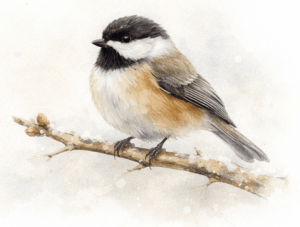
The feeder itself soon filled — sparrows first, then juncos in their tidy grey coats, and finally the chickadees, darting in and out as if late for an appointment. It swayed slightly with their comings and goings, a small sign of life in an otherwise still morning.
Later, it was time to bundle up and take my little chihuahua outside. She approached the snow with caution, as if it might suddenly do something unexpected, then set about her business with dignity intact. I lingered longer than necessary after we finished, breathing in the winter air. I have always loved this season — the way it clears things out, the way it feels honest and bracing, the way it asks you to be present and alive.
But winter asks a lot of us. Patience, for one. A willingness to slow down whether we want to or not. Sometimes it asks us to stay put, to wait things out, to trust that what looks dormant is not finished — only resting.
And in return, winter offers these quiet gifts — a cardinal passing through, a determined woodpecker at work, the steady presence of mourning doves beneath the feeder, the clean breath of cold air that fills your lungs and reminds you that you are still very much here.
The world, it seems, has not stopped. It has simply lowered its voice.
Somewhere nearby, a bird called out — sharp and clear — and for a moment it felt like an answer, though I had not asked a question.
Winter will pass. It always does. But while it is here, it offers this small, steady reassurance — life continues, quietly and faithfully, right outside the window.
Winter has a way of slowing the world just enough for a person to notice things that usually pass unseen. Not the grand sort of things — nothing you would mark on a calendar or read about in the paper — but the smaller, steadier ones that tend to show up when days grow shorter and folks move a little more deliberately. It is a season that rewards paying attention. If you step outside and stand still for a moment, you may discover there is more going on than the quiet first suggests.
One of the first things one notices is wood smoke. It drifts low and unhurried, slipping between houses and along fence lines, carrying with it the sense that someone, somewhere, has settled in for the evening. It does not announce itself so much as it reassures you. Fires have been laid, kettles set on, and the day has found a comfortable place to rest. On winter nights, that smell lingers, as if the air itself has decided to hold onto it just a little longer.
On certain evenings, when the air lies heavy and keeps every sound close, there is something else worth listening for. Long before you ever see it, you may hear the train. At first it is only a low rumble — so far off you might take it for weather, or wind working its way slowly thru the hollers. But if you stand still and listen, it keeps coming. Minutes pass and the sound gathers itself as it travels, rounding distant bends, slipping along the lay of the land, growing clearer without ever seeming in a hurry. Folks who live within reach of the tracks come to know this kind of listening. It is not something you rush toward. You let it come to you — steel and motion carried on cold air, mingling with the smell of wood smoke — until, for a little while on a quiet winter night, you are reminded that even in the stillness, the world is finding its way along.
By morning, the snow has stories of its own to tell. Tracks crisscross yards and paths where wandering critters passed thru while most folks were asleep. Small prints hop and pause, then disappear beneath hedges or brush piles. Others wander more boldly, heading straight across open ground as if nothing in the world had reason to hurry them along. From the tracks, it looks like a porcupine left them for us to discover. But one does not need to know exactly who made the tracks to appreciate them. It is enough to know that life moved along quietly thru the night, leaving behind just enough evidence to be noticed.
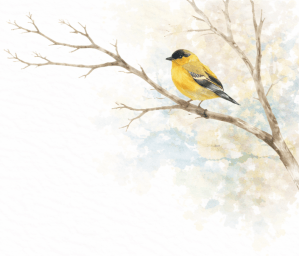
Daylight brings its own set of noticings. Winter birds seem to understand the season better than most, wearing their colors proudly against the pale background. A bright red cardinal perched on a snow-dusted evergreen looks as if it was placed there on purpose, perhaps waiting for an artist with their paints and canvas passing by. Chickadees move quickly, darting and bobbing, as if they have errands to run and very little time to waste. Many folks keep watch for the dark-eyed juncos — the little “snowbirds” that seem to arrive right on cue — hopping and skittering along the ground and fence lines. And then there are the red-bellied woodpeckers, working steadily up and down bare trunks, tapping out a rhythm that feels as much a part of winter as breath in cold air.
There is a different kind of noticing that comes with taking a walk thru the woods on a snowy late afternoon. Sound is deadened as it seems to settle into the ground, and you find your own footsteps feel as though they belong there.
Light behaves differently then — sunlight catching the snow in one moment, moonlight taking its turn not long after — each making the world glisten in its own way. It is the sort of stillness that does not ask anything of you. You walk, you look, you breathe, and for a little while the quiet feels complete, as if nothing is missing at all. And, just for the moment, it is as if all the world is at peace.
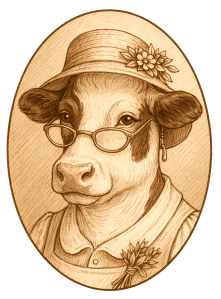
Myrtle Mae Meadowbloom, our Farm & Home editor for the “Hearth & Holler Gazette” coming soon, reminds us that winter noticing often comes with small responsibilities of its own. Birds need full feeders when the ground stays hard, and fresh water matters even more than seed when everything else is frozen solid. A shallow pan set out and checked often can make all the difference.
She is the sort who never forgets the squirrels and chipmunks either, setting out a little something for them well away from the house. These are not grand gestures, Myrtle Mae says, just the ordinary kind of care that keeps a place feeling lived in and looked after. It is the kind of Farm & Home wisdom that never asks for credit, and here at the Gazette, we have learned that those are often the things most worth passing along.
In the end, winter does not demand much of us. It asks only that we slow down enough to notice — the drift of wood smoke at dusk, the far-off sound of a train finding its way thru the hollers, a flash of red against the snow, the quiet stories written overnight in tracks, the calm of the woods when snow glistens and light rests gently on the ground.
These are the kinds of things that never make headlines — but somehow matter most. They have a way of steadying a season, and the people moving thru it, reminding us where we are and what matters still, if we merely take the time to look and listen.
Thanks for walking along with me for a while. Safe steps until next time.
— Jim (and Red!)
And before you go — a small note from the Gazette.
Something new is nearly ready here, and we will share a first look this Saturday, January 17th. It will be the last quiet preview before The Hearth & Holler Gazette officially opens its doors the following week.
P.S. from Little Red Bear — Red would like it noted that he has been noticing winter too — mostly from indoors, with a warming cup of tea and hot biscuit drenched with honey nearby, which he feels is the sensible approach, after all.
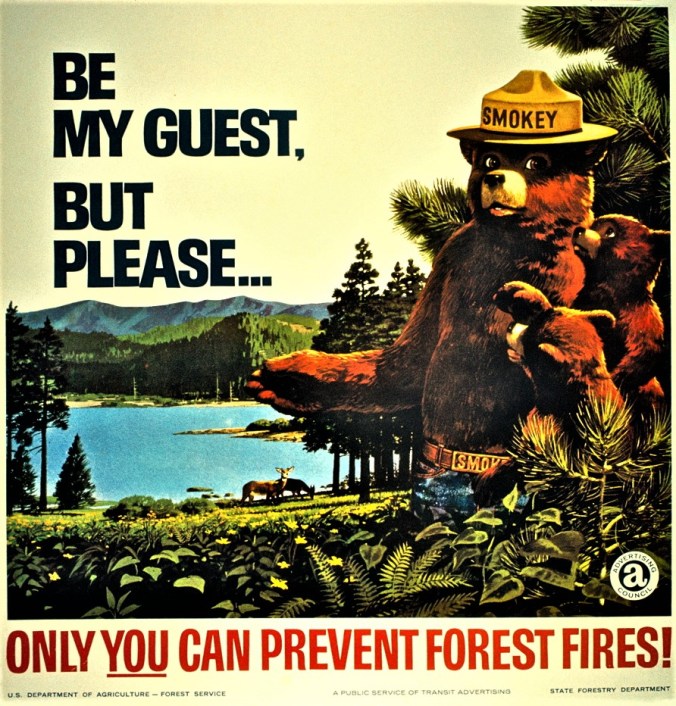
Happy Birthday to Smokey the Bear! A robust 78 years old today, Smokey is still dutifully at it, still spreading the word about fire prevention and safety for everyone.
Smokey the Bear was born on August 9, 1944, when the U.S. Forest Service and the Ad Council both agreed that a fictional bear would be the symbol going forward for their efforts to promote forest fire prevention and safety. Smokey was named after a famously brave NYFD firefighter named Joe Martin, nicknamed “Smokey”. The artist Albert Staehle, a popular cover artist for the ‘Saturday Evening Post’ magazine at the time, was commissioned to paint the very first poster of Smokey Bear.
Smokey the Bear’s image may have changed and been modernized a bit over the ensuing years, but his familiar phrase — “Only YOU Can Prevent Forest Fires!”has remained unchanged and become even more meaningful in today’s warming world. The phrase was adopted as his official message a few years after Smokey began, in 1947, the year his slogan first appeared.
Smokey the Bear has been spreading the word about forest fire prevention and safety ever since. More recently, and sadly due to climate change, Smokey’s message has expanded to include the Prevention of Wildfires.
Smokey the Bear became more popular when, in the spring of 1950 in the Capitan Mountains of New Mexico, a young bear cub was trapped as the forest burned around him. Taking refuge in a tree, the young bear was able to survive the blaze, although badly burned. Rescued by firefighters who were so moved by the cub’s survival, he was named “Smokey”. News about the real Smokey soon spread nationwide. Later, the real-life Smokey was moved and given a new, permanent home in the National Zoo located in Washington, D. C. During his life, this bear survivor played an important role in helping to spread Smokey the Bear’s fire prevention and conservation messages. After his death in 1976, he was returned to Capitan, New Mexico, and buried in the State Historical Park.
Smokey the Bear’s forest and wildfire prevention messages remain vitally relevant and important today. According to the Earth Eclipse site —
“90% of all wildfires are caused by humans. Human acts of carelessness such as leaving campfires unattended and negligent discarding of cigarette butts result in wildfire disasters every year. Accidents, deliberate acts of arson, burning of debris, and fireworks are as well other substantial causes of wildfires.”
To help children and families to learn more about Smokey the Bear and his fire safety and awareness messages, Little Red Bear has created a separate page of Smokey the Bear Coloring Images for everyone! We invite you to download and print as many copies as you like for hours of family coloring fun, all Free because that’s how we roll here.
Thanks always for visiting and spending part of your day with us! We hope you visit often to check out all of the free posts, features, puzzles, games, coloring pages, and other activities for the family!
My story character friend Little Red Bear and I both encourage you to visit and enjoy the great outdoors, spending healthy quality time with Mother Nature. When visiting outdoors, as Smokey the Bear would say today —Please Remember – Only YOU Can Prevent Forest and Wildfires!
So, wishing a very Happy Birthday and many more to Little Red Bear’s cousin Smokey the Bear! — Jim (and Red!)
“The lack of power to take joy in outdoor nature is as real a misfortune as the lack of power to take joy in books.” – Theodore Roosevelt
This is a purposefully non-monetized, ad-free site to be able to offer the most enjoyable reading and viewing experience for everyone, with all content freely shared, and generates no income to offset the costs of maintaining and operating.
If you enjoy your visits and time with us, I invite you toJoin our new Patron Communitytoday, because together we can do so much!
With the help of patrons, we are able to donate free print copies of “The Adventures of Little Red Bear: The First Holler!” to Senior Citizens, School Libraries and Classrooms, and to those who could otherwise not obtain a copy.
Patrons also help my friend Little Red Bear and me to continue this as a Non-Monetized site free of distracting advertisements, dedicated solely to entertainment and educational purposes while sharing positive messages of Happiness, Inspiration, Kindness, Environmental Awareness, and Conservation with everyone.
“I don’t know how to save the world. I don’t have the answers or The Answer. I hold no secret knowledge as to how to fix the mistakes of generations past and present. I only know that without compassion and respect for all of Earth’s inhabitants, none of us will survive – nor will we deserve to.” – Leonard Peltier
Thank You for visiting with us!
Please feel free to share with family and friends. Likes, Shares, & Comments are truly appreciated and help greatly to expand our reach and encourage new readers and visitors!
It finally seems the warmer weather is here to stay after more than a few false starts this year. Reaching 91 one day and then freezing the next. What’s up with that? For a while, it seemed as though Mother Nature herself had contracted the COVID-19 virus and wasn’t quite herself in how the weather bounced up and down for weeks on end early on. One of the strangest Spring seasons I recall in quite a while. But then again, this whole year of 2020 has been something to behold so far, hasn’t it?
I would not want to be in the shoes of whoever Mother Nature ultimately tracks down thru contact tracing as to who gave her the virus, if that is the case. How many remember the old adage — “It’s not nice to fool Mother Nature?”
Personally, I have been looking forward to the arrival of Spring since the last Christmas present wrapping hit the floor. And I am not alone. Mother Nature’s critters, huddled in winter dens, have all been awaiting the first warming rays of sunshine, too.
So, let’s talk about Wildlife. The four-legged, feathered, and furry sort mostly, and save Las Vegas, Party Barges, and Weekend Bingo Binges for another discussion and time.
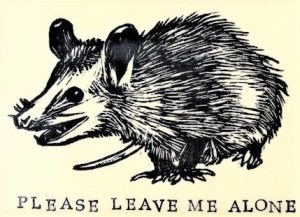
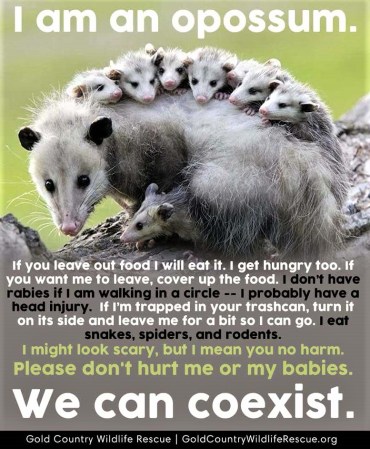
Where I live, we have had a Skunk lurking around the trash cans and smoking area in the rear of the buildings for a while. A Possum, too. It crossed in front of me walking the dog a few weeks ago. Mid-morning, no rush at all crossing the street as if it owned the crosswalk. And it has been sighted again around the area more recently.
Given the old-growth trees around the neighborhood, I would expect to see Raccoons and hear some Owls anytime, as well. I stop and listen when out at night trying to hear or see one. No luck so far, but I have seen bats zipping around overhead from time to time.
And we have countless Squirrels scampering about gathering acorns and other food treats. And a very special little tailless squirrel. It lives nearabout the twin fir trees at the end in the side yard area. I saw him on two occasions last fall scurrying along the curbside of the rear parking lot.
I first became aware of the presence of the tailless squirrel after noticing a scribbled “Reward Note” posted on a Sweetgum tree out front –
“25 Acorns Reward For Information Leading To The Whereabouts And Speedy Recovery Of My Missing Tail.”
The note was signed by “Stubby the Grey Squirrel”.
Assuming the tailless little guy is still anywhere around to be seen now, of course. Being somewhat of an oddity, he may have run off already to join the circus, hit the talk show circuit, or to pursue a movie career with the Muppets in Hollywood. What some see as misfortune, others see as a blessing and opportunity! It just depends on your mindset, I suppose.
As I have advised my friends here in the seniors’ community, there is no reason to be alarmed by any of the little neighborhood critters because they generally do not want to have anything to do with you. But please do not rush out to change your deodorant or take that personally. It is not about “You”.
By nature, wildlife does not want to have anything to do with any other human, either. It’s a survival thing. It seems humans have unfortunately established themselves as a threat in the eyes of most wildlife. Accordingly, practicing the original form of social distancing, they will avoid you at all costs if they can, just as we are the COVID-19 virus at present.
The best thing whenever you see any of Mother Nature’s friends is to simply ignore them and go about your business while they go about there’s. Or simply turn around and go back the way you came. Chances are that once the little guys see you, they will be hightailing it out of there to the safety of a nearby tree or hidey-hole, anyway. Again, they really do not want to have anything to do with you. Trust me, you are not on the menu or in any of our local critters’ food groups, so you can feel pretty safe about that.
The odds of you being chased down and eaten by a chipmunk in the backyard are pretty slim. Actually, the first, last, and only recorded chipmunk attack on a human being was when an exasperated Alvin the Chipmunk allegedly attacked a record producer for not giving him a hula hoop at Christmas. And there are some doubts as to the neutrality and impartiality of the witnesses, Simon and Theodore. In the end, Mr. Seville was not actually eaten and consumed by Alvin anyway, merely bashed and battered around a bit by the disgruntled chipmunk crooner. Just do not promise a hula hoop and then fail to deliver on it, and you should be fine. Chipmunks and other small critters do not eat people. Really, I’ve studied this stuff.
Except, possibly for coyotes. But probably not them, either. Coyotes do not typically attack humans, but as they increasingly spread into urban areas, pets may be at risk. Coyotes may view large dogs as rivals and seek to eliminate them and see small dogs and cats as prey (i.e. lunch snacks). I have neither seen nor am I aware of any coyotes in our neighborhood here, but putting the word out anyway for our dog walker friends to be aware going forward and to keep little Spot and Fido safe, because that is not to say they may not be in your neighborhood. As well as bears, wolves, and mountain lions depending on where you may live. So while not purposefully ignoring those larger guys today, we are mostly just talking about the smaller, everyday, urban critters we encounter more frequently in our neighborhoods.
Otherwise, it is springtime, and springtime in the animal community means “Babies” and the beginning of Baby Wildlife Season.
Wildlife babies of all varieties are either emerging from nests and dens about now or very soon will be. Lots of them. And we all know that a Mother will always stand her ground to protect her Babies.
In the event you happen across a Mother and Babies, the best thing to do is to give them plenty of space no matter how cute they seem, and by all means, do not appear threatening to them. It is best to just calmly and quietly leave the area.
Mother and Babies will move along soon enough so that you can get back to whatever you may have been doing, and everyone can go safely on about their business.
But what to do (or not do) if you come across a wildlife baby and there is no mother around? It depends. The best advice from the National Wildlife Federation is to simply leave it alone.
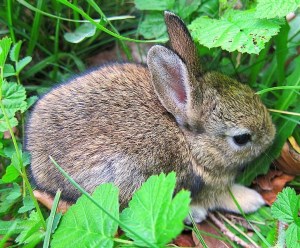
For most of us, our first instinct may be to “rescue” it. But before intervening and quite possibly interfering, we really need to make sure that the baby truly needs our assistance in the first place. In many instances, it is totally normal for wildlife babies to be on their own. Mother deer and rabbits leave their young alone for most of the day to avoid attracting predators, for example.
If a baby bird is fully feathered, it is called a “fledgling” and it is normal for it to be out of the nest. Fledglings spend several days on the ground hiding in the vegetation until they can fully fly. It is a dangerous time for them to be sure, but the mother bird is usually close by keeping a watchful eye. If you get too close or interfere, you may get divebombed by one or both parents.
On the other hand, if a baby bird is featherless or covered in fluffy down, it is called a “nestling” and should be returned to the nest if possible. Contrary to popular belief, touching a nestling or baby animal will NOT make the parents reject it.
Regarding reptiles – baby snakes, turtles, and lizards hatch from eggs (or are born live in the case of some snakes) and are completely equipped to care for themselves right from the get-go. Simply leave them right where they are and they will be fine without any help.
So again, before intervening in the “rescue” of any wildlife baby, make sure it actually needs help, to begin with. Again, in many situations, it is totally normal for wildlife babies to be on their own. “Rescuing” an animal that does not need rescuing actually decreases its chance of survival, and of course that is the last thing we want.
Though it might seem harsh, the fact of the matter is that it is normal and natural for wildlife babies to be on their own and that in the grand scheme of things, not all wild animals survive to adulthood. A wildlife baby sadly may not make it, but in many instances may end up being the food that allows other wildlife babies to survive. That is the natural way of things. Stepping away and letting nature take its course is usually the best thing to do.
The exception to all this is if an animal is injured as a direct result of human activity – getting hit by a car, attacked by a pet, striking a window, falling from a nest during tree work, or if you have witnessed its parent being killed and know without a doubt that the baby has been orphaned.
At those times, the ethical thing is trying to help, but not necessarily by intervening directly. Contacting a local wildlife rehabilitator or wildlife rescue group should be our first step to provide help because they are trained, properly equipped, and know what to do to provide the best treatment, care, and chances for the animal’s recovery and survival.
And a word about Snakes. Snakes are beneficial because they prey on and keep down the number of real pests and possible disease carriers – Mice and Rats – the most common urban animals whether we like to admit it or not. Yes, mice and rats are likely in the backyard and around the trash cans and dumpsters, too. Snakes help keep mice and rats under control. That is a good thing.
The scary thing would be if there were no snakes at all. For example, snakes play a major role in controlling the spread of Lyme Disease by preying on the mice and rats who play host to the ticks that spread the disease. If snakes all disappeared, Lyme Disease would rapidly become much more prevalent and more widespread. And that is merely one example of the importance of snakes.
With the rising temperatures, you may see a snake basking and warming itself in the sunshine. Again, not to panic. If you see or unwittingly disturb a snake – simply move away quietly and let it be. Snakes, like all critters, do not consider humans a food source so have no reason to bother you unless you give it one and they feel cornered or threatened with the need to defend themselves. They merely go about doing their jobs as Mother Nature and God intended.
But, a necessary word of caution. Being reptiles, with warmer weather upon us snakes will be more active, and it must be said that a few are venomous. Again, they do not want to eat you and should not bother you unless you provoke or give them a reason to. Or, startle them and catch them by surprise.
So when working in the garden or out and about, it is best to be aware and alert to their possible presence.
Snakes and all of the other wildlife have every much of a right to be here as we do. Maybe more. They were here first, after all.
“Live and Let Live” is the best policy for snakes and all wildlife.
So, as you are out and about enjoying the beautiful Spring and Summer weather to come, please be aware of the miracles and wonders of nature surrounding you where you live. Simply stop, listen, and be aware of the moment.
And, please do not leave food out for or feed local wildlife. They have a natural role to play in nature and must be allowed to do that. Foods that we leave out or unsecured garbage in trash cans is not their natural food or healthy, and it frequently ends badly for the animals as they suddenly become classified as “pests” to be eliminated.
It is best for all not to do it. Wildlife will do much better on its own being allowed to simply function as Mother Nature intended.
Possums, Raccoons, Skunks, Groundhogs, Squirrels, Chipmunks, Rabbits, Snakes, Turtles, Moles, and Deer (and Mice and Rats, too), not to mention the wondrous varieties of birds, all call our neighborhoods home and raise their families right alongside us. They are out there. And if we are mindful, we can enjoy all of the local wildlife and live together in Peace. I encourage you to venture outdoors, take a walk, and breathe the fresh air. Take a break from the daily news and avail yourself of the beautiful World and Wildlife surrounding us.
If you would like to learn more about what to do if you do find baby wildlife, please visit The National Wildlife Federation for more information, specific to each species.
When outdoors, please keep your eyes and ears open and listen for your local wildlife neighbors because they are all around you whether you see them or not!
And for Bigfoot. Always Bigfoots. Because like UFO’s and ghosts, we never really quite know for certain, do we?
Please remember that wearing a mask when in public right now is not solely about protecting ourselves, but moreover a showing of respect and concern for those around us, a way of protecting them. And that is a very simple and kind thing we all can surely do for each other.
Because we truly are all in this together.
Thanks for visiting with us today! Best wishes and health! — Jim (and Red!)
PS — As a friendly reminder, Little Red Bear and I have changed some Amazon marketing structures and eliminated all royalties on his “Adventures of Little Red Bear” stories to make them as affordable as possible for leisurely and relaxing reading during this time for everyone. They are always Free with Kindle Unlimited.
And if you have already read and enjoyed Red’s adventures, we would sincerely appreciate if you could take a minute to leave a review to help others find their way to the books.
“If we can teach people about wildlife, they will be touched. Share my wildlife with me. Because humans want to save things that they love.” – Steve Irwin
“Our prime purpose in this life is to help others. And if you can’t help them, at least don’t hurt them.” – 14th Dalai Lama
This is a purposefully non-monetized, ad-free site to be able to offer the most enjoyable reading and viewing experience for everyone, with all content freely shared, and generates no income to offset the costs of maintaining and operating. If you enjoy your visits and time with us,Join our new Patron Communitytoday, because together we can do so much!
“A simple act of kindness and compassion towards a single animal may not mean anything to all creatures, but will mean everything to one.” – Paul Oxton
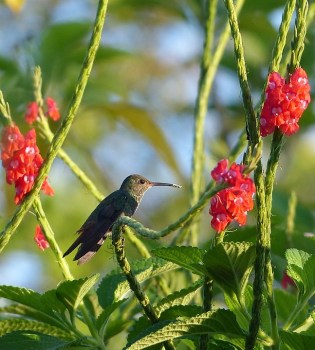
Happy Hummer Season! Soon the buzzing and whirring sounds of rapidly beating wings and flashes of color will be filling the air in our backyards once again. The hummingbirds return!
My earliest memories of hummingbirds from many years ago recall the stern admonition and warning from my Mother, taking a page from the ‘Mother’s Guide to Eyes & BB Guns’ — “Don’t go anywhere near the hummingbirds or bother them. They’ll poke your eye out with that bill of theirs!”
This has always seemed out of character with my Mother’s deep love for all things ‘nature’, but she nevertheless firmly stood by it all thru the years. Maybe she knew someone from her past that had an unfortunate run-in with a disgruntled hummingbird. But I tend to doubt it.
Despite the “Eye Poke” warning, we planted a never-ending stream of flowers and butterfly bushes over the years to attract them, and it was always a special time celebrating new arrivals each Spring. It seemed that Summer would not really be Summer without Hummingbirds buzzing around our flower gardens!
Hummingbirds are a joy to observe in the backyard as they hover, flit and fly about, and will very soon be arriving back to summer homes in North America from winter stays in Southern Mexico, Costa Rica, Panama and other regions of Central America. Hanging a nectar feeder to greet their arrival in Spring will help immensely as they arrive thirsty and in quick need of nourishment following their long migrations northward.
To find out when to expect the arrival of regional hummingbirds in your area, check out the Audubon Guide. Residents in the South and along the Gulf shores should expect them first and have feeders out, available, and at the ready. When the tiny hummingbirds arrive after long journeys across the Gulf of Mexico from Central and South America they are famished, exhausted, and in need of quick energy resupply!
I invite you to enjoy this slow-motion “Moment of Chill — The Hum of Wings”, sponsored by The Orvis Company —
Providing a hummingbird feeder in your yard helps to renourish the little hummers quickly and get them off to a healthier start for the coming breeding season after their arduous travels northward, and can be both a source of entertainment and a healthy learning experience for the children in your family as they learn more about nature.
If unprepared in the Spring, not to worry. It is never too late during the season to put your first feeder out for hummingbirds, and extra feeders in the fall are very important for both local birds to prepare for southern migrations and for those passing thru from up north on their way south. It’s never too late to start.
Hummingbirds need to consume several times their body weight in food intake each day and are necessarily always on the lookout for flowering plants to quench their thirst and maintain energy. Flowering plants for the hummingbirds are much more numerous and available during the summer months, so providing an early supplementary food source with a hummingbird feeder can help them get thru leaner spells in springtime when flowers and natural food sources are not yet as numerous.
There is no need to worry about supplementing their diet with a feeder and distracting hummingbirds from natural food sources, as they will continue to seek out and consume plant nectar, small insects, and tree saps to prepare for the breeding season, and then later feeding their young in the nest. And later still, preparing for fall southern migrations back to their winter homes.
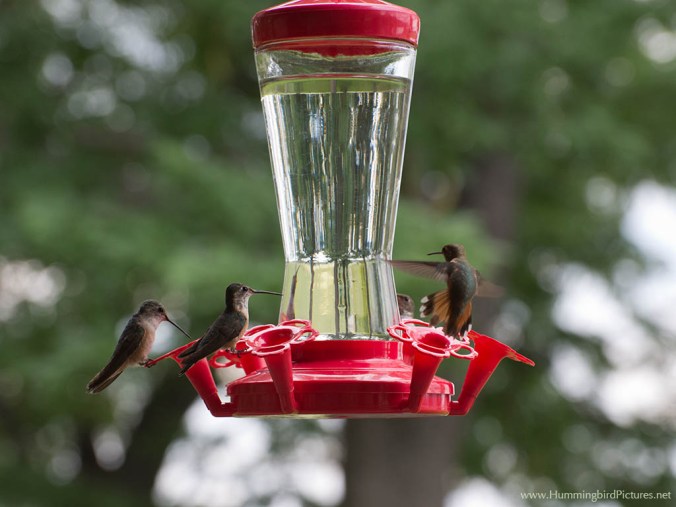
To select the best feeder, choose one that can be easily cleaned on the inside to prevent contamination and illness for the birds, and one that is brightly colored with lots of red to get their attention and attract them to your feeder.
If you have few hummingbirds in your area, completely filling the feeder is not necessary, to not waste the nectar mixture. As the season progresses, filling the feeder to the brim may be more advisable as the birds will be visiting more often to drink and the feeders will probably be even busier with greater numbers in the summer heat and growing families.
If there are a large number of hummers in your area, a larger feeder with a greater number of feeding ports can help to reduce territorial conflicts brought about by the hummingbirds’ natural territoriality and competitiveness to guard the feeding source by allowing more birds to access the feeder. Everyone enjoys a little elbow room.
Feeders can be inexpensive and plain, or very decorative and ornamental. The hummingbirds only care about the nectar and happily leave design and decor choices to the humans’ personal tastes. But it is important for any feeder to contain a good deal of bright red coloration. Hummingbirds are naturally attracted to brightly colored flowers, including yellows, oranges, pinks, and purples, but are drawn to the color red much more than any other color as it signals a food source to the tiny bird, so they naturally associate the color red with food.
Wearing a bright red shirt one hot day last summer, a hummingbird approached and examined me closely before sadly moving on, clearly disappointed after determining that the giant flower he thought he had joyfully discovered was not in fact, a flower.
There is no need to purchase pre-packaged hummingbird food mixes in the store, as a perfect nectar mix can be easily and inexpensively prepared in your home kitchen using only sugar and water as the ingredients.
It is important to prepare the nectar supplement mixture using only Refined White Sugar, as honey can promote dangerous and harmful fungal growth and should never be used. In addition, organic, natural and raw sugars may all contain excessive levels of iron which can be harmful to the birds. Plain, white refined sugar is sucrose, which when mixed with water comes the closest to matching the chemical composition of naturally occurring nectar in the wild.
With a brightly colored red feeder, there is no need to add red food coloring to the nectar mixture, as the chemicals in food coloring can be harmful to the hummingbirds.
Homemade Hummingbird Nectar Recipe
To prepare the nectar mixture, simply mix 1/4 Cup of Refined White Sugar in 1 Cup of Boiling Water until the sugar is all dissolved, or a ratio of 1 part sugar to 4 parts water if preparing a larger amount. Let the mixture cool and then fill the feeder and hang it outside for the birds. Simple as that.
For best results, hang the feeders preferably about head high so you do not need a ladder to reach it for cleaning and refilling, and also in the shade to keep the nectar from spoiling as quickly as it would in the full sun. The nectar will serve as a healthy and beneficial supplement to the birds’ natural nectar diet in springtime, and then all summer long as well, providing the birds with an extra and welcome energy boost at the end of long, hot, and dry summer days.
Keeping the feeders freshly filled and available for the birds when fall arrives and having the extra nectar nourishment available will help your little neighborhood hummingbirds restrengthen after the breeding season is finished, boosting energy and helping them to prepare for their long migration back to southern wintering grounds.
Autumn feeders will also provide welcome and needed nourishment to hummingbirds in winter migration passing back thru on their way south. Because of the influx and numbers of migrating birds, putting additional hummingbird feeders out in the fall can actually be very helpful in providing needed migration energy for all who stop by to visit.
Extra nectar mix may be stored covered in the refrigerator for up to two weeks in a clean glass or plastic container. If the mix in the feeder becomes cloudy or mucky, it should be discarded and the feeder cleaned. The feeder should be cleaned regularly every few days, especially during hot weather to keep it free from mold and mildew, as nectar is a food and will spoil. We usually clean ours every other day just to be safe.
Feeders can be cleaned using various sized bottle brushes and by soaking them in a mixture of 1 part plain white vinegar and two parts hot water, then thoroughly rinsing to keep the birds healthy.
If black mold is detected, soaking for an hour in a bleach mixture of 1/4 cup bleach to a gallon of water can be done, followed by very thorough rinsing. Mold should not be an issue if the feeders are cleaned regularly.
To control and keep away uninvited wasps and bees which may visit hummingbird feeders, avoid choosing a feeder with the color yellow on it, as yellow is known to attract them. Some feeders have built-in water moats which protect against ants contaminating the nectar, and some have screens over openings which only allow the hummingbird’s long tongue to enter, keeping bees and other insects out.
For additional tips to prevent the problem of unwanted insect visitors, visit Control All Insects On Nectar Feeders. In years of feeding hummingbirds with different types of feeders, we have never really had a problem with either mold or uninvited guests.
Hummingbirds can be territorial, especially during breeding season, so there is no harm in hanging out more than one feeder, which may result in even more visitors to your yard. If possible and for the best results, hang additional feeders out of the line of sight from one to another to attract more birds and to diminish conflicts over territory.
Adding native plants for your regional area and growing them in your garden and yard will also help the hummingbirds by providing natural shelter and food, including a healthy environment for insects. Many are surprised to learn that insects provide an important part of the hummingbird’s diet, especially during the breeding season.
For help in selecting the best native plants for not only hummingbirds but all birds, a great resource to check out is Audubon’s Native Plant Database. Simply enter your zip code to find the recommendations of local experts in your area for your yard. Then you can narrow down the search by the type of birds and/or plants you have in mind.
So, happy Hummer Season! Little Red Bear and I hope this guide to helping the hummingbirds was helpful, and that both you and your family are able to experience the joys and delights of watching the amazing aerial displays and acrobatics of hummingbirds all summer long. Teaching children about the wonders of Mother Nature can never begin too early, and hummingbirds are fascinating and captivating to watch for all ages.
Likes, Comments, and Shares are always appreciated, in addition to sharing with family and friends to help spread the word to others about Mother Nature and helping to make the world a better place for everyone. Including the Hummingbirds!
Thanks as always for visiting and spending part of your day with us. A small gesture or kind word can brighten someone’s day or change a whole life around. Join us in the “Smile & Compliment” club and help brighten someone’s life today! — Jim (and Red!)
(And if a new visitor — Welcome! To find out what we are all about here, please check out — “Welcome To My Writing Pages!”— and sign up to follow and be notified of every new post!)
“Kindness is the sunshine in which virtue grows.” — Robert Green Ingersoll
~ Every Day is Earth Day. Think Globally — Act Locally. ~
“The woods hold not such another gem as the nest of the hummingbird. The finding of one is an event.” – John Burroughs
This is a purposefully non-monetized, ad-free site to be able to offer the most enjoyable reading and viewing experience for everyone, with all content freely shared, and generates no income to offset the costs of maintaining and operating. If you enjoy your visits and time with us,Join our new Patron Communitytoday, because together we can do so much!
With the help of patrons, each month we are able to donate free print copies of “The Adventures of Little Red Bear: The First Holler!” to Senior Citizens, School Libraries and Classrooms, and to those who could otherwise not obtain a copy.
Patrons also help my friend Little Red Bear and me to continue this as a non-monetized, ad-free site, dedicated solely to entertainment and educational purposes while sharing positive messages of happiness, inspiration, and kindness with everyone. We invite you to join us in making a positive difference in the world!
“If you truly love nature, you will find beauty everywhere.” — Vincent van Gogh




 with small responsibilities of its own. Birds need full feeders when the ground stays hard, and fresh water matters even more than seed when everything else is frozen solid. A shallow pan set out and checked often can make all the difference.











 My earliest memories of hummingbirds from many years ago recall the stern admonition and warning from my Mother, taking a page from the ‘Mother’s Guide to Eyes & BB Guns’ — “Don’t go anywhere near the hummingbirds or bother them. They’ll poke your eye out with that bill of theirs!”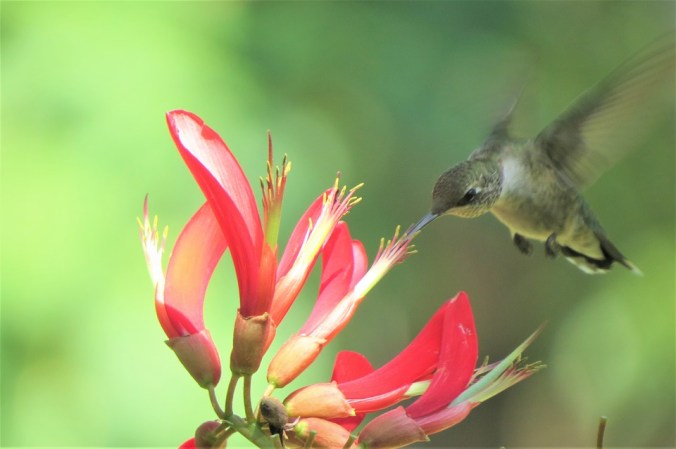


 thirst and maintain energy. Flowering plants for the hummingbirds are much more numerous and available during the summer months, so providing an early supplementary food source with a hummingbird feeder can help them get thru leaner spells in springtime when flowers and natural food sources are not yet as numerous.
 lots of red to get their attention and attract them to your feeder.




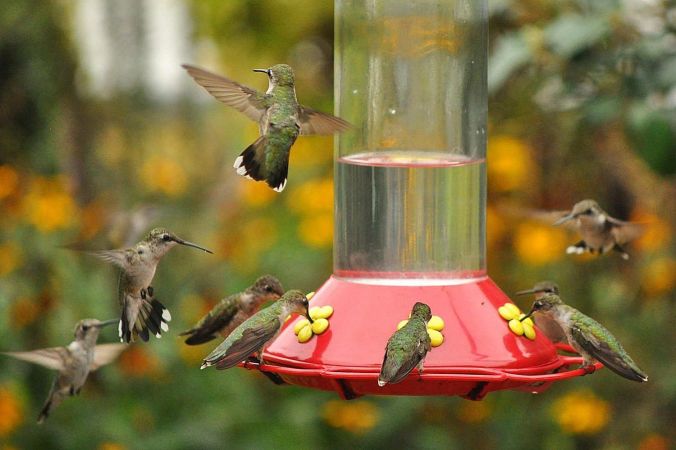
 attract them. Some feeders have built-in water moats which protect against ants contaminating the nectar, and some have screens over openings which only allow the hummingbird’s long tongue to enter, keeping bees and other insects out.


 James Milson - The Writing Pages