As a general rule, I endeavor to keep it on the light side here, and do not get actively involved in political discourse. Goodness knows there are already enough serious and worrisome issues and events in the world these days. On the other hand, I have a growing awareness of what I perceive to be a serious problem in this country. As such, I thought it important to bring it to the attention of the soon-to-be growing number of presidential hopefuls and candidates for the next presidential election. I say both “hopefuls” and “candidates”, because I am never quite sure if they are really one in the same and want to be certain to bring the issue to everyone’s attention, not leaving anyone out.
Here is the crux of the matter, to get right to it. I am a baby boomer, and there are a growing number of us reaching the years when we are empty nesters, and/or without spouses or companions for various and obvious reasons. In other words- alone. Aloneness is generally regarded to be unhealthy, thereby impacting the issues of medical care, mental health and associated social costs and issues.
To combat the isolation and solitude, many seek the solace and companionship of pets, primarily dogs and cats in vast numbers. Dogs and cats are excellent companions most of the time, providing sympathetic comfort, great for snuggling and warmth during cold winters (although not so much hot summers when they seem to have the curious urge to snuggle even more), they serve somewhat as alarms and guard dogs against intruders, many perform invaluable service assistance to the challenged and disabled, requiring walks and outings they aid in helping us to exercise and get fresh air, their own food and upkeep costs help to support the economy, etc. All good things.

“Do you fellas know what we should be doing with these?”

“Feel like I should be doing something with these, but they say they aren’t Chew Toys. Quite frankly, I’m at a loss.”

“If only I could read like my human. Osmosis just isn’t working for me.”
That being said, here is the concern. All of the above listed benefits of having a dog or cat companion are “physical” or “emotional”. They do very little to stimulate the “mental” side for aging boomers, a very important thing in maintaining a fulfilling, vigorous and healthy lifestyle by challenging and maintaining an active brain as well as body. I have become increasingly aware that dogs and cats in general seem to be very unread and sorely lacking in knowledge of current events beyond issues of food availability and scheduling. They are frustratingly difficult to hold an intelligent conversation with. Great listeners, without question, but clearly deficient in conversation skills and a base of knowledge to draw from to foster insightful discourse and discussion. They don’t distinguish Dali or Degas from a dog dish, or Kipling or Kierkegaard from kibble.
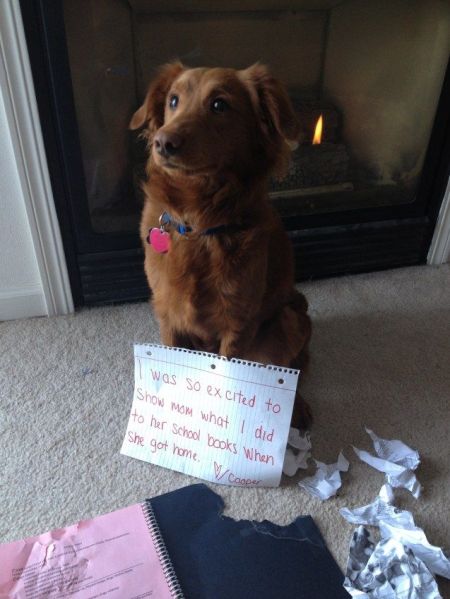
“So, what you’re saying is that it wasn’t really a Chew Toy? Seemed like it.”
Indeed, most dogs mistakenly perceive books to be chew toys or pillows rather than tools of enlightenment. And it is we who have allowed this sad state to continue. It is a rather poor reflection on our species, that given our long and close relationship to dogs and cats over thousands of years we have allowed this matter to go unattended for so long, turning our backs on the educational and intellectual development of our dearest companions. Some certainly seem to be sending us clear messages that they are at the very least interested in books and higher education. We just have not gotten the message. Until now.

“The light seems to illuminate my very soul, yet I still feel something is missing.”

Sadly mistaking a blanket of knowledge for a blanket of warmth.
Accordingly, it seems reasonable that the next group of folks aspiring to be President of our great land and all its people should address the issue of illiterate, uneducated and incommunicative pets, for the sake of not only the ever increasing number of lonely boomers but also for the long term benefits for all the citizenry. With the copious “pork” projects that Congress always seems able to generously fund without risk of government shutdown, I am sure it should be no problem achieving bipartisan support and finding adequate sums to fund Dog and Cat Literacy Research with concurrent studies in Household Pet Speech Therapy, given the proper leadership of the future President.
“O Day of days when we can read! The reader and the book, either without the other is naught.”
— Ralph Waldo Emerson
In fairness to others, I readily admit that Chimpanzees and other primates would seem to have a leg up on dogs and cats as far as literacy and communication possibilities go, given the advances made earlier in sign language communication with Koko the Gorilla, among others. Along with Parrots and some other avian members perhaps, already given to outbursts of spontaneous, albeit limited speech, most frequently revolving around a desire for crackers. But the prime focus of this is to foster mentally stimulating pet discourse for the sake of aging baby boomers, and so few of us have Chimps, Gorillas or Parrots as pets in the home. And quite honestly, the troubling images from the “Planet of the Apes” movies still haunt many, making it more difficult for an educational movement to gain traction for the primates, given the opposable thumbs and all.
Dolphins would also offer great promise, displaying consistently high intellect, but even fewer of us are able to keep large sea mammals as household pets. We own more dogs and cats to be sure. Regrettably, the others will have to wait their turn. In a democracy, numbers rule. However, I am confident that whatever scientific strides made in the field of Dog and Cat Literacy and Speech will also benefit the chimps, gorillas, parrots and dolphins down the road as well. And the whales, not to be left out, of course. So there’s that.

Doctor Dolittle spoke the language of the animals. It is now incumbent upon us to teach them ours. The time has come to educate the furry members of society. Dog and Cat Literacy. Free Speech for Pets. The time has come. For the benefit of baby boomers and their pets in the interest of an intelligent conversation, for goodness sake.
Thanks as always for visiting! — Jim (and Red!)

“According to this book, I can’t read. Why is that?”
“The Adventures of Little Red Bear” Short Stories on Amazon.
About an Uncommonly Special Bear and His Friends. For Young and Young-at-Heart!





 James Milson - The Writing Pages