The Little Tin That Changed the Supper Table

And the Quiet Idea That Made It Possible

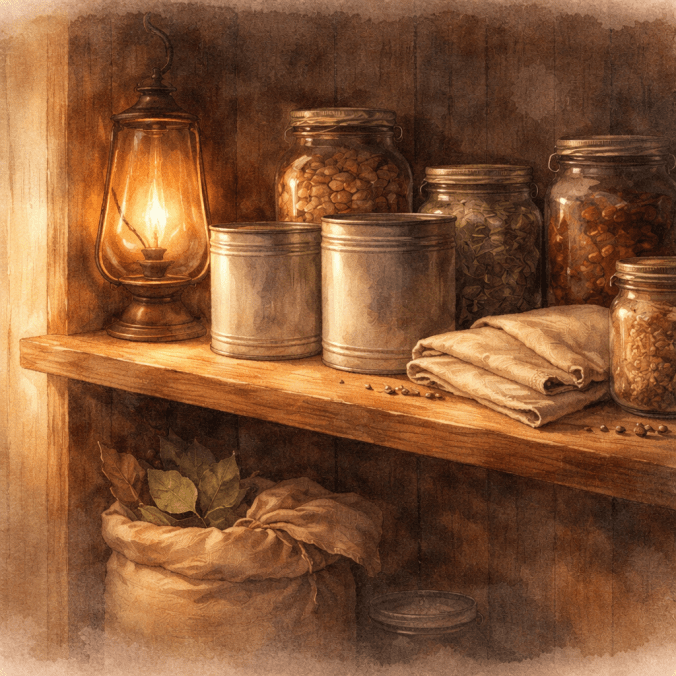
There are certain things that sit so plainly on a shelf, one might pass them by without a second thought.

A small tin, for instance.

Nothing remarkable in its appearance — no flourish, no fuss — merely a label, a lid, and the promise of something warm inside.

And yet, now and again, a closer look reveals that even the simplest things carry a story worth telling.


In the closing years of the last century, a company began offering what was then considered a rather fine and hearty dish — Beefsteak Tomato Soup.

By all accounts, it was a very good soup. Filling, flavourful, and welcome on the table.

But like most foods of that time, it came with its share of inconveniences — its weight, for one, made the cost of transport high, along with the need to prepare it fully before it ever reached the home.

Then, in 1897, someone had a different sort of idea.

Not louder. Not grander.

Just . . . . better, in a practical way.

A chemist by the name of Dr. John T. Dorrance developed a method of condensing soup — removing much of the water content before it was sealed in its tin.

What this meant, in practical terms, was rather remarkable:

Smaller tins
Lower cost to ship
Longer keeping

And the ability for families to prepare a warm meal simply by adding water or milk at home.

It was not merely a new product — it was an all together new way of thinking about food on the household table.


A smaller tin meant less cost, so more could be carried.
A lower price meant more could afford it.
A simpler preparation meant less time at the stove after a work-filled day, and more time at the table.

And before long, what was once a new and occasional thing became part of everyday life.


By these early years of the new century — including our own Gazette year of 1904 — such tins were beginning to appear more regularly on the shelves of mercantiles and general stores, often for around ten cents apiece.

A modest price at the time.

But one that placed a warm, dependable meal within easy reach.


There is something worth noticing in that.

Not every improvement arrives with great fanfare.

Some come quietly — set down on a wooden shelf, waiting to be tried.

And once tried, they have a way of staying.


You may notice something familiar on the shelves in this week’s “Hearth & Holler Gazette.”

And should you do so, you will now know a little more of the story behind it.

‘Til next time then, and hoping to see you on Saturday . . . .

— Jim  (and Red!)

P.S. from Little Red Bear —After a long day roaming the hills up and down in search of honey, a warm supper that asks only for water, a pot, and a little good sense sounds to me like one of mankind’s better ideas.

Pen-and-ink illustrations created with the assistance of AI and lovingly styled for Little Red Bear Land.

Front Porch Notes — Just Something I Set Down

Just Something I Set Down

Winter has a way of narrowing the world.

The view out the window grows smaller. Daylight slips away early, like it has someplace else to be. Air sharpens, carrying that clean, honest cold that wakes you up if you let it.

I noticed that this week while sitting in my rocking chair by the bedroom window, tea cooling nearby because I had forgotten to drink it, as usual. The predicted snow had come in overnight — the kind that smooths everything over and makes the world look newly ironed. No tracks yet. No hurry. Just quiet.

A flash of red landed briefly in the bare branches across the way — a cardinal, bright as a dropped mitten against the snow. He stayed just long enough to make his point, then moved on.

A flicker of motion caught my eye.

A red-headed woodpecker worked his way up and down the branches of the honey locust outside my window, tapping, pausing, tapping again, as if checking a long list of winter responsibilities. His bright head flashed against the pale morning, all business and purpose.

Below him, the mourning doves were already at work.

They are always there — steady, unassuming, moving along the ground beneath the feeders just as they always do. While other birds dart and flutter, the doves walk rather than hop, heads bobbing gently, as if keeping time to a tune only they can hear.

Near the base of the feeder, the chipmunk made a brief appearance — a quick inspection, a pause, and then gone again, carrying on as if winter were merely an inconvenience.

The feeder itself soon filled — sparrows first, then juncos in their tidy grey coats, and finally the chickadees, darting in and out as if late for an appointment. It swayed slightly with their comings and goings, a small sign of life in an otherwise still morning.

Later, it was time to bundle up and take my little chihuahua outside. She approached the snow with caution, as if it might suddenly do something unexpected, then set about her business with dignity intact. I lingered longer than necessary after we finished, breathing in the winter air. I have always loved this season — the way it clears things out, the way it feels honest and bracing, the way it asks you to be present and alive.

But winter asks a lot of us. Patience, for one. A willingness to slow down whether we want to or not. Sometimes it asks us to stay put, to wait things out, to trust that what looks dormant is not finished — only resting.

And in return, winter offers these quiet gifts — a cardinal passing through, a determined woodpecker at work, the steady presence of mourning doves beneath the feeder, the clean breath of cold air that fills your lungs and reminds you that you are still very much here.

The world, it seems, has not stopped. It has simply lowered its voice.

Somewhere nearby, a bird called out — sharp and clear — and for a moment it felt like an answer, though I had not asked a question.

Winter will pass. It always does. But while it is here, it offers this small, steady reassurance — life continues, quietly and faithfully, right outside the window.

Sometimes, that is more than enough.

We need only look.

— Jim  (and Red!)


While the Year Is Still New

Easing out of December and taking the new year one unhurried day at a time

While the year is still new, there is a softness to the days that does not last long. The holidays have packed themselves away, and the calendar has turned without yet asking much of us. Mornings arrive more gently. Even the house seems to move at a slower pace, as though it, too, is willing to linger a moment before the year begins in earnest.

Porches are swept clean. Decorations are carefully taken down and set aside. The lights that remain are fewer, but somehow warmer for it. Routines return slowly — politely — without knocking too loudly. Most of the calendar is still blank, and there is comfort in that. Room to move. Room to breathe.

By the time January reaches its first full week, the talk of New Year’s resolutions has begun to hum a little louder. Lists are made. Promises are weighed. Some folks feel the pull to hurry — to decide everything at once, or to prove something before the year has truly had time to arrive.

But there is no bell to beat here.

Continue reading

You’re Welcome Here

Some Sundays end the way they should.

A good meal. Plates pushed back. Folks sitting around a little longer than planned. Nobody watching the clock. The talk wandering from one thing to the next, easy and unimportant in the best way. Somebody pours another cup of coffee or tea. Slices of pumpkin and pecan pies are served. Or maybe a slice of cake. Or two. And no one says much about it.

Those moments matter more than we sometimes realize at the time.

Continue reading