A Handful of Seed, a Dish of Water, a Safe Place to Rest — and Why Small Actions At Home Matter
February can feel long.
Not dramatic. Not tragic. Just . . . . long.
The trees are bare. The color has drained from the fields. The air moves a little slower.
And yet — there is motion.
A flutter in the honey locust.
A finch on the ledge.
A woodpecker arriving like he owns the place.
February is National Bird Feeding Month.
And it is not only about enjoying the view.
It is about helping birds make it through winter — and preparing the ones who are about to arrive after journeys that stretch farther than we can easily imagine.
Why February Matters
Some of the birds at the feeder have been here all winter.
They have endured snow, ice, and weeks of scarce food. Their natural food sources — seeds, berries, insects — are limited now. What they find at a feeder can make the difference between merely surviving and entering spring strong enough for nesting and raising young.
Others will soon begin arriving from long migrations — marathon flights fueled by stored fat and sheer instinct. When they land, they will need to replenish quickly. Breeding season demands energy.
But here’s the part that makes this more than just a “nice thing to do” . . . .
Scientists estimate that North America has lost nearly 3 billion birds — roughly one out of every four — since 1970. That isn’t just rare species or birds you don’t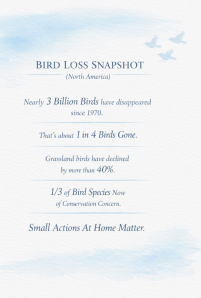 often see. It’s a continent-wide drop affecting many common backyard visitors too.
In some habitats — like grasslands and arid lands — losses have been even steeper, with total populations falling by more than 40 percent over the same period.
Add to that — 1/3 of bird species now of conservation concern.
That’s a staggering shift in a living, breathing part of our world.
And yet — they still come when the feeder is filled.
When we put out a feeder, a dish of water, or a safe patch of shelter, we aren’t just making a pretty picture — we’re helping counteract that decline, one bird at a time.
So, February matters. What we offer matters. Small actions at home matter.
1. Offer High-Energy Food
Winter is not the time for filler.
Birds need fat and fuel — the kind that helps them stay warm in extreme cold and rebuild strength for spring.
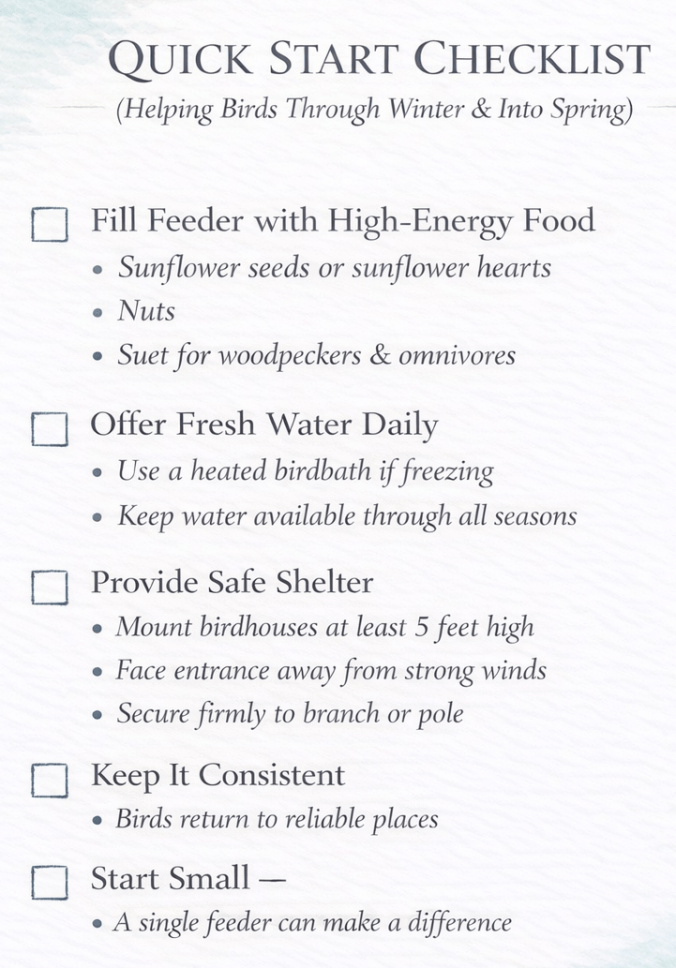
High-energy foods include:
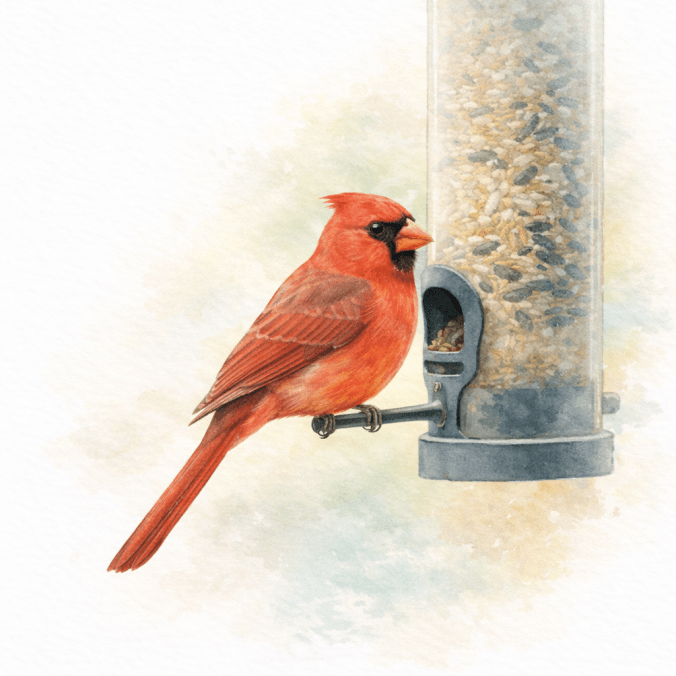
- Sunflower seeds (especially black oil sunflower)
- Shell-free sunflower hearts
- Nuts
- Suet
Shell-free options are especially helpful in winter. Birds do not have to spend precious energy cracking shells — they can perch, eat, and return quickly to conserving warmth.
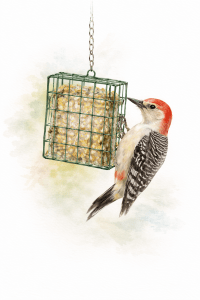
Suet is another cold-weather staple, especially for omnivorous birds like woodpeckers. Made from rich fats and often blended with seeds and grains, suet provides concentrated energy in a small amount of time.
A simple feeder stocked well can become a dependable station — a place birds learn to trust.
2. Offer Water — Even in Winter
Food is only part of the story.
Fresh water can be surprisingly difficult to find when natural sources freeze. Birds need hydration year-round, even in cold weather.
A simple birdbath — especially one with a small heater to prevent freezing — can make a significant difference. It does not have to be elaborate. It only needs to be consistent.
And once you begin offering water, keep it going through spring, summer, and autumn. Birds quickly learn reliable sources — and they return.
3. Offer Safety
Wild birds live outdoors year-round, but shelter matters.
A birdhouse or nesting box placed thoughtfully can provide a safe place during storms and high winds.
A few practical considerations:
- Mount at least 5 feet off the ground.
- Secure firmly — either to a sturdy branch or a well-set pole.
- Face the entrance away from prevailing winds.
- Choose a sheltered location when possible.
In late winter and early spring, birds begin scouting for nesting locations. Offering shelter now means you may see families later.
A Small Act That Carries Forward
Feeding birds will not reverse decades of decline overnight.
But it does something real.
It strengthens the ones who stayed.
It restores the ones who return.
It prepares the air for new songs.
Nearly three billion birds may be gone.
And yet — they still come when the feeder is filled.
A handful of seed.
A shallow dish of water.
A safe place to rest.
That is not everything.
But it is something.
And something, done faithfully, matters.
And in the process, it changes the feeling outside your window.
You may find that you were not only helping birds survive winter.
You were welcoming spring a little earlier than expected.
The third-floor honey locust branches here do not look empty anymore. They look expectant.
Life is gathering itself again.
Feeding birds will not solve every problem they face.
But it will help the ones in your yard today.
Small Actions At Home Matter.
And sometimes, that is where lasting change begins.
‘Til next time then . . . .
— Jim (and Red!)
P.S. from Little Red Bear — Winter is not empty — it is simply quieter, so you can notice who still shows up.

Pen-and-ink illustrations created with the assistance of AI and lovingly styled for Little Red Bear Land.


 James Milson - The Writing Pages