A Weekly Visit of Tales, Tidings, and Old-Time Country Comfort
Welcome!
It’s been a full and lively week in Honey Hill Country.
From the rabbits’ tooting sound of joyful Carrozelas across the hills to the gathering of neighbors along the roadside, the past several days have brought a great deal of movement, merriment, and shared moments worth noting. As the season’s celebrations draw to a close, there is both much to remember and, perhaps, a little quiet beginning to return.
As always, The Hearth & Holler Gazette is a work of fiction set in a place that exists most clearly in the imagination — though from time to time it may resemble somewhere you have known. But for first time visitors, it may help to know where — and when — we are, and what I am talking about
The Hearth & Holler Gazette hails from Honey Hill Country, a small, rural corner of the Missouri Ozarks, as it might have been known in the year 1904 — a time of front porches and wagon roads, oil lamps and handwritten letters, when news traveled at a human pace, and a Saturday paper was meant to be read slowly, with coffee close at hand. This is not a paper of breaking news or loud headlines. It prefers instead to notice it — the small, human-sized moments that once filled a morning without asking much in return.
The Hearth & Holler Gazette is a work of fiction — a made-up paper from a made-up place, written in the spirit of an earlier time. Any resemblance to real towns, people, or events is entirely coincidental, though we do our best to make it feel otherwise.
This must be understood at the beginning — the towns, fields, and citizens described here exist only within these pages. With that firmly in mind, the small and ordinary wonders of the week may unfold as they will. That is the way of things here. That is all we need to know, and that ought to be enough.
So, with that said — Please come on in. Your paper awaits . . . . . .

And would you prefer Coffee or Tea with your newspaper?
THE HEARTH & HOLLER GAZETTE
Sharing Stories and Smiles from Little Red Bear’s World
— A Weekly Visit of Tales, Tidings, and Old-Time Country Comfort —
Serving Honey Hill, Hopper’s Holler, and Beyond | Est. 1904
Saturday Morning Edition
March 28, 1904
Honey Hill Country • Cricket Hollow County
Vol. I — No. 10
Price: Five Cents (If You Have It) • Free to Read (If You Do Not)
Published Weekly on Saturday Mornings
From the Front Porches, Back Rooms, Kitchens, Workshops, Hillsides, and Quiet Corners of Honey Hill Country
MARCH MADNESS DAYS COME TO A JOYFUL CLOSE
Local News from Around the Holler
Filed by Percival “Percy” Puddlesniff, News-Hound
With Field Notes from Rusty the Fairydiddle, Roving Reporter
GRANDE PARADE & CLOSING CEREMONIES BRING MARCH MADNESS DAYS TO A TRIUMPHANT CLOSE
Music, Motion, and a Street Full of Celebration Mark the Season’s Final Day
It began with a sound — bright, unmistakable, and carried clean across the morning air.
Then another joined it.
And another.
Until the whole of Butterfield seemed to awaken at once, not to a single note, but to a gathering of them, as the Grande Parade of March Madness Days made its way into full procession.
A Street Set in Motion
From the very first turn onto the main thoroughfare, it was clear that this would not be a modest conclusion.
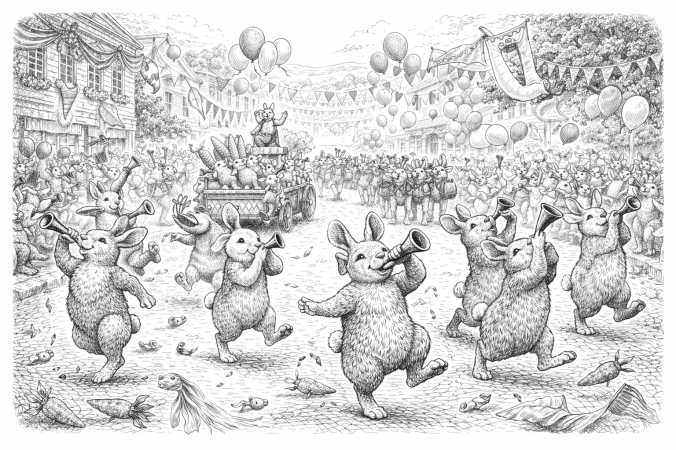
Rabbits filled the street in number and in spirit — dressed in their finest, moving forward with a kind of cheerful determination that did not always concern itself with strict alignment.
Many danced.
Some attempted to.
Others moved in ways that could only be described as enthusiastic.
Carrozelas were raised and sounded freely, their bright tones weaving in and out of one another until the street itself seemed to carry the music forward.
Wagons, Floats, and Banners
Behind them came a procession of decorated wagons and floats, each more inventive than the last.
There were wagons trimmed with early spring greens and trailing ribbons, floats carrying children who waved with both hands, and hand-painted signs that shifted gently as they passed.
Carrot banners — bright, bold, and numerous — lifted and dipped in the breeze, marking the day as unmistakably belonging to the rabbits.
One float, featuring a careful arrangement of carved carrots rising in tiers, drew both admiration and laughter in equal measure as it passed.
The Band Holds Its Course
At the center of it all, the Honey Hill Brass Band carried the procession forward with steady purpose.
Cornets rang clear.
Drums held time.
And though the Carrozelas made their presence known — sometimes in agreement, sometimes otherwise — the band did not yield its rhythm.
More than once, the two sounds met in such a way that no one present could have said where one ended and the other began.
No one appeared to mind.
A Crowd That Stayed
Along the roadside, families gathered in full.
Hats were lifted.
Hands were raised.
Voices called out names both expected and surprising.
There was laughter, and there was music, and there was that rare and welcome feeling that nothing more was required of the moment than to stand and take it in.
A Performance to Close the Day
As the final wagons passed and the procession slowed, attention turned toward a small platform set just beyond the square.
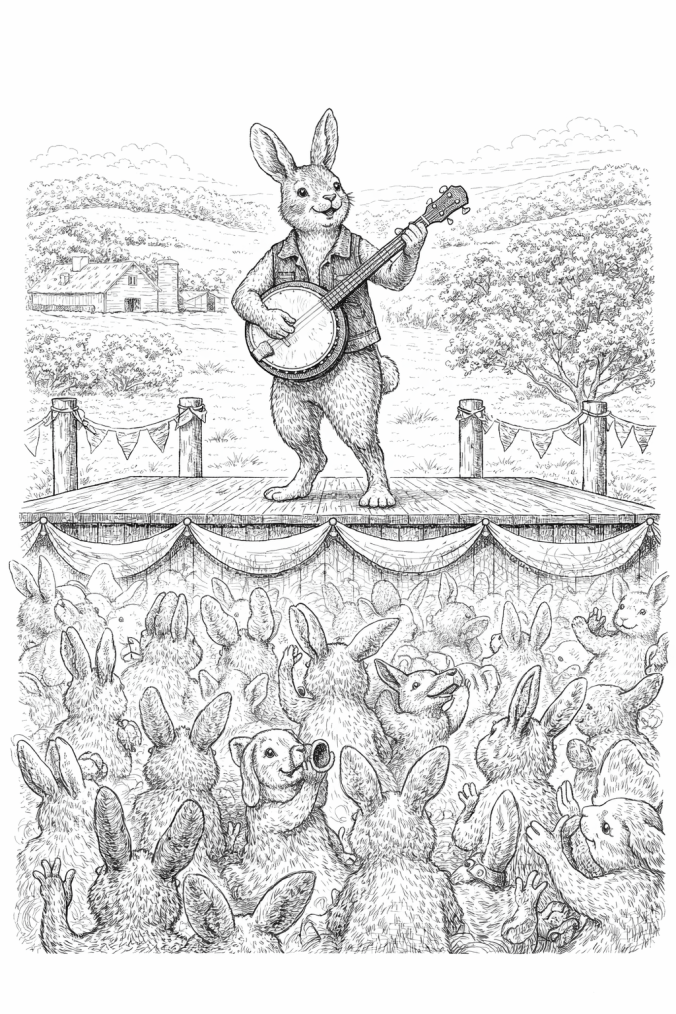
There, with vest set and banjo in hand, Banjo the Bluegrass Bunny stepped forward.
He began without announcement.
The first tune brought a settling over the crowd.
The second drew them closer.
By the third, there were those who had begun to hum along.
And when the fourth had finished, the call for more came not as a request, but as an expectation.
Banjo obliged.
Once.
Then again.
And again.
By the time he had concluded his fourth encore, it was widely understood that the day had found its proper ending.
A Word from the Presiding Rabbit
As the music gave way and the crowd held a moment longer than necessary, Bartholomew “Barty” Burrows, Presiding Rabbit in Chief for Seasonal Affairs, Celebrations, and Shenanigans, stepped forward to offer his closing remarks.
He stood for a moment, looking out over the gathered crowd, now quieter but no less full.
Then, in his usual steady manner, he spoke:
“The March Madness Days were blessed with beautiful, dry weather throughout, which we do not take for granted.”
“Every event was well attended, well intended, and, in most cases, well concluded.”
A small pause followed, as if to allow for the truth of it.
“We are pleased to say that everyone appears to have had a fantastic time.”
He looked once more across the square, now beginning to ease back toward its ordinary shape.
“And we believe that is reason enough.”
A Season Comes to Rest
As the crowd dispersed and the final sounds gave way to something quieter, Butterfield returned, little by little, to itself.
The banners were lowered.
The wagons turned for home.
And the Carrozelas, though not entirely absent, sounded less frequently.
It had been a lively season.
A full one.
And, by all accounts, a good one.
As one gentleman was heard to remark, watching the last of the day settle:
“Well now . . . . I don’t believe they could have done it any bigger.”
“Or any better.”

RUSTY ON THE RUN — THE GREAT OBSTACLE COURSE RACE
By Rusty the Fairydiddle

I did not intend to run the whole course.
That was not the plan.
The plan was to observe — to report — to stand in a sensible place and describe what happened as it happened.
That plan held for approximately six seconds.
And They’re Off
The line had barely settled when the signal came, and the field of runners surged forward in a way that made standing still feel like a poor decision.
So I didn’t.
I took off along the side of the course, keeping pace as best I could, notebook forgotten somewhere behind me and no longer of any use.
At the front, as expected, was Thaddeus Swiftfoot of Round Corners — long stride, clean form, and moving with the kind of confidence that suggests a rabbit already knows how this is going to end.
The Mud Pit
The first real test came early.
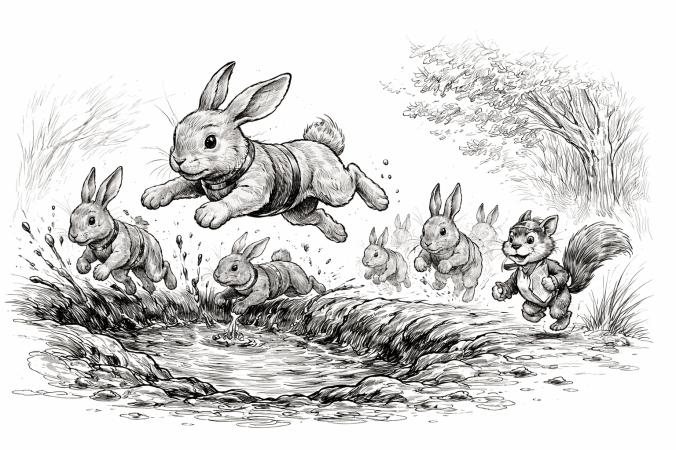
A stretch of ground worked loose by the week’s earlier rains, now settled into a broad and waiting mud pit.
Swiftfoot took it clean.
One bound, two, and through.
Behind him, the field fared less evenly.
One runner misjudged the edge and sank just enough to lose rhythm.
Another attempted speed and paid for it in footing.
I went around.
That seemed wise.
“Bonk the Weasel”
No sooner had the runners regained their line than the next challenge presented itself.
A small, sudden appearance — the weasel cut-out, rising just enough to require attention.
Each competitor was required to deliver a clean and decisive bonk with the provided carrot before continuing.
Swiftfoot did not hesitate.
A quick, practiced strike — clean contact — and he was on.
Others required a moment.
One required two.
The weasel, for its part, remained untroubled.
Over, Through, and Onward
From there, the course unfolded in rapid succession:
- a hedge line, taken low and fast
- a fence, cleared cleanly by the leaders and less so by those behind
- a long jump stretch, where distance began to matter
- and a creek crossing that rewarded judgment over enthusiasm
Swiftfoot held his lead.
Not by a great margin — but enough.
And always with that same steady, forward purpose.
The Final Hill
It was near the end, at the rise just before the final descent, that things changed.
The hill itself was not remarkable.
The ground, however, was.
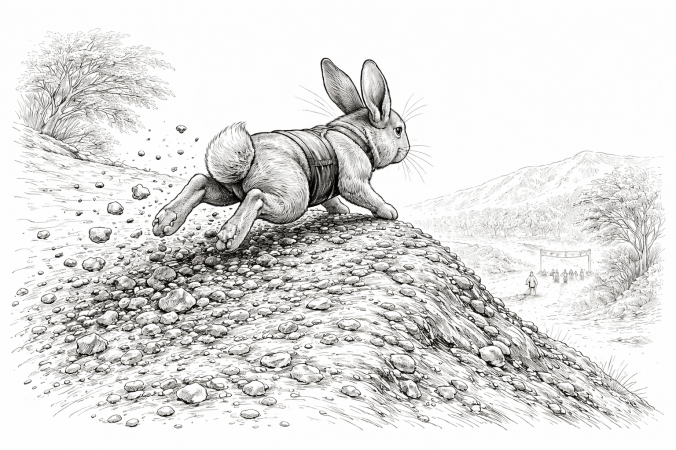
Loose gravel, scattered across the incline in a way that did not announce itself until it was too late to reconsider.
Swiftfoot took the rise strong.
Halfway up, his footing slipped.
Not fully — not a fall — but enough.
His back legs lost their hold, and for a brief but costly moment, they churned against the slope, sending a scatter of gravel behind him as he worked to regain purchase.
It was not a collapse.
But it was time.
A New Line Forward
Behind him, closing fast, was Lydia Bramblehop of Upper Creek Mill.
Where Swiftfoot had pushed, Bramblehop measured.
Where he had driven forward, she had held just enough in reserve.
She took the hill clean.
No slip.
No hesitation.
And at the crest, she did not look back.
The Finish
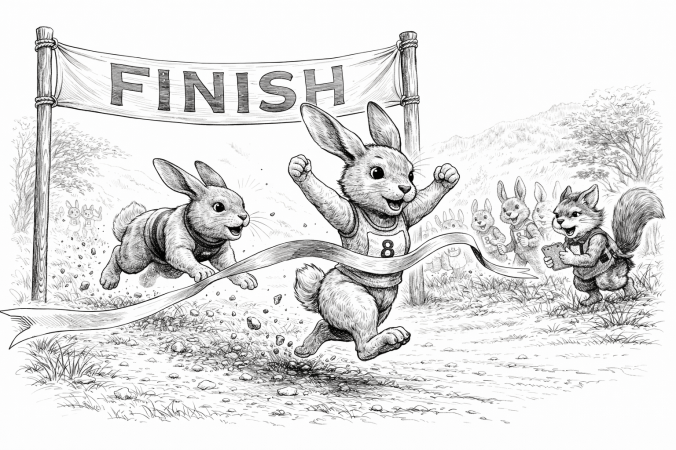
From there, it was a race.
Swiftfoot recovered quickly — impressively so — and came down the far side with determination and full effort.
But the distance, once lost, does not easily return.
Bramblehop crossed first.
Clean.
Controlled.
Certain.
Swiftfoot followed just behind, strong to the line and without surrender in the final stride.
What Comes After
There was a moment, just beyond the finish, where the two stood together.
Breathing.
Still.
And then, without delay, Swiftfoot stepped forward and offered his congratulations.
It was given plainly.
And received the same way.
A Race Worth Running
I slowed to a stop somewhere past the line, remembering at last that I had not meant to run at all.
But having done so, I can say this:
There are races where speed decides the outcome.
And there are races where something else — steadiness, perhaps, or timing — finds its way in.
This was the second kind.
And it was worth seeing up close.
Lydia Bramblehop crossed the line not with surprise, but with the quiet certainty of someone who had run exactly the race she intended.
— Rusty the Fairydiddle

EGGER EVENTS BRING COLOR, CREATIVITY, AND A MEASURE OF COMPETITIVE ROLLING
EGGER EVENTS BRING COLOR, CREATIVITY, AND A MEASURE OF COMPETITIVE ROLLING
ot all contests of the past week were decided by speed, distance, or the ability to clear a fence under pressure.
Some required a steadier hand.
Others, a patient eye.
And a few depended entirely upon whether an egg, once set in motion, could be persuaded to continue along the intended path.
A Table Full of Color
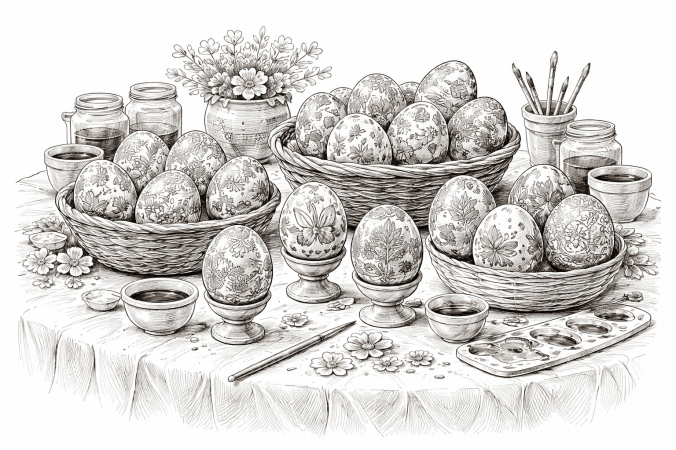
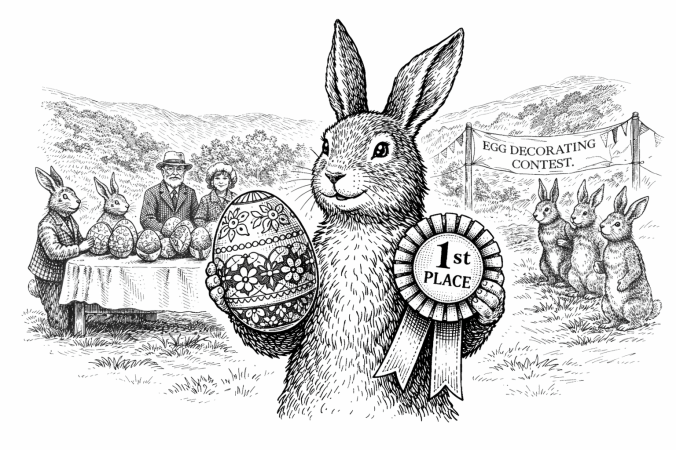
The Egg Dyeing Competition, held early in the week, drew a wide and varied field of entries, each more inventive than the last.
Tables were set with care, and by the time judging began, they held:
- eggs of soft and even tone
- eggs marked with delicate patterns
- and a number that appeared to have taken on designs not easily explained
One entry, featuring a careful layering of colors that shifted with the light, was observed more than once before a decision was made.
Another, simple in appearance but flawless in execution, drew quiet approval from those passing by.
As one judge was heard to remark:
“There is a difference between doing a great deal… and doing something just right.”
The Egger Roll
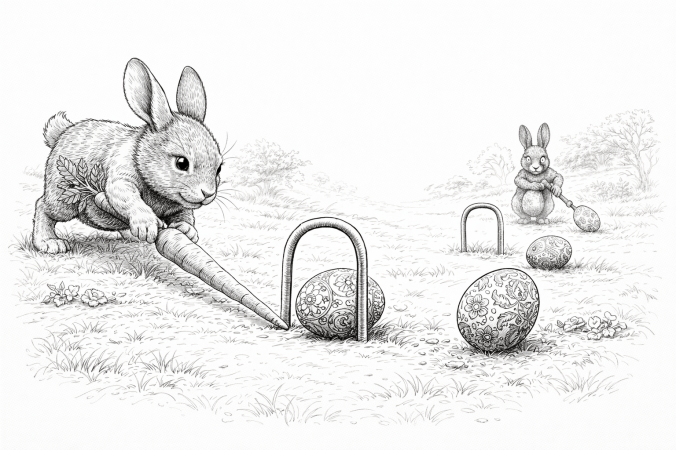
Later in the week came the Egger Roll, an event that proved, in practice, to be less about rolling and more about persuasion.
Participants were tasked with guiding their eggs along a course marked by a series of croquet hoops, set at intervals across a gently sloping lawn.
The object was simple:
👉 move the egg forward
👉 pass cleanly through each hoop
👉 and arrive intact at the finish
The execution was less so.
Some approached with care and patience, advancing their eggs in small, deliberate motions.
Others attempted speed, with results that varied considerably.
At least one egg, having been struck with confidence, departed the intended course entirely and was last observed continuing with independence toward a nearby hedge.
Order, or Something Like It
There were moments throughout the event that suggested a certain resemblance to organized play.
There were also moments that did not.
A course official was seen to reposition a hoop that had been “adjusted” during competition.
Another was observed retrieving an egg from beneath a bench, returning it with the comment:
“It appears to have taken a turn.”
A Quiet Success
Though less noisy than other events of the week, the Egger competitions carried their own kind of satisfaction.
They asked for:
- attention
- patience
- and a willingness to accept that not everything moves as intended
And in that, they provided a welcome contrast to the more energetic contests that surrounded them.
A Season in Full
Taken together with the races, the exhibitions, and the final parade, the Egger Events offered something quieter — but no less appreciated.
A chance to pause.
To look closely.
And, for a moment, to consider that even in a week of motion and noise, there is still room for careful work done well.

SCHOOLHOUSE DECLARED UNSAFE — FULL REPLACEMENT REQUIRED; EMERGENCY MEETING CALLED
Classes Suspended as Structural Findings Raise Immediate Concern for Student Safety
What had been, until recently, a matter of repair has now been determined to be  something else entirely.
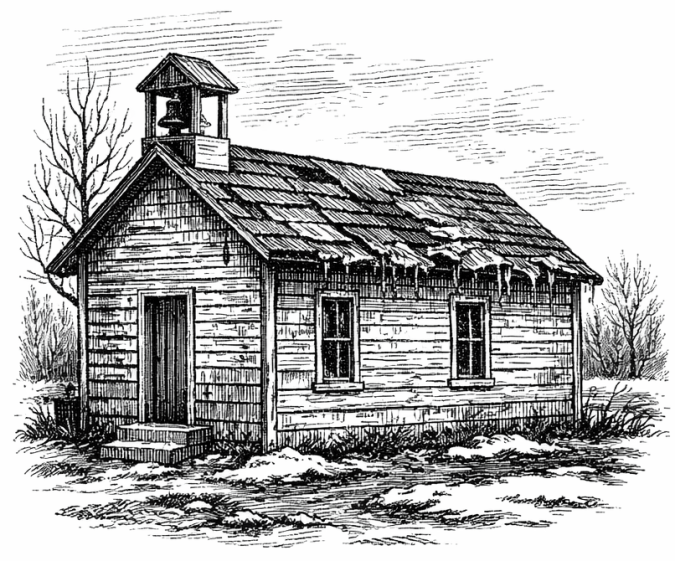
Following a detailed inspection conducted earlier this week, the Honey Hill Schoolhouse has been formally declared unsafe for continued use, with structural findings indicating that the building’s condition has progressed beyond practical repair.
From Repair to Replacement
Initial concerns regarding a leaking roof have, over time, revealed more extensive issues within the structure itself.
Specialists brought in to assess the condition of the building have concluded:
- the roof system is compromised beyond repair
- supporting structures show signs of instability
- continued use presents an unacceptable risk under normal conditions
Of particular concern are:
- heavy spring rains
- high winds
- and even the vibration caused by freight trains passing behind the property
Any of which, it was stated, could result in sudden failure.
Immediate Closure
As a result of these findings, the schoolhouse has been closed effective immediately.
All classes have been suspended until alternative arrangements can be determined.
Parents and guardians are advised that no instruction will take place within the building under any circumstances until further notice.
A Community Decision Ahead
In response to the urgency of the situation, an Emergency Meeting has been scheduled to determine next steps.
Location: Whispering Pines Meeting House
Date: Thursday Evening (next week)
Time: 7:00 PM
Those expected to attend include:
- representatives of the school board
- the principal and teaching staff
- town officials
- planning and zoning members
- and those responsible for funding and construction considerations
The meeting will address:
- plans for a new schoolhouse
- immediate relocation of classes
- timelines and materials
- and the financial requirements necessary to proceed
Public Invitation
All members of the community are invited to attend.
Given the scope of the matter and its impact on families, it is expected that attendance will be strong.


EDITOR’S DESK
— Clara Thimblewick, Editor
The matter of the schoolhouse, as reported in this issue, is one that calls for clear attention and steady judgment.
It is not uncommon, in the course of any community, for smaller concerns to reveal themselves over time to be of greater consequence than first understood.
Such appears to be the case here.
It is my expectation that the meeting scheduled for next Thursday evening will be conducted with the seriousness and cooperation the situation requires.
The Gazette will report further developments as they are known.
In the meantime, I would remind our readers that a community is often best measured not in moments of ease, but in how it meets its necessities.
— Miss Clara Thimblewick
Editor, The Hearth & Holler Gazette
Letters to the Editor
Our readers are invited to share their thoughts, observations, and neighbourly remarks. Letters may be shortened for space, but never for spirit.
To the Editor,
A Welcome Bit of Noise
To the Editor,
I have heard it said more than once this past week that things have been “a bit much.”
And perhaps they have.
But I will say this — after the long quiet of winter, I found it a comfort to hear a little life again, even if it came in the form of horns at hours I might not have chosen myself.
There is a difference between noise and liveliness.
I believe we have had the latter.
Respectfully,
Edwin P. Cartwright
Butterfield
A Matter of Adjustment
To the Editor,
It took me some days to grow accustomed to the general level of enthusiasm that  accompanied this month’s celebrations.
At first, I resisted it.
Then I endured it.
And finally, I found that I had begun to expect it.
This morning was notably quieter.
I am not yet certain whether I approve.
Yours,
Martha Ellery Pike
Lower Hollow Road
Well Enough for Once
To the Editor,
I cannot say I would wish for such a month every month.
But I can say that once was well enough, and perhaps even better than that.
It is not often that a place finds reason to be so thoroughly occupied with its own enjoyment.
That seems worth noting.
Sincerely,
Thomas B. Wren
Near Cedar Ridge
On the Subject of Carrozelas
To the Editor,
I have taken the liberty of placing mine in the top drawer of the sideboard, where it will remain until such time as it is again required.
I mention this only in the event that others may be wondering what is to be done with them now.
It seemed a reasonable solution.
Respectfully,
Harold P. Dimmick
Lower Switch Road
The Gazette prints letters of interest to the community and does not inquire overly into the private identities of correspondents.– The Editor

EDITORIAL CARTOONS — by C. “Clary” Moss
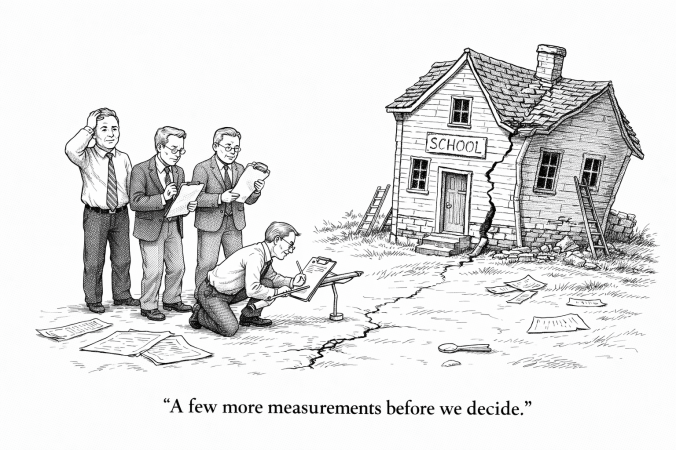
Each week, Mr. Moss offers a pen-and-ink observation of life in Honey Hill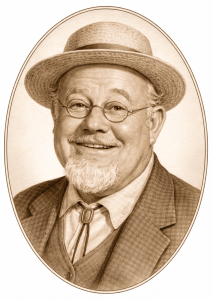 Country. This week’s illustration accompanies the ongoing discussion regarding the Butterfield Schoolhouse roof.
Mr. Moss brings a practiced eye for the small ironies of civic life and a steady hand in their illustration. His drawings will appear regularly, offering visual commentary on matters of local interest — with due regard for both humor and fairness.
We trust our readers will receive his work in the spirit in which it is offered.

FROM AROUND OUR WAY
By Lillian Harper
Word Drifts In from the Exposition Grounds
It has been a lively few weeks here at home, and yet, in the midst of it all, word has begun to arrive of something taking shape not so very far from us.
Not all at once.
Not in any formal way.
But in the manner such things often do — carried back by those who have passed through, or paused long enough to take a look before returning.
A City Becoming Something More
Several travelers, having recently been to St. Louis, have spoken of a great deal of  activity along the western edge of the city, where the grounds for the coming Louisiana Purchase Exposition are said to be steadily filling with structures of remarkable size and number.
One gentleman described it as:
“A place where it appears a whole new city is being set down, piece by piece.”
Another remarked that the buildings, even unfinished, already suggest something far beyond the ordinary, rising in pale tones and broad lines that catch the light in a way not often seen.
Lights, Walkways, and Wonder
There has also been mention — repeated more than once — of preparations for lighting the grounds in the evening hours.
Not the usual lanterns or scattered lamps, but something more extensive.
 Something planned.
One visitor, returning just last week, said:
“If even half of what they intend comes to pass, it will be something to see after the sun goes down.”
There were also reports of wide walkways, long avenues, and spaces set aside for displays that, as yet, have not fully arrived.
But the expectation of them is already present.
A Growing Conversation
Here at home, the talk has begun to follow.
Not loudly.
Not all at once.
But in small pieces:
- at the store counter
- along the boardwalk
- between neighbors who have heard from someone who has seen something
There is, it seems, a shared understanding forming that whatever is being prepared will not be small.
Not Yet, But Soon Enough
For now, it remains something just beyond our immediate reach.
Not distant.
But not yet here.
There is still work being done.
Still pieces being put into place.
And perhaps that is part of what makes it so interesting to consider — the sense that something large is underway, even if we have not yet seen it for ourselves.
A Glimpse Ahead
It may be that, in the weeks to come, more will be known.
More will be said.
And more of our own may find reason to make the trip and return with clearer accounts.
Until then, it is enough, perhaps, to know that something is being built.
And that, before long, we may all have occasion to see it.
— L.H.

Crops & Markets Report
By Virgil Stone
The close of March finds the ground beginning to give a little more each day, though not yet enough to rush matters.
There is work to be done, but most of it still favors patience over haste.
It is a good time to begin, but not a time to rush.
There is work to be done, and there will be more of it soon enough.
Seasonal Field & Farm Notes
- Oats are being put in where the ground will take them
- Pastures are showing early signs of return, though uneven
- Frost remains a consideration in low areas
- Equipment is being brought back into readiness after winter use
Garden & Planting Updates
- Potatoes have gone in where tradition allows
- Peas, radishes, lettuce, and spinach are being set directly
- Onion rows are appearing in well-prepared ground
- Early transplants (cabbage, broccoli, cauliflower) are being set with care
Forage & Grass Work
- Orchardgrass and tall fescue are being sown where needed
- Smooth bromegrass continues to be worked into open ground
- Red clover and alfalfa seeding is underway in suitable fields
Forward-Looking Guidance
- Soil temperature remains the deciding factor for larger plantings
- Corn and soybeans are expected to begin once conditions steady
- Drainage and field preparation now will determine success later
- Fences, tools, and sheds should be checked ahead of spring storms
Market Notes
- Corn — holding steady
- Wheat — unchanged
- Hay — consistent demand
- Eggs — improving slightly with longer days
- Butter — good quality where fresh churns are kept
There has been continued mention of building materials moving outward toward St. Louis, particularly:
- tin
- fasteners
- and milled lumber
Availability remains, though not always in the quantities or timing some would prefer.
Those planning repairs or construction would be wise to account for possible delay.
Market Prices (Approximate Ranges)
- Corn — 48¢ to 55¢ per bushel
- Wheat — 85¢ to $1.00 per bushel
- Oats — 30¢ to 38¢ per bushel
- Eggs — 14¢ to 18¢ per dozen
- Butter — 18¢ to 24¢ per pound
- Hay — $7.00 to $11.00 per ton
A Word for the Week
For now, it is enough to get started where you can, watch the ground, and let the season come the rest of the way on its own.
— Virgil Stone

Hillside Chronicles
By Silas Thorne
There are certain mornings when the sky feels close enough to notice.
Not large and distant, as it often does, but near — as though what passes through it might reasonably be observed, if one is willing to pause long enough to look.
It was on such a morning that a pair of Canada Geese passed overhead, traveling from north to south with steady purpose.
They did not hurry.
They did not drift.
They moved as though they had agreed, long before they came into view, exactly where they were going and how they meant to get there.
And all the while, they spoke.
Not loudly.
Not urgently.
But continuously — a low, conversational calling back and forth, each answering the other as they went.
Of Pairs That Travel Together
It is well known that Canada Geese keep to their pairs, often for life.
They travel together.
They return together.
And when one speaks, the other answers.
There is something in that — not grand, not dramatic — but steady.
A kind of agreement carried not in words, but in repetition.
One might wonder, hearing them pass overhead, what such conversation contains.
Perhaps it is no more than direction.
Perhaps it is reassurance.
Or perhaps it is simply the habit of having traveled together long enough that silence would feel out of place.
A Different Passage
Later that same day, the sky held a different kind of movement.
A Peregrine Falcon, swift and certain, cut across the open air with a speed that left  little room for doubt as to its purpose.
It passed overhead and settled briefly into a distant tree.
For a moment, there was stillness.
Then motion again.
A smaller bird, having either seen or sensed what had arrived, broke suddenly from its place and fled.
The falcon followed.
The element of surprise, it seemed, had been lost — and with it, perhaps, the advantage.
The two moved out of sight before any conclusion could be observed.
What We See, and What We Do Not
It is easy, in such moments, to find oneself choosing sides.
The smaller bird, quick and uncertain.
The falcon, precise and intent.
One escapes.
One pursues.
And though we understand — as we are often reminded — that such things are necessary, that balance is maintained in ways both seen and unseen, there remains a quiet preference in the heart.
We hope, perhaps, for the smaller one.
We listen for wings returning.
And when we do not hear them, we are left with only the knowledge that the sky has gone on about its business, as it always does.
The Morning Again
By the next morning, the sky had returned to its more usual distance.
But the memory of those two passages remained.
The geese, moving together, speaking as they went.
The falcon, moving alone, silent in its purpose.
Both belonging.
Both necessary.
And both, in their own way, reminding us that what passes overhead is rarely without meaning — even when we are left to supply it ourselves.
— Silas

Farm & Home — Notes From the Farm & Field
By Myrtle Mae Meadowbloom
It has been a lively stretch of days, that much is certain.
I have seen more carrots in the past week than I believe I have seen in all my years combined — and not always in ways I would have expected.
There were pies, of course.
And casseroles.
And a number of other preparations that required a moment’s consideration before deciding what to make of them.
Still, each was made with care, and that counts for more than novelty.
A Practical Solution Takes Hold
In the midst of all this, I was shown something that struck me as particularly useful.
Mrs. Talloway, finding her mornings arriving earlier than she preferred, set about addressing the matter in a simple and direct way.
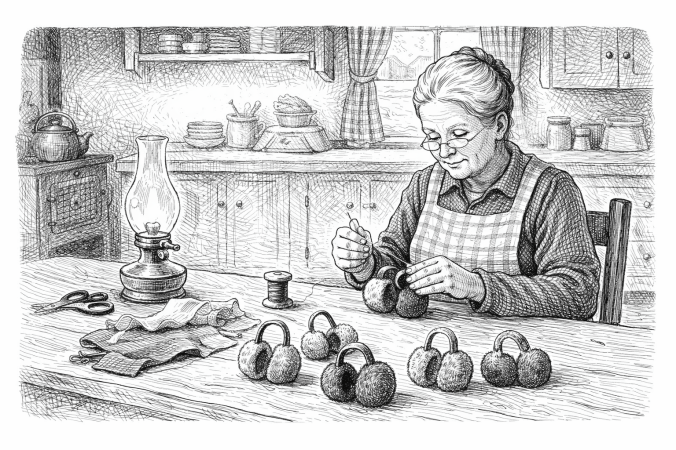
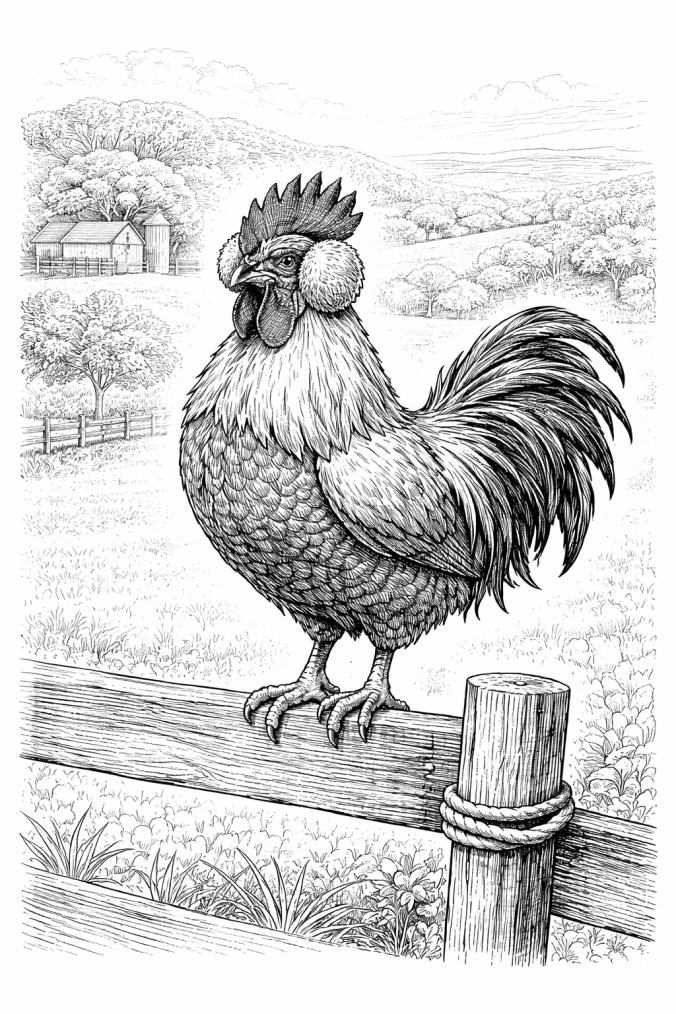
With needle, thread, and a bit of patience, she fashioned a small set of coverings for her rooster — fitted neatly and secured just enough to remain in place without causing distress.
The intention was not to silence the bird entirely, but to soften what it heard.
The result, by all accounts, was immediate.
The rooster, still attentive to his surroundings, appeared far less inclined to answer distant calls that no longer reached him with the same clarity.
From One Yard to the Next
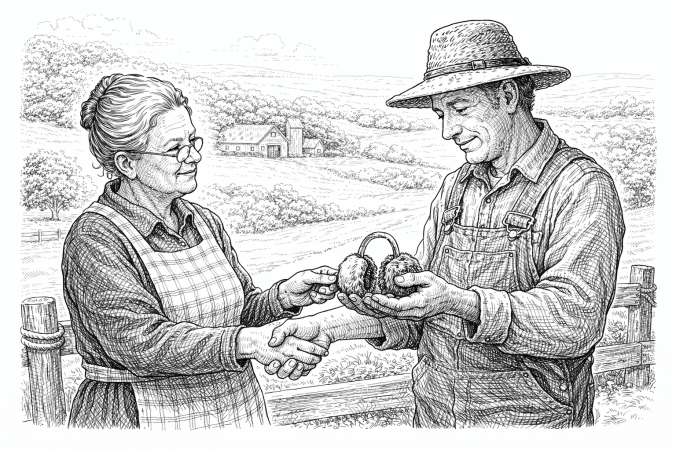
It did not take long for the idea to travel.
Neighbors took notice.
A pair was requested.
Then another.
Before the week was out, Mrs. Talloway’s table had become a place of steady work, with small sets of what are now being called “Rooster Muffs” laid out in careful rows.
There is nothing complicated about them.
And that, I suspect, is the reason they have proven so effective.
A Quieter Morning
I have since had occasion to observe the difference for myself.
Where there had been a great deal of answering from one ridge to another, there is now a more measured beginning to the day.
Not silent.
But quieter.
And, for many, that appears to be sufficient.
Putting Things Right Again
Now that the celebrations have drawn to a close, there is a different kind of work to be done.
Cloths folded.
Dishes returned.
Doilies set straight again where they have shifted just enough to be noticed.
Windows opened when the air allows.
And quiet, little by little, finding its way back.
A Closing Thought
A useful idea, once proven, seldom stays in one place for long.
And there is a certain comfort in that.
— Myrtle Mae

Fleet on the Field
By Fleetwood “Fleet” Hopperson
The Sock Hop Pairs Race — Coordination Strongly Advised
There are events that reward speed.
There are events that reward strength.
And then there are events that reward something else entirely — though what that is was not always agreed upon during the running of the Sock Hop Pairs Race.
A Familiar Idea, Adjusted
For those who have seen a three-legged race among the humans, the general arrangement will be understood.
Two participants.
Two legs tied together.
A shared effort forward.
This event followed a similar principle, though with a notable adjustment.
Instead of being tied, each pair of rabbits placed one leg apiece into a single, shared sock, drawn up and held in place as best they could manage.
The intention, as explained beforehand, was that this would allow for greater comfort and, perhaps, improved coordination.
This was, in practice, only partially the case.
At the Top of the Hill
The starting line was set at the crest of a gentle slope.
Pairs were arranged side by side, each making final adjustments to their shared footing.
Some spoke quietly to one another.
Some nodded.
One pair was observed attempting a short practice step, which resulted in a reconsideration of strategy.
At the signal, they were off.
Early Progress
For a brief and promising moment, several pairs achieved something resembling forward motion.
There were steps taken in agreement.
A rhythm established.
And even, in one or two cases, a suggestion that the event might proceed in an orderly fashion.
This did not last.
The Matter of the Hill
A downhill course introduces certain complications.
Gravity, while helpful in theory, does not always account for shared footing.
Pairs began to accelerate.
Some intentionally.
Others not.
A misstep by one became a difficulty for both.
And what had begun as a race soon took on a more varied appearance.
A General Entanglement
At approximately the midpoint, a number of pairs arrived at the same portion of  ground at nearly the same time.
What followed was not disorder, exactly.
But it was not easily described as order.
Several competitors came together in what might best be termed a collective pause, during which progress was temporarily suspended while arrangements were reconsidered.
There was no lasting harm.
Only a delay.
A Clear Run to the Finish
From this, a single pair emerged ahead of the rest.
Having maintained both footing and direction, they continued down the remaining stretch with a steadiness that had thus far been in short supply.
They crossed the finish line without incident, followed shortly thereafter by others, each with their own version of how they had arrived.
A Race Well Run
It would be inaccurate to say that every step was taken as intended.
But it would also be inaccurate to suggest that intention was ever the sole aim.
There was effort.
There was cooperation.
And, at times, there was a great deal of adjustment.
Which, in the end, may have been the point all along.
Final Note
As one observer was heard to remark while helping a pair regain their footing:
“It’s not the running… it’s the agreeing on how to run.”
— Fleet

Where Folks Gather in Good Company
By Felicity Grace Merriweather
A Most Orderly Sort of Hop
There are many ways to measure a thing.
Speed.
Distance.
Height.
These are the usual methods.
But this past week, I had occasion to witness a gathering where none of those seemed to matter quite so much as how something was done, rather than how quickly.
A Quieted Crowd
The Hoppalong Trials & Exhibition of Proper Rabbit Movement drew a most attentive audience.
What surprised me first was not the number of those gathered, but the manner in which they watched.
There was no calling out.
No interruption.
Only a respectful hush that settled over the field as each participant took their place.
It was, in its way, as quiet as any church social I have attended — though with rather more anticipation.
The Matter of Form
Each competitor stepped forward with care, performing a series of movements that, to an untrained eye, might have seemed simple.
They were not.
There were:
- measured hops
- controlled landings
- precise turns
- and a most particular attention paid to ear position, which I was told plays a significant role in proper execution
It became clear, even to those of us merely observing, that a great deal of practice had gone into what was being presented.
The Judges
The panel assembled for the occasion was a serious one.
There was:
- an elderly cottontail of considerable reputation
- a composed and thoughtful swamp rabbit
- two English hares, whose expressions suggested they had seen many such things before
- and several others whose attention never wavered
Each took notes.
Each conferred.
And when scores were posted, they were received with interest — and, in a few cases, quiet discussion among those who had formed their own opinions.
A Pair Worth Noting
Among the many fine performances, one pair in particular drew repeated notice.
Juniper Fleetfoot of Cedar Ridge Hollow and Thomas Bramblewick of Round Corners moved with a coordination that did not call attention to itself, but rather allowed the routine to unfold as though it had always been meant to.
There was no excess.
No hurry.
Only a steady and shared understanding of what was to come next.
It was, I thought, a most agreeable thing to watch.
The Value of Care
What stayed with me most was not any single score or placement, but the evident care taken by each participant.
In a week filled with noise, speed, and lively motion, this was something different.
Something quieter.
And perhaps, for that reason, something that held the attention all the more.
A Small Reminder
It is easy, in times of excitement, to think only of what is fast or large or easily noticed.
But there is also value in doing a thing properly.
In taking the time to get it right.
And in knowing that someone, somewhere, is paying close enough attention to see the difference.
A Merriweather Moment
There is a particular kind of satisfaction in watching something done with care.
It does not ask for applause.
But it earns it, all the same.
— F.G.M.

The High Brush Chronicles
Hickory Pinenut of High Brush Farm
Hickory Pinenut
On the Matter of a Dog Intended for Raccoons
It was reported earlier in the week that Mr. Hickory Pinenut, having grown increasingly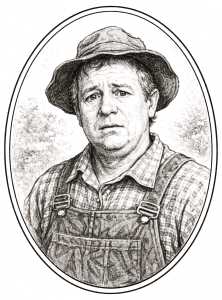 dissatisfied with the number of raccoons making free use of his property, took steps to address the matter in what appeared, at the time, to be a practical way.
While in town, Hickory is said to have purchased a coonhound of reputable appearance from a passing traveler, who assured him that the dog would “set things right” in short order.
The dog, by all accounts, accepted the position immediately.
Early Signs of Progress
For the first evening, there was every indication that matters had improved.
The dog was seen moving about the property with purpose.
There was barking.
There was movement along the fence line.
And there was, for a time, a noticeable absence of raccoons in their usual places.
Hickory was reported to have gone to bed satisfied.
A Change in Pattern
By the following evening, however, certain irregularities began to present themselves.
The dog could not be located at the usual hour.
There was, in place of barking, a sound described by one nearby observer as “something closer to conversation.”
Lights—of a sort—were reported deeper in the woods beyond the back fence.
The Discovery
Concerned for the dog’s whereabouts, Hickory set out to investigate.
 What he found, as later described, was not what had been anticipated.
In a small clearing just beyond the tree line, the dog was observed seated comfortably among what was estimated to be no fewer than thirty-six raccoons, gathered in a loose circle around a modest fire.
At the center of this arrangement was a cooking pan of some kind, in which crayfish were being prepared.
There was, by all accounts, a great deal of cackling and general good cheer.
The dog, it should be noted, appeared fully at ease.
A Matter Under Review
As of this writing, it is not clear whether the dog misunderstood its purpose or simply chose to pursue a different approach.
The raccoons, for their part, have not returned to their usual visits behind the barn.
Their attention, it seems, has been drawn elsewhere.
Hickory’s Position
When asked for comment, Hickory was said to have stood a moment, hat in hand, looking out toward the woods before replying:
“Well now… I set out to get ’em gone, and I reckon they’re gone.”
He was then observed to consider the matter a moment longer before adding:
“Might not be the way I’d have done it… but I can’t say it ain’t worked.”
A Continuing Situation
The dog has since been seen returning at daybreak, appearing rested and in good spirits.
The raccoons have not.
The Gazette will continue to follow developments as they occur.

Community Notices & Small Tidings
Items of interest from Honey Hill Country and nearby hollers. Notices are printed as received and offered in good faith.
Good Friday Fish Fry
Pleasant Grove Community & Fellowship Church will hold its final fish fry of the season on Friday evening, April 3rd, beginning at 5:00 PM and continuing until all are served.
Fried fish, potatoes, slaw, and pie will be available. All are welcome.
Butterfield Cribbage Club
The Butterfield Cribbage Club will meet on Tuesday evening at 6:30 PM at Ethel McNickle’s Pickles & Pork Rinds.
New players are welcome. Experienced players are expected.
The Scribbling Women Society
The Scribbling Women Society will gather at the Round Corners Library on Thursday afternoon at 2:00 PM.
Members are invited to bring their current writings, letters, or observations for shared reading and discussion.
Wet, Wild & Watercolor Exhibit
A display of local works titled “Wet, Wild & Watercolor” will continue through April 10th at the Whispering Pines Meeting House.
The exhibit features landscapes, riverside scenes, and seasonal studies by area artists.
Afternoon viewing hours are available daily.
Busy Bee Society — Spring Preparations
The Independent Order of the Busy Bee will hold a working gathering on Wednesday morning to prepare for spring planting assistance among neighboring farms.
Those with extra time and willing hands are encouraged to attend.
Wood Deliveries Delayed
Several residents have reported delays in lumber and tin deliveries, attributed to increased demand toward construction efforts in St. Louis.
Those planning repairs are advised to allow additional time for materials.
Rooster Muff Availability
A limited number of “Rooster Muffs” are still being prepared by Mrs. Talloway for those seeking a quieter morning.
Inquiries may be made directly at her residence after midday.
Rail Traffic Noted
Increased freight movement has been observed along the Iron Mountain Line this past week, particularly in evening hours.
Residents near the tracks may expect continued activity.
A Small Reminder
If you have a notice to share — a gathering, a need, a thank-you, or a simple word worth passing along — you may leave it with the Editor by letter or in person. Space is limited, but goodwill is not.
Classifieds
Notices are printed as submitted. Replies may be made discreetly, or not at all.
Instruction Offered
Miss Eleanor Whitcombe, accomplished pianist of Round Corners, now accepting a limited number of pupils for piano instruction.
Children preferred. Proper posture and practice expected.
Inquire at the residence of Mrs. Beatrice Whitcombe, Blue Willow Tea Room.
Teamsters Wanted
Cherry Valley & Iron Mountain Freight Company seeks reliable teamsters for regular hauling routes between Round Corners, Butterfield, and surrounding settlements.
Experience with horses and wagons required. Steady work.
Apply at the freight office near the rail depot.
Carriage Driver Sought
Mrs. Adelaide Whitcombe of Round Corners requires a capable driver for carriage transport to social calls, engagements, and town visits.
Applicants should be:
- well-presented
- punctual
- and of steady disposition
References requested.
Wanted — Older Farm Equipment
Buyer seeking used plows, harrows, hand tools, and other farm implements for repair and continued use.
No piece too worn to be considered.
Leave word at Round Corners Grain, Feed & Seed.
Help Wanted — Willow Creek Fish Camp
Willow Creek Fish Camp seeks a general hand for dockside and camp duties.
Work includes:
- assisting visitors
- maintaining boats and gear
- light kitchen and grounds work
Apply in person at the camp.
Positions Available — Willowbend Lavender Rows
Miss Lila Mayfield is seeking:
- Planting & Field Workers (part-time and full-time)
- Retail Clerk for the Lavender Shoppe
Applicants should be dependable and comfortable working both outdoors and with the public.
Apply in person, Monday through Friday.
Milk Cow for Sale
Gentle Jersey milk cow, good temperament, steady yield.
Suitable for small farm or household use.
Inquire at High Brush Farm.
Dressmaking & Mending
Mrs. Iona Campbell — Campbell’s Millinery & Notions
Now accepting orders for spring dresses, alterations, and repairs.
Fine work. Reasonable time.
Dog of Working Disposition — Inquiry
A party in the vicinity of Butterfield seeks information regarding a hound of industrious reputation, recently acquired for pest control purposes.
Any knowledge of similar animals, particularly those inclined toward cooperation, would be appreciated.
Feathers & Down Wanted
Seeking clean feathers and down for pillow and bedding work.
Fair price offered.
Leave word with the Ladies’ Practical Improvements Circle.
A Small Reminder
Classified notices may be left with the Editor in person or by letter. Brevity is appreciated. Honesty assumed.

Country Chuckles
By Cousin Orville P. Dithers
A Matter of Who Wakes Whom
It was reported out near Blusterville that Mr. Horace P. Dunwiddle, a man of generally reliable habits, has lately found himself falling behind in the mornings.
Not by choice.
But by circumstance.
For many years, Mr. Dunwiddle’s day began in the usual and proper way.
His rooster crowed.
Mr. Dunwiddle rose.
The work commenced.
There was no need for clocks, reminders, or any other arrangement.
The system was sound.
A Recent Change
During the recent weeks of March festivities, however, a great deal of additional sound made its way across the countryside.
Carrozelas, in particular.
They were heard at all hours.
They were answered at all hours.
And, as it turns out, they were answered most enthusiastically by Mr. Dunwiddle’s rooster, who took it upon himself to respond to each distant toot as though it were a matter of personal obligation.
An Adjustment Is Made
Over time, this resulted in a noticeable shift.
The rooster began to crow less at daybreak…
…and more in response to the Carrozelas.
At first, this was not considered a problem.
There was, after all, no shortage of Carrozelas.
The Present Difficulty
With the close of the festivities, however, the Carrozelas have quieted.
 Considerably.
And with them, so has the rooster.
Entire mornings have now been observed to pass in complete and uninterrupted silence.
Mr. Dunwiddle, having relied upon the established system, has in turn remained asleep.
A New Arrangement
Faced with this development, Mr. Dunwiddle has devised what he describes as a temporary solution.
He now rises before first light, retrieves a Carrozela of his own, and proceeds to sound it with sufficient clarity to awaken the rooster.
The rooster, hearing the call, responds immediately with a crow.
At which point, Mr. Dunwiddle considers the day properly begun.
A Matter of Order
When asked whether this arrangement might be improved, Mr. Dunwiddle was said to have paused, looked toward the barn, and replied:
“Well… it seems to be working.”
He then added, after a moment’s further thought:
“Though I can’t help but feel we’ve got things turned around somewhat.”
— Cousin Orville
Heart of the Holler
By Abigail “Abby” Whitcombe
After the Music Fades
There is a particular kind of quiet that comes after a lively time.
Not the quiet of winter, which settles in and stays.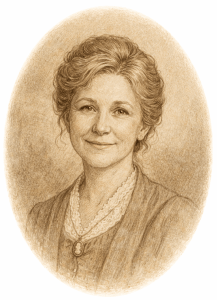
But a different sort.
One that arrives slowly, almost as if it is remembering where everything belongs.
The Sound That Was
For weeks, there was always something to hear.
A horn in the distance.
Laughter carried across a field.
Feet moving where feet do not always move so quickly.
It was not orderly.
It was not always convenient.
But it was alive.
What We Shared
What stays, once the sound has gone, is not the noise itself.
It is the feeling of having been part of something together.
Standing along a roadside.
Watching something pass.
Hearing a note and knowing others heard it too.
There is comfort in that.
More than we sometimes realize at the time.
The Return of Quiet
This morning came more gently.
The air felt wider.
The spaces between sounds a little longer.
And though nothing was missing, exactly…
something had changed.
Not Gone, Just Passed Through
It would be easy to say the moment has ended.
But that is not quite right.
It has simply moved on, as such things do.
Leaving behind:
- a memory
- a shared experience
- and, perhaps, a small lightness carried forward into the ordinary days ahead
What Remains
There will be work again.
 Routine.
The steady pace of things returning to where they belong.
And that is as it should be.
But it is also true that, for a little while, things were different.
And we were different in them.
A Quiet Kind of Gratitude
There is something to be thankful for in that.
Not loudly.
Not with great declaration.
But in the quiet understanding that such times come when they can—
…and that we are better for having been there when they do.
— Abby W.


Front Porch Reflections
A Place Between the Noise and the Quiet
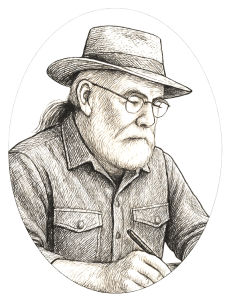
by James Milson
There comes a moment, after something lively has passed, when the world does not go silent all at once.
It eases.
A little at a time.
At first, you still expect it.
 A sound in the distance.
A call carried across the ridge.
Footsteps where there have been many footsteps lately.
And when it does not come, you find yourself noticing that too.
The chairs are still where they were set.
The road still runs the same direction.
The porch boards hold the same creak beneath your step.
Nothing has changed.
And yet something has.
It is not that the noise is gone.
It is that it has been replaced.
By space.
By breath.
By the kind of quiet that does not arrive empty, but full.
There is a place between the noise and the quiet where things seem to settle best.
Not in the height of the moment.
And not after it has fully passed.
But just there, in between—
where what has happened has had time to land, and what comes next has not yet begun.
That is where you can feel it.
What was shared.
What was noticed.
What, for a little while, brought people out of their usual ways and into something together.
And then, as it always does, the day moves forward.
The work returns.
The ordinary reclaims its place.
Not as something lesser.
But as something steadier.
And if you are paying attention—
if you are settin’ there long enough—
you may find that the quiet that follows is not a loss at all.
But a kind of keeping.
We will see you again next Saturday.
— Jim (and Red!)
The Hearth & Holler Gazette is a work of fiction, created for entertainment and storytelling purposes. The people, places, events, and notices appearing within its pages are imagined, and any resemblance to actual persons or events is purely coincidental.
© 2026 James Milson. All rights reserved.
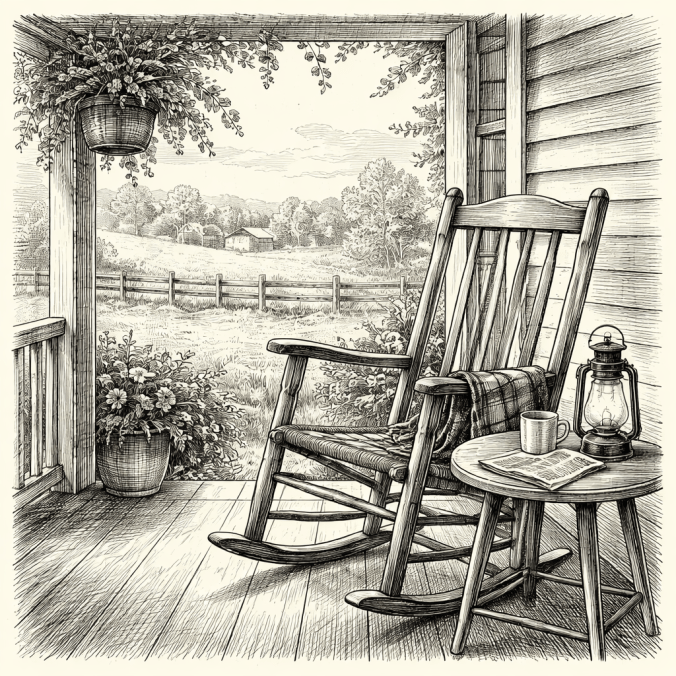
Pen-and-ink illustrations created with the assistance of AI and lovingly styled for Little Red Bear Land.
Would you prefer Coffee or Tea with your newspaper?

 James Milson - The Writing Pages