Please Don’t Pull The Dandelions — They’re Nature’s Gift!

Oh my gosh!  It’s early Spring and here come the dandelions all over the yard.  What to do?!?

Answer — absolutely nothing.  Relax, have an iced tea, and simply leave them be. We really dig dandelions here, but perhaps not in the way some may imagine.

My father, noted for his dandelions obsession, would have me busy every available free moment years ago it seemed, dandelion puller in hand, sent out to pull and dispatch the lowly yellow flowers out of our burgeoning green lawn.

“Now, get down deep and pull ’em up by the roots or they’ll surely come back on us, son!”

My idea of true technological progress was when my father came home one day with a long-handled dandelion puller newly purchased from the hardware store, one I didn’t have to bend over all day with or crawl around the yard on hands and knees.  Yep, modern science had come a long way. I could pull ’em standing up!


In the suburban sprawl era of the early ’60s with new subdivisions sprouting up everywhere, my father could and did spend hours talking with other men in the neighborhood about — Grass.

Seriously weighing the merits of one variety of grass versus another and how best to care for their lawns.

Those out there on the very cutting edge of technology were experimenting with the new Zoysia Grass just becoming available at the time, and “plugging” their lawns with it.  Anybody in their right mind seeded. Everybody knew that.  They were “plugging!”

“Poor Troutman’s lost his mind this year with that Zoysia grass.”

“Gonna have an ugly mess on his hands for sure!”

“That Zoysia stuff turns brown like straw all winter.  A real fire hazard, that!  He’ll be sorry.”

“Well, he’s a young college guy and doesn’t know anything.  He’ll learn.  Ya just can’t beat good ol’ Kentucky Blue Grass.”

“Nah, that stuff burns up in the summer heat.  I’ll stick with my Fescue.”

And on and on it went. Heady stuff, those evening, after-dinner grass meetings on the sidewalk.  We won’t even go into Crabgrass debates.  And what in the world to do about that guy on the corner and his dandelion infested yard, blowing seeds all over the neighborhood?

“Who does Baggett think he is, after all, a Dandelion Farmer? Look at his mess down there! Why doesn’t he get out and pull those dad-gummed weeds?!?”


The beauty of one’s lawn was definitely a status symbol in the subdivision back then, as dandelions in your yard certainly meant that you would be looked down upon by all of the folk meticulously fertilizing, treating, and clipping perfectly manicured lawns, proudly pushing their new, bright green Scotts’ spreaders in front of them while whistling a happy tune, dandelion digger tucked into their belt or back pocket.  And yes, there was a distinction.  Farmers ‘mowed’ down weeds.  Lawn aficionados ‘clipped’.

Folks with dandelions in their yards were judged to be lazy, uncaring, and downright disrespectful because soon those wicked seed puffs would be blowing thru the air on spring breezes and re-infesting all of the honorable and upstanding folks’ yards.

Such was life in the suburbs during the time of manicured lawns and new homeowners aspiring to be featured on the cover of ‘Better Homes & Gardens’ magazine.


But, let’s hold on just a bit and fast forward several decades.

Honeybees, critical to the world’s food supply, have been decimated in recent years from an assortment of maladies —  colony collapse disorder (CCD), global warming, selective industrial crop plantings, insecticide and herbicide poisoning, the uprooting and destruction of native plant species, and so much more.  They sorely need our assistance for the benefit of the planet, and it just so happens that leaving those dandelions in your yard alone for a while is one of the very best things that you can do to help them in early Spring.


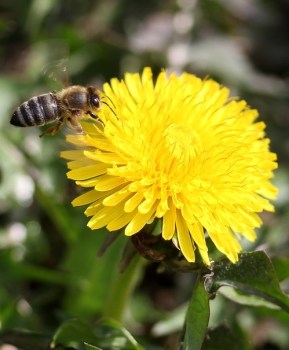
When honeybees and other pollinators first emerge in the very first warm days of early Spring, like bears coming out from their dens after a long Winter and having depleted their honey stores which kept them going thru the Winter months, they are hungry and in need of nutrition right away. And just as Mother Nature intended, those bright yellow dandelion flowers in your yard are one of the very first emerging and available food sources for them every year.

Each dandelion flower is composed of up to a hundred individual florets, each one packed with needed nectar and pollen before later emerging flowers and plants bloom and are available.  Dandelions are one of the earliest and best food sources for bees and pollinators each Spring.  They count on dandelions for survival.


Not only honeybees feast on the flowers but also bumblebees, hoverflies, beetles, and butterflies.  Later, goldfinches, house sparrows, and others eat the seeds while raising babies in the nests.

For us, young dandelion leaves make a fine addition to spring salads and are loaded with vitamins and antioxidants, and the flowers (leaving some for the honeybees and wildlife) have been made into Dandelion Wine for ages.  Just be sure the plants have not been treated with chemicals or lawn fertilizers for food safety.


So, if it is necessary to mow the grass, please consider raising the height of the cutting blades to safely pass over the dandelion flowers for the first month or so. It makes mowing thick spring grass easier, anyway. And then sit back with your iced tea on the porch to enjoy the parade of honeybees, butterflies, and other visitors to the dandelion flowers in your yard, confident that you are helping both them and the environment.


And if a well-intentioned neighbor makes a comment, just bring them up to speed about why it is so important to simply leave the dandelions be in early springtime, for the sake of the honeybees and pollinators. And us.

Cross-pollination helps at least a third of the world’s food crops and 90% of wild plants to survive.  Without bees to pollinate and spread seeds, many plants, including major food crops that we ourselves depend upon for survival, would die off.  And that is why early spring dandelions are so important.
Some have stated that if honeybees disappeared from the Earth, humans would inevitably follow four years later due to lack of food supplies. If letting the dandelions grow in early springtime helps the bees survive and keeps the grocery shelves stocked, we are all for that.

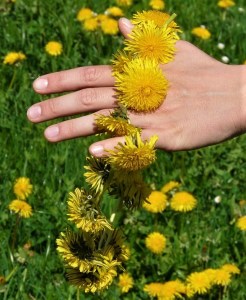
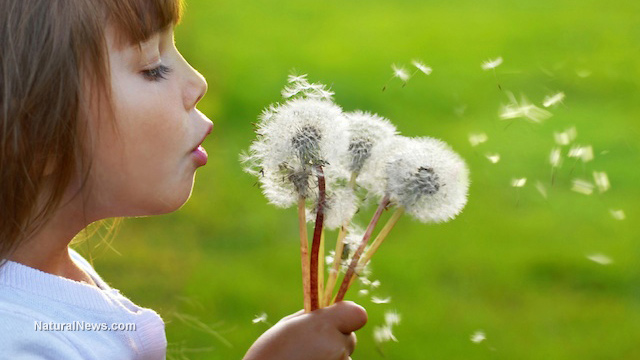
Besides, I haven’t met the Mother yet who doesn’t delight in a freshly-picked dandelion bouquet from her four-year-old in the Spring.

And, if the dandelions are all mowed down, pulled out, and tossed away — how could we ever hope to make a wish?


Speaking of dandelion bouquets and making wishes, if you have small children or grandchildren, check out the delightful little children’s book “Why Dandelions Grow” by Nita Marie Clark available on Amazon.

Told in verse with colorful illustrations, the book tells about how dandelions came to be (they seemed to be an afterthought, you know), and is very instructive for youngsters on both dandelions and bees, along with the importance of dandelions to the survival of bees in early springtime.

Little Red Bear and I always advocate teaching children about Nature and its importance, beginning at the earliest age, so they will become involved, learn to appreciate, and care about taking care of and preserving it for the future.  That’s the Little Red Bear way.


Working together we can do our best with Mother Nature to help the bees and other pollinators.

Thanks always for stopping by to visit with us, and please feel free to share this important message with family and friends!

My story friend, Little Red Bear, and I hope you will join us in the “Bee Friends” club and simply sitting back to watch the dandelions grow, confident in knowing that you are doing something positive and a ‘good thing’ for the environment and Mother Nature.  — Jim   (and Red!)

If you enjoyed this feature, you may also like → “Happy Hummer Season! Welcoming, Helping, and Attracting Hummingbirds In Your Neighborhood” 


Think Globally — Act Locally — Tomorrow Begins With You TODAY!

Children + Nature + Outdoors = Happy, Healthy, Balanced Kids


Meet Little Red Bear & His Friends —  “Once Upon A Time In A Very Special Woods . . . .”


Old-fashioned, Family-friendly Stories and Fun for All Ages! 
About an Uncommonly Special Bear and His Friends.

                 “Those who contemplate the beauty of the earth find reserves of strength                   that will endure as long as life lasts.” – Rachel Carson 


This is a purposefully non-monetized, ad-free site to be able to offer the most enjoyable reading and viewing experience for everyone, with all content freely shared, and generates no income to offset the costs of maintaining and operating. If you enjoy your visits and time with us, Join our new Patron Community today. Patrons help my friend Little Red Bear and me to continue this as an ad-free site,  dedicated solely to entertainment and educational purposes.

Because together we can do so much!


“How doth the little busy bee, Improve each shining hour,
And gather honey all the day, From every opening flower!”

 – Isaac Watts, ‘Divine and Moral Songs for Children’ 


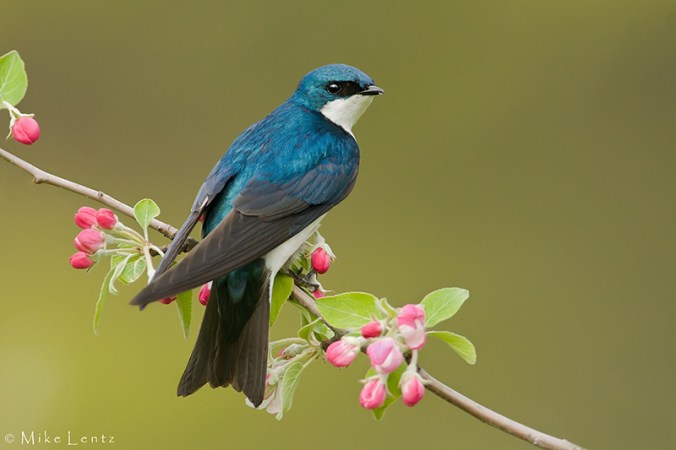
Getting to Know — Tree Swallows

Tree Swallows are among my favorite birds, always delighting in observing their aerial acrobatics in fast pursuit of insects, rapidly twisting and turning thru the air dashing here, there, and everywhere on late summer afternoons and evenings.

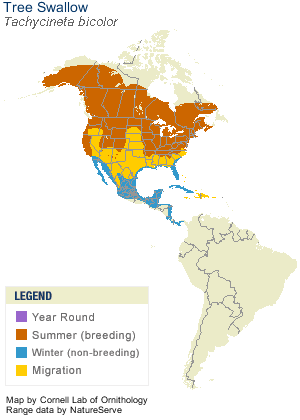
The Tree Swallow (tachycineta bicolor) is one of the most beautiful of the swallow family, with deep-blue, iridescent backs and clean white fronts.  With their steely, bluish-green feathers flashing in the sunlight, Tree Swallows make a most striking appearance and display as they chase thru the air in pursuit of insect food for their families.

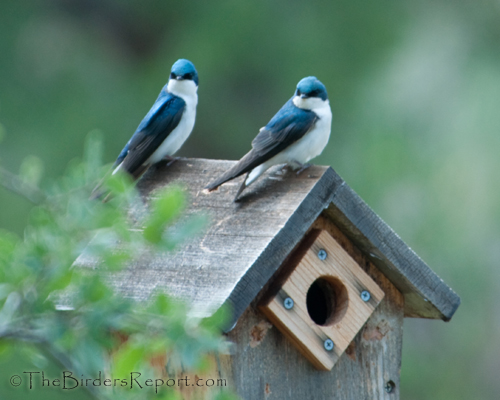
Tree Swallows do not build open, free-form nests of dead grass, leaves, sticks and twigs like many birds, but rather only nest inside cavities, such as old woodpecker holes in trees.  With such natural places in limited supply, nesting sites like these are scarce and at a premium in the spring, on a first-come, first-served basis, with intense competition with everyone looking for a home in which to raise a family.  But fortunately, Tree Swallows also adapt readily to nesting boxes.

You can help the Tree Swallows in your neighborhood by putting out nesting boxes in your backyard.  The birds are a great addition to a backyard or field and will reward you, as many birds and bats do, by regularly patrolling and keeping insects under control and at bay all summer long.

The average adult Tree Swallow consumes 2,000 insects each day during the 45 day nesting period, while also catching approximately 6,000 insects per day to feed to their nestlings over their twenty day stay in the nestbox. Overall, this adds up to about 300,000 insects per family over the 45 day span. Since most of their hunting takes place under a height of 39 feet, that is potentially a lot of insects not pestering you in the backyard over the summer.

That is a good return on the purchase, or for a few boards and time invested in building a nest box. And then you and your family will also be able to enjoy observing these beautiful birds going about their business darting and dashing thru the air and raising their young thru the whole season.

For more information on Tree Swallows, please visit the Tree Swallow Nesting Project and Building Nesting Boxes for some easy how-to guides.

Thanks as always for visiting.  If you have stories or experience with these beautiful birds or helping them with nest boxes at your home, please feel free to share with us in the comments.  —  Jim (and Red!)

Family Times — Together Times — The Best Times!

Children + Nature + Outdoors = Happy, Healthy Balanced Kids


Old-fashioned, Family-friendly Stories and Fun for All Ages and Fitness Levels!
About an Uncommonly Special Bear and His Friends.


On Fly Fishing — Teach a Bear to Tie a Fly (And You Will Have Accomplished Something!)

Right off the bat, I must admit that the title may be a bit optimistic and premature, because I haven’t accomplished anything quite yet teaching Little Red Bear about tying flies and fly fishing.  But we’ll get back to that in a minute.

One of my favorite uncles, my mother’s youngest brother, was a first class fly fisherman in the day.  One of his best friends was a conservation officer with the Missouri Department of Conservation at the time, and they would spend every chance they got fly fishing the Ozarks streams. Like my mother, he had grown up in the country and was all about nature and the outdoors.  He had served in the Pacific on Iwo Jima and Okinawa among others in WWII not too many years before, and I always figured maybe the peacefulness of fly fishing is what may have so appealed to him after it all.

Uncle Paul firmly maintained that anyone could catch a fish if they hooked up a worm, used bait and fed them, but it was a true challenge and art to catch a fish on a lure that you had made yourself.  So he taught me how to make and tie my own flies and to fly fish as a boy.  He reassured me that the hungrier I got, the better I would get at making them.

I don’t know whose idea it was that I should learn how to tie flies at the age of nine, my mother’s or my uncle’s (it certainly wasn’t my father’s because he was a city kid, thru and thru), but there I was sitting at his kitchen table one Saturday morning learning all about the different kinds of flies and bugs to imitate. Shiny Mylar strips, tinsels, miniature corks, colored wires, hooks of all sizes, chenille stems, horse hairs, bits of assorted furs, spools of thread, and tools and miniature vices I had never seen before all spread out on the table before me.

And all sorts of wondrous feathers — peacock eye feathers, guinea fowl, pheasant, grouse, quail, marabou, ostrich, ducks, roosters, chickens and others.  Feathers from all over the world from birds I had only seen and read about in Encyclopedias!  All a small boy’s imagination could hope for and a whole new world suddenly opened.

As it turned out, fly fishing is the only kind of fishing I ever really enjoyed, to tell the truth.  And now steadfastly agree with my mentor.  Tossing a worm-baited hook into the water is not only lacking in challenge, but also an insult to the intelligence of the fish.  And since they spend so much time in schools, they do tend to take it rather personally.

There is just something about fly fishing.  The excitement and sudden rush of spotting a flash of silver under the water in the distance.  Working and playing out the fly line, back and forth, back and forth in a relaxing zen-like rhythm imitating soft lapping waves along the shoreline, the heavy line artfully arched over your head.  Cast out and land the lure in exactly the right spot where you just saw a riffle on the water, widening circlets across the way. Being at the water’s edge with the songbirds in the background while water ripples around you.  A turtle pops up to say ‘Good morning!’  and forest critters edge cautiously to the shoreline for a drink. Frogs croak their greetings as red-winged blackbirds cheer you on from the nearby reeds. Simply — magical. Nature speaks to you, if you listen. For myself, I just could never find that same joy in any other type of fishing.

I would spend hours on summer afternoons, just as Uncle Paul showed me, fly rod in hand in the backyard practicing to drop a fly inside a hula hoop target laid on the ground at the back of the yard. Eventually the larger hula hoop was replaced with a smaller metal bucket. I always look back on all that, together with the time my uncle spent with me infusing his love of the outdoors and respect for wildlife, as probably where my life-long love of nature and conservation got its start at an early age.  We never know at what precise moment the stars may align and how a few minutes spent with a child may influence their whole life to come.  And there’s a lesson there in itself.

We would visit my uncle’s home regularly thru the year on Saturday mornings, me in the kitchen learning to tie flies at the kitchen table with Uncle Paul, working side by side each of us with our own vise and every time a different type; while my mother visited with Aunt Laura in the living room. Wrapping and making the Wooly Bugger Worm was always my favorite.

It was Uncle Paul who gave me my first hunk of beeswax and taught me to always wax the sewing thread to keep it from tangling while tying the flies.  A trick I still use today when hand sewing teddy bears and things.

Some of the little tools, grips, vices, supplies and books used back then are still with me today.  We made frequent trips to visit the Culver Lures store on Missouri Avenue in south St. Louis at the time. A somewhat dark little store because the two smallish front windows were cluttered with merchandise, with a white wooden store front and wooden floors too, as I recall, overflowing with every fly tying and rod making item imaginable.  Stand at the counter, tell the man smoking the stubby cigar what I needed and he would go find it and ring it all up on the cash register.  Hand over the cash and away we’d go to make more lures. The store is long gone now and remodeled into a condo. A different time.

Used to have an honest-to-goodness fisherman’s straw hat with flies stuck in all over it, too. Don’t know where that might have went over the years, sadly.  I suspect my mother may have pricked her finger on a hook dusting it one too many times when I was away at college and it was shown the door.  But just a guess.  No one ever seemed to recall its whereabouts or fate later, whenever queried.

flies-3

It turns out Uncle Paul was right — there are few thrills in life to compare to catching and landing a fish on a lure that you have handmade yourself.  Marriage and the birth of children are certainly at the top, but that first fish is right up there on the list, too!

And that all brings me to Little Red Bear.  Being an avid fisherman himself with his assortment of bamboo and stick poles and always up for a challenge, Little Red Bear now wants me to teach him how to make his own lures and teach him how to fly fish.

Red has always been a “throw out the bait and wait” type, as he puts it.  Not my thing, as I said.  So I can readily see his wanting to move up the fishing ladder, so to speak.  The only problem is, with those big bear paws of his, I’m not sure that I’m up to the challenge of teaching him.  Showing him how to make biscuits is one thing, and admittedly his are better than mine now (although I still make the best cornbread). But Little Red Bear sitting and tying teeny little fishing flies?  Not so sure.

Still, I’ve yet to see Little Red Bear not accomplish something he sets his mind to, so we’ll see.  There was that time at Perch Lake when he hauled that giant, cantankerous and ill-tempered . . . . .   Well, I really should let you read and enjoy that ‘Sir Snapsalot’ story for yourself.  He even tells folk how to make their own bamboo fishing poles in that one!  Red’s famous for them in these parts.

In the meantime, I wonder what Uncle Paul would think now about the time he spent with a young nephew years ago, teaching him how to tie flies and fish, and who grew up to later write stories about conservation and an uncommonly special bear and his friends in the Ozarks Mountain Country that we visited and fished together ourselves? I like to think he might enjoy them. Time is never wasted when spending it with a child.

Thanks as always for visiting.  I will keep you posted, and we’ll see how this fly tying adventure goes with Little Red Bear, I suppose.  I can’t say ‘no’ to someone looking to learn and try something new.  Even if it seems as though it may be a mighty challenge along the way.  — Jim  (and Red!)

Family Times — Together Times — The Best Times!

~ Children Learn To Read on the Laps of Their Parents ~

Old-fashioned, Family-friendly Stories and Fun for All Ages and Fitness Levels!
About an Uncommonly Special Bear and His Friends.


Birds of Prey– What’s the Hurry?

We most often think as the spring months as being the nesting season for birds.  And it is, for the Cardinals, Sparrows, Robins, Finches and such.  But not for the raptors, birds of prey.  Young raptors, because they are much larger, take a much longer time to grow up and need a head start on the season. So raptors nest in winter.

Remember the images of the nesting Eagles dutifully tending their nest and eggs covered over in the snow?  It takes very dedicated parents to go thru an ordeal like that.  Why the rush?  Why start nesting so early before the weather has changed for the better, we wonder?  Most other birds wait until April or later to arrive at their summer breeding grounds and start to build nests.

Turns out, there’s a very good reason.  It’s all about rodent and other prey animal population control and giving the baby birds of prey an easier start in life.  It takes a long time for large raptors to grow big enough to be independent and hunt on their own.  An early start in the nest allows them the required time to grow and develop, while also insuring that when they are fledged and on their own, there will be a plentiful supply of prey animal babies emerging from their nests and running about at the same time to help make the raptors’ initial hunting forays a little easier and more successful.  Nevertheless, 60% to 70% of Red-tailed Hawks, Owls and other raptors do not survive their first year.  Life is hard for young raptors still trying to figure it out, so being ready early gives them the best chance of survival, while also helping to keep the world from being overrun by mice and other voles.

So while the other birds and small animals are just getting started with nest building and babies now, the raptors are already well on their way to being able to greet them when they emerge later.  The early bird gets the, ummm– baby mouse shall we say.  Birds of Prey have a very important role to play in population control and the grand scheme of things as Mother Nature designed, and early nesting gives them the needed head start to make it all work.

Thanks as always for dropping in to visit! — Jim (and Red!)

Red-tailed Hawk with Mouse

Red-tailed Hawk with Mouse

“The Adventures of Little Red Bear” Short Stories Available on Amazon

Old-fashioned Storytelling About An Uncommonly Special Bear and His Friends!

Meet “Whistlin’ Will” the Whip-poor-will

Old forests in the Ozarks Mountain Country, where the Little Red Bear stories take place, are home to Eastern Whip-poor-wills, one of my favorite birds.  Strictly nocturnal and calling all thru the night, they have serenaded me to sleep on camping trips on many occasions.

While you may hear the Whip-poor-wills thru the night, finding them in the daylight hours is very difficult as they are largely inactive, hiding on the ground or roosting in the trees.  Their mottled plumage blends perfectly with the grey/brown leaf litter and forest debris where they live, a natural camouflage.

A medium sized bird, the Eastern Whip-poor-will is a member of the Nightjar family of birds, sometimes referred to as Goatsuckers from ancient tales that they sucked milk from goats.  Also in the nightjar family is the Nighthawk, another nocturnal bird, along with another and one the Whip-poor-will is frequently mistaken for– its close relative the Chuck-will’s-widow, which has a similar but lower, slower call.  Both calls are hauntingly beautiful on an otherwise quiet summer night in the woods.

Whip-poor-wills are mentioned frequently in “The Adventures of Little Red Bear” stories, with “Whistlin’ Will” being one of Red’s friends, singing right behind his cabin on Honey Hill each evening.

Here is a recording for you to listen to the beautiful call of the Whip-poor-will.  Like the recording, they go on and on, tirelessly all thru the night, a calming reassurance that all is right in the woods.  Do you hear the “whip-poor-will, whip-poor-will, whip-poor-will” call for which they were named?

Sadly, as with many species, their numbers are in decline in several areas as open forests are converted for suburbs and agriculture, and as their primary foods- large moths and beetles- are also on the decline due to development.

More information and sound recordings may be found on the Cornell Lab of Ornithology page, and on the Audubon Society page.

If you would like to read more about Whistlin’ Will in “The Adventures of Little Red Bear” short stories collection, it is available on Amazon for Kindle and in Paperback.  Just click the link below.

Thanks as always for reading and following! — Jim (and Red!)

Order Your Copy of “The Adventures of Little Red Bear”


Image via American Bird Conservancy, by Jacob Spendelow

Image via American Bird Conservancy, by Jacob Spendelow


“The Silent Voice of Nature”

There is a deep and ancient wisdom held by the trees, wilderness and nature.   Quiet your mind and be attentive for the voice you can only feel.  Peace and answers await in the stillness.

“Close your eyes so the heart may become your eye,
and with that vision look upon another world.”

Birds- Hummingbird Art via TW, uncredited

“A Moment in Time” by John Kolenberg, available on Fine Art America.com

“There is a voice that does not use words. Listen.”

— Rumi