Pigs and Other Barnyard Folks

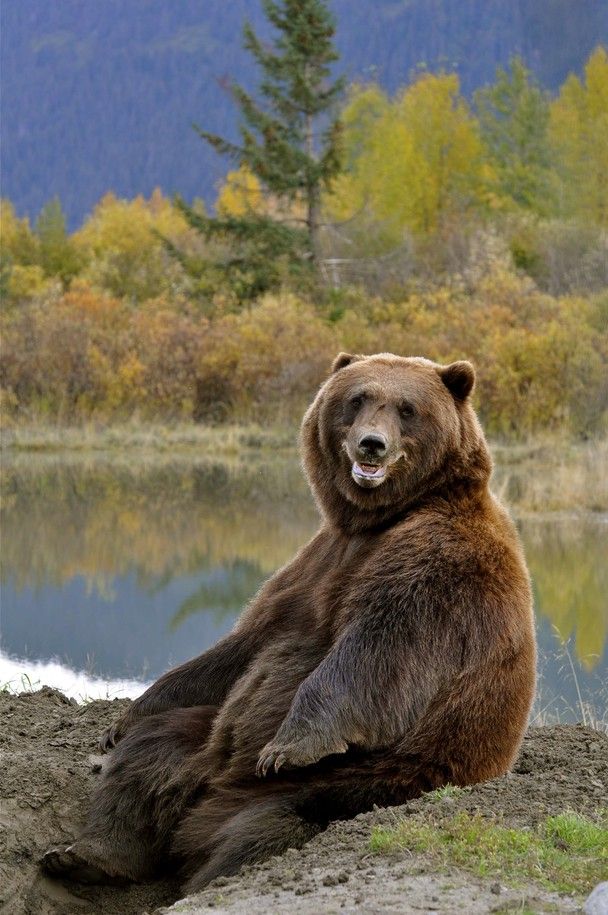
Pigs.  I like ’em.  There, I said it.  I like pigs.  And goats and sheep and chickens and ducks and cows and mules and other barnyard folks. And so does Little Red Bear, when he can understand them.  And there are a good number of each that are going to be wandering in and out of the upcoming “Adventures of Little Red Bear” stories.  There’s a certain little mini pig that is especially problematic for Little Red Bear in the first collection of stories, and we’re working with a whole fleet of ducks already for the second collection.

The stories are indeed backwoods adventures, but with a number of farms nearby Little Red Bear has a great many friends on the farm, too.  So, kind of just giving you a heads-up if you’re not of the same mind about the pigs and such. Careful where you step while turning the pages.

And if you do like pigs, I hope you enjoy this little video → A Pig’s Guide to Being a Dog. 

The first collection of short stories in “The Adventures of Little Red Bear” will be released very soon– “The First Holler!”  Watch for the first official book trailer in the next few days.  Thanks as always for stopping by! — Jim (and Red!)
Animals- Pig Smart


Native Plants for Birds & Wildlife

Getting ready to start work on the garden and yard work soon?  Please consider using and decorating with plants, trees and wildflowers native to your geographical region.  Here’s why it is so important– the birds and animals in your area have adapted to native plants over thousands of years and are dependent on them.  Overrunning the landscape with non-native plants, trees and ornamentals can seriously impact the native wildlife’s food chain and resources.

“Because native insects did not evolve with nonnative plants, most of them lack the ability to overcome the plants’ chemical defenses so cannot eat them. Caterpillars, a particularly important food source for birds, are especially picky about what they feed on. Like the famous monarch butterfly larva, which must have milkweed to survive, more than 90 percent of moth and butterfly caterpillars eat only particular native plants or groups of plants.”

— Laura Tangley, National Wildlife Federation article.

And of course, the birds feed on the insects feeding on the plants.  Not only are the insects directly affected, but the pollinators and those that feed on the insects as well, right up the food chain. As more and more imported varieties and ornamentals crowd out native plants, the birds, pollinators and wildlife have an increasingly difficult time. That plant at the nursery might be pretty, but is there another native to the area that might work just as well or better? Check it out.  The birds and wildlife will thank you for it!

For more information and to read the article in entirety → “Chickadees Show Why Birds Need Native Trees”

Thanks as always for reading.    — Jim (and Red!)

Birds- Chickadee, Carolina Chickadee via National Wildlife Federation FB, photo by Doug Tallamy

Carolina Chickadee via the National Wildlife Federation. Photo by Doug Tallamy.

Old-fashioned, Family-friendly Stories and Fun for All Ages and Fitness Levels!
Join us for an Adventure in the beautiful Ozarks Mountain Country!

Guest Blog- “Trees” by Neil Giles with Artwork by Emma Childs

Sharing a delightful nature post combining original poetry and artwork from friends.  This enchanting post originally appeared on my friend Sylva Fae’s blog Sylvanian Ramblings.  If you love nature and children, I strongly encourage you to visit and follow her captivating blog.

The amazing “Trees” poem is courtesy of Neil Giles, and the accompanying beautiful artwork “Cyclamens at Killerton” created by Emma Childs.

I invite you to meet, connect and follow their creative works.  Sylva’s delightful blog is linked above, clicking on the poem tree image will take you to Neil’s Twitter page, and clicking on the artwork will take you to Emma’s site.

Big thank you’s to Sylva, Neil and Emma for allowing me to share their magical creative works with you!  I hope you enjoy as much as I did when first seeing their creations.


Page-1

Cyclamens at Killerton by Emma Childs

“The Rubbly Bubbly Bath”

A hungry little bear sat alone on a hill.

Honey jar in paws, ever careful not to spill.

He spoke not a word while opening the jar,

gazing over the meadows and fields afar.

Sticking in his tongue, slurping and lapping up the sweet honey,

he enjoyed the beauty of the day, so warm bright and sunny.

Honey drizzled down his chin and all over his front,

“Ugh! I’m all sticky! Egads!” he exclaimed with a grunt!

“What will my Mother say,

when she sees me this way?”

“She will want me to bathe and then toss me in the river.”

And with this worrisome thought, his lip started to quiver.

Though his dire hunger was now sated,

new bath concerns went unabated.

The sweet honey nearly gone,

he then leaned back with a yawn.

And remaining honey now out of reach with his tongue,

The bear remembered a tune which his mother had sung.

“Joshua Giraffe was born in a zoo,

he lived there, too.

For two years and a half,

he hasn’t had a bath . . .”    *

He sang the verse boldly as he wandered back home,

Still hoping not to be drowned in wretched soap foam.

With icky sticky honey all over his fur,

he crept beside Mother, to hide, snuggle and purr.

But a bear is not a cat,

so shouldn’t try to do that.

Bath time was on as he wriggled and squirmed,

dunked in the river, his bath fears confirmed.

But since the bears don’t use soap,

There were no reasons to mope.

With no shampoo in his eyes to cause any tears,

he had no real worries to support all his fears.

Wee bear shouldn’t have tried to conceal his icky sticky self.

Not when there’s a jar of honey noticed missing from the shelf.

Mothers always seem to know when something is amiss.

Besides, all bath times end with a motherly bear kiss.

Bear and Cub bath time- Pinterest, uncredited

Note *– Song lyric excerpt from “Joshua Giraffe” lyrics by Raffi Cavoukian

Birds of Prey– Why the Rush?

Remember the images of the nesting Eagles dutifully tending their nest and eggs covered over in the snow the past few weeks?  It takes very dedicated parents to go thru an ordeal like that.  Why the rush?  Why start nesting so early before the weather has changed for the better, we wonder?  Most other birds wait until April or later to arrive at their summer breeding grounds and start to build nests.

Turns out, there’s a very good reason.  It’s all about rodent and other prey animal population control and giving the baby birds of prey an easier start in life.  It takes a long time for large raptors to grow big enough to be independent and hunt on their own.  An early start in the nest allows them the required time to grow and develop, while also insuring that when they are fledged and on their own, there will be a plentiful supply of prey animal babies emerging from their nests and running about at the same time to help make the raptors’ initial hunting forays a little easier and more successful.

The early bird gets the, ummm– baby mouse shall we say.   Check out today’s BirdNote for more.