There are some Spring mornings that feel as though they’ve been set out just for noticing.
Last week offered one of those.
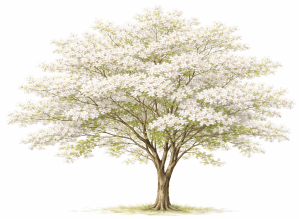
The air had that early-season softness — not quite warm, not quite cool — in between — the kind that carries sound a little farther than usual and lets the world arrive in layers. Across the street stood a White Dogwood in full bloom, its branches lifted and spread like open hands, each one holding those unmistakable cross-shaped blossoms that seem less like flowers and more like small, quiet declarations.
And there, settled comfortably among them, was a Cardinal, its crimson feathers glowing in the sunlight.
Not just present — but singing.
Filling the morning air with his full-throated melodies. Steady, and sure of himself, as Cardinals tend to be. The kind of song that doesn’t ask for attention so much as assuming it will be given.
On my side of the street, just ahead, stood a Red Maple — not yet committed to Spring, its branches still mostly bare, holding back just a little longer before leafing out. And from somewhere within those branches — though I could not see him at all — came the bright, quick voice of a Carolina Wren.
It is one of those things, where if you know that sound, you know it — sharp, cheerful, almost insistent, as if every note matters. Such a loud song coming from such a tiny bird.
And then something curious happened.