A Weekly Visit of Tales, Tidings, and Old-Time Country Comfort
Welcome!
It’s been a week of preparation in Honey Hill Country.
As always, The Hearth & Holler Gazette is a work of fiction set in a place that exists most clearly in the imagination — though from time to time it may resemble somewhere you have known. But for first time visitors, it may help to know where — and when — we are, and what I am talking about
The Hearth & Holler Gazette hails from Honey Hill Country, a small, rural corner of the Missouri Ozarks, as it might have been known in the year 1904 — a time of front porches and wagon roads, oil lamps and handwritten letters, when news traveled at a human pace, and a Saturday paper was meant to be read slowly, with coffee close at hand. This is not a paper of breaking news or loud headlines. It prefers instead to notice it — the small, human-sized moments that once filled a morning without asking much in return.
The Hearth & Holler Gazette is a work of fiction — a made-up paper from a made-up place, written in the spirit of an earlier time. Any resemblance to real towns, people, or events is entirely coincidental, though we do our best to make it feel otherwise.
This must be understood at the beginning — the towns, fields, and citizens described here exist only within these pages. With that firmly agreed, the small and ordinary wonders of the week may unfold as they will. That is the way of things here. That is all we need to know, and that ought to be enough.
Winter loosens its hold by degrees. In St. Louis, great halls rise in anticipation of the Louisiana Purchase Exposition. Here at home, neighbors measure beams, set buckets beneath persistent drips, and begin planning how best to raise a roof before spring rains press their case.
Maple sap runs quietly. Rabbits consult schedules and polish sashes. Markets shift. Coin jars gather weight.
The county is not yet in motion — but it is readying itself.
So, with that said — Please come on in. Your paper awaits . . . . . .
And would you prefer Coffee or Tea with your newspaper?
THE HEARTH & HOLLER GAZETTE
Sharing Stories and Smiles from Little Red Bear’s World
— A Weekly Visit of Tales, Tidings, and Old-Time Country Comfort —
Serving Honey Hill, Hopper’s Holler, and Beyond | Est. 1904
Saturday Morning Edition
February 21, 1904
Honey Hill Country • Cricket Hollow County
Vol. I — No. 5
Price: Five Cents (If You Have It) • Free to Read (If You Do Not)
Published Weekly on Saturday Mornings
From the Front Porches, Back Rooms, Kitchens, Workshops, Hillsides, and Quiet Corners of Honey Hill Country
FAIR DEMAND FELT ACROSS HONEY HILL
Local News from Around the Holler
Filed by Percival “Percy” Puddlesniff, News-Hound
With Field Notes from Rusty the Fairydiddle, Roving Reporter
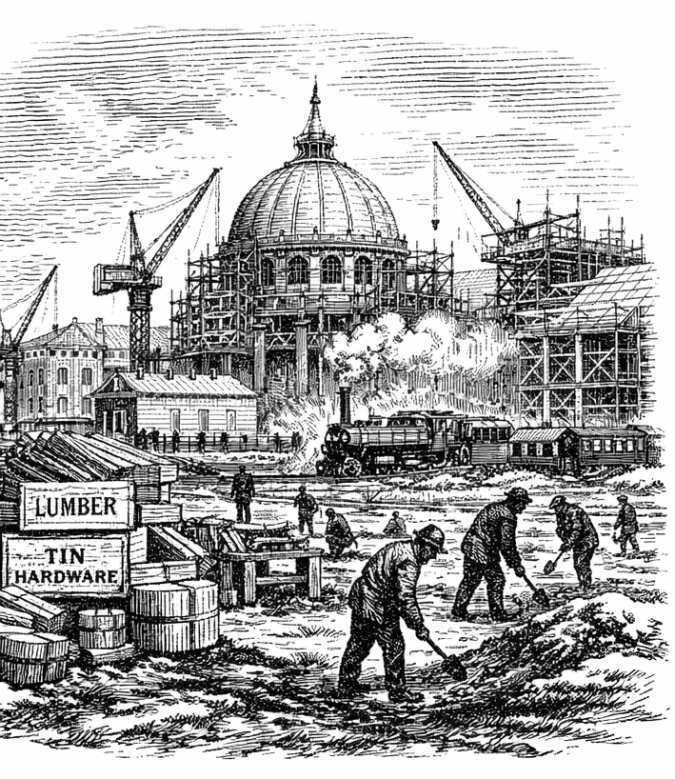
Fair Construction in St. Louis Begins to Affect Local Prices and Supplies
The rising structures along the Mississippi River in St. Louis may feel far removed from the muddy lanes and quiet fields of Honey Hill Country, but their influence is already being felt here at home.
The event drawing so much labor, lumber, and tin toward the city is formally  known as The Louisiana Purchase Exposition, though many are beginning to call it simply the St. Louis World’s Fair of 1904. The Exposition is being held to mark the centennial of the Louisiana Purchase of 1803, the vast land acquisition that doubled the size of the United States and opened the American West.
What is unfolding in St. Louis is no small regional gathering. It is intended to be a world’s fair in the truest sense — a grand exhibition of industry, agriculture, invention, art, machinery, and culture from across the United States and many foreign nations. Organizers have spent years preparing, and construction crews are now working at a relentless pace to complete palaces, pavilions, halls, and avenues before the scheduled opening later this spring.
That work requires materials — and many of them.
Lumber shipments are being diverted south. Tin roofing, fasteners, and hardware are in high demand. Skilled carpenters and roofers from throughout Missouri and neighboring states have taken contracts in St. Louis, leaving fewer tradesmen available for local work. Merchants report thinner inventories than usual for this time of year.
Virgil Stone, in this week’s Crops & Markets report, notes that tin sheets have risen noticeably since January, with additional increases expected if demand continues. Lumber prices show similar movement. While grain prices are climbing as well — a development welcomed by many farmers — the cost of building materials is advancing just as quickly.
River traffic north of Davenport remains slowed by heavy ice, further tightening  supply lines along the Mississippi. Though thaw has begun in places, movement of goods upriver has not yet returned to full strength.
For most residents, the effects are subtle but steady. A pound of nails costs a little more. A wagon repair must wait an extra week. A roof that might have been patched last year may now require more careful planning.
The grand buildings rising in St. Louis are meant to celebrate progress and expansion. Yet even here, among our own hills and hollers, we are reminded that such progress carries practical consequences.
As the year unfolds, the Gazette will continue to report on developments at the Louisiana Purchase Exposition and the ways in which its influence touches Honey Hill Country.
Butterfield School Roof Must Be Replaced
Community Meeting Called as Costs Continue to Rise
The effects of rising material costs have already reached one of Butterfield’s most important buildings.
Following an inspection earlier this week, it has been determined that the roof of the Butterfield Schoolhouse can no longer be repaired with patchwork. A full replacement is now advised.
Mr. Amos Calder and Mr. Elijah Whitaker, who examined the structure, report that  while the rafters remain sound, the tin roofing sheets have worn thin in several places. Underlayment has deteriorated, and moisture has begun to soften sections of the sheathing boards. With spring rains approaching, continued delay could result in interior damage.
A formal estimate places the cost of replacement materials at $198.40, based on current pricing.
In the interest of transparency, a detailed estimate has been prepared using current February prices for materials and labor. The figures below illustrate how even a modest roof quickly becomes a considerable undertaking.
Estimated Cost of Schoolhouse Roof Replacement
(Based on Current February 1904 Pricing)
Tin Roofing Sheets (approx. 18 squares)
$5.75 per square × 18 = $103.50
Roofing Nails & Fasteners
Estimated = $6.40
Underlayment & Tar Paper
Estimated = $14.25
Replacement Sheathing Boards (as needed)
Estimated lumber cost = $22.75
Ridge Cap & Trim Metal
Estimated = $11.50
Carpentry Labor (Two men, approx. 5 days)
$3.50 per day × 2 men × 5 days = $35.00
Incidentals & Contingency
Estimated = $5.00
Total Estimated Cost: $198.40
That figure may not hold.
Local merchants confirm that tin sheets and fasteners have risen in price since January, with additional increases possible as suppliers prioritize large contracts connected to construction for the Louisiana Purchase Exposition in St. Louis. Skilled tradesmen, too, are in short supply, many having taken engagements in the city ahead of the Fair’s opening.
For now, lessons continue as usual. On rainy days, students take turns emptying buckets placed beneath persistent drips. Teachers have shifted desks where necessary and made the best of the situation.
A community meeting will be held at the Whispering Pines Meeting House on Tuesday evening to discuss fundraising efforts and next steps. Several proposals are already under consideration, including a Maple Syrup Boil and Pancake Supper scheduled for Saturday, February 28, and a larger Spring Planting Fair and Seed Exchange to be held March 14.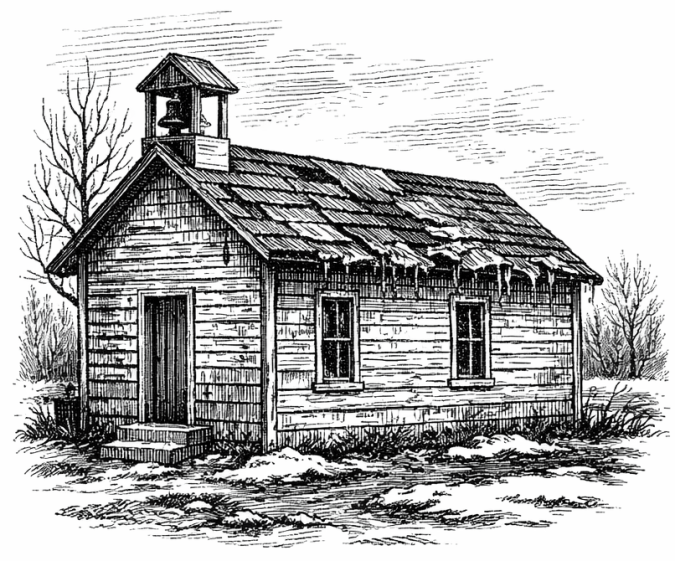
Organizers stress that the goal is not merely to patch a leak, but to secure the schoolhouse for years to come.
“The roof over a school,” one resident remarked, “ought to be the surest one in town.”
Further details regarding the upcoming events will appear in next week’s issue.
MARCH MADNESS DAYS APPROACH
This Year’s Theme: “Mad As A March Hare”
The Gazette has confirmed that preparations are underway for the annual observance known as March Madness Days.
This year’s festivities will proceed under the official theme “Mad As A March Hare.” Organizers assure the public that the phrase is intended in the most dignified and regulated sense.
Each March, the rabbits of Honey Hill Country host a carefully organized series of parades, contests, Egger activities, and tea gatherings conducted with impressive seriousness. Though the tradition has long been established within rabbit communities, this marks the first year the Gazette will provide full coverage of the month’s proceedings.
Festivities will begin March 1 and continue throughout the month, with events scheduled on successive weekends.
Readers may expect decorated hats of ambitious height, regulated hopping performed to approved standards, croquet implements employed with confidence, and tea poured according to guidelines still under formal review.
Participation in official activities remains limited to rabbits in good standing and demonstrably upright posture. Visitors are welcome to observe, provided they remain behind designated carrot lines and refrain from interfering with ceremonial matters.
It is further understood that two respected rabbits have been selected to serve as Co–Grand Marshals of the upcoming March Madness March. Their names will be announced in next week’s issue, once certain sash-related matters have been satisfactorily resolved.
The Committee for the Regulation of Upright Hopping & Associated Celebrations reports that all arrangements are proceeding in orderly fashion.
March Madness begins March 1st. Be ready.
EDITOR’S DESK
— Clara Thimblewick, Editor
The matter of the Butterfield Schoolhouse roof warrants calm attention.
It is tempting, when faced with rising costs and competing demands, to defer such concerns for a more convenient season. Yet education does not pause for favorable pricing, nor do children’s lessons wait upon the market rate of tin.
The Louisiana Purchase Exposition in St. Louis represents ambition on a grand scale. It is right that progress be celebrated. It is fitting that invention and industry be displayed before the world. However, progress is not measured solely in palaces and exhibition halls. It is also measured in the condition of the places where young minds are formed.
A sound roof is a practical necessity. It is also a quiet declaration that learning is valued.
The estimate presently before the community is not insignificant. Nor is it insurmountable. Honey Hill Country has never lacked for capable hands when a common purpose is clearly seen.
Residents able to attend the meeting at Whispering Pines on Tuesday evening would do well to lend their presence.
The Gazette will report developments as they unfold.
— C.T.

Letters to the Editor
Our readers are invited to share their thoughts, observations, and neighbourly remarks. Letters may be shortened for space, but never for spirit.
To the Editor,
A Sound Roof Is a Sound Start
Editor,
The schoolhouse roof may not be grand, but it shelters our children just the same. If tin costs more this spring, then we must simply value it more carefully.
I have already set aside flour for two cakes and will gladly prepare additional pies for the Maple Supper if needed. Let us not delay what we already know must be done.
Sincerely,
Mrs. Adelaide Trafford, Butterfield
To the Editor,
Concerning Upright Conduct
From A Concerned Observer, Packet’s Landing
Editor,
While I respect the rabbits’ long-standing March traditions, I wish to inquire whether the “designated carrot lines” are to be clearly marked for taller residents who may not readily see them.
I would not wish to cause diplomatic offense by stepping where I ought not.
Awaiting clarification,
A Concerned Observer
To the Editor,
On Tin, Timber, and Timing
Madam Editor,
It has come to my attention that tin now costs more than it did when I was younger and sturdier of roof myself. I do not object to progress, nor to grand  exhibitions in cities where buildings rise taller than common sense. However, I do observe that when a palace in St. Louis requires roofing, a schoolhouse in Butterfield pays the difference.
If the Fair intends to celebrate the Louisiana Purchase, perhaps it might consider purchasing less of our tin.
In the meantime, I shall attend Tuesday’s meeting, though I reserve the right to grumble in an orderly fashion.
Respectfully,
Chilly B. Bottoms, Upper Ridge
To the Editor,
On Standards of Seriousness
Editor,
While I applaud the community’s desire to replace the roof of the Butterfield Schoolhouse, I feel it necessary to remind residents that repairs, once undertaken, must be executed in a manner befitting the dignity of learning.
A roof placed carelessly is no improvement at all. Tin improperly aligned, nails unevenly set, or ridge caps lacking symmetry may leave an impression upon young minds that disorder is acceptable in public works.
Furthermore, as March Madness Days approach, I trust that any celebratory hopping will not interfere with the orderly progress of civic responsibilities. Enthusiasm, though natural in certain species, must never eclipse propriety.
I remain hopeful that both roof and rabbits will proceed with due seriousness.
Respectfully,
Mrs. Silence DoBetter, Address Withheld by Request
To the Editor,
Pennies for the Roof
Dear Gazette,
If we need money for the roof, I have twelve cents saved. I will bring them Tuesday.
Thomas Hale, Age 9
The Gazette prints letters of interest to the community and does not inquire overly into the private identities of correspondents.– The Editor

EDITORIAL CARTOONS — by C. “Clary” Moss
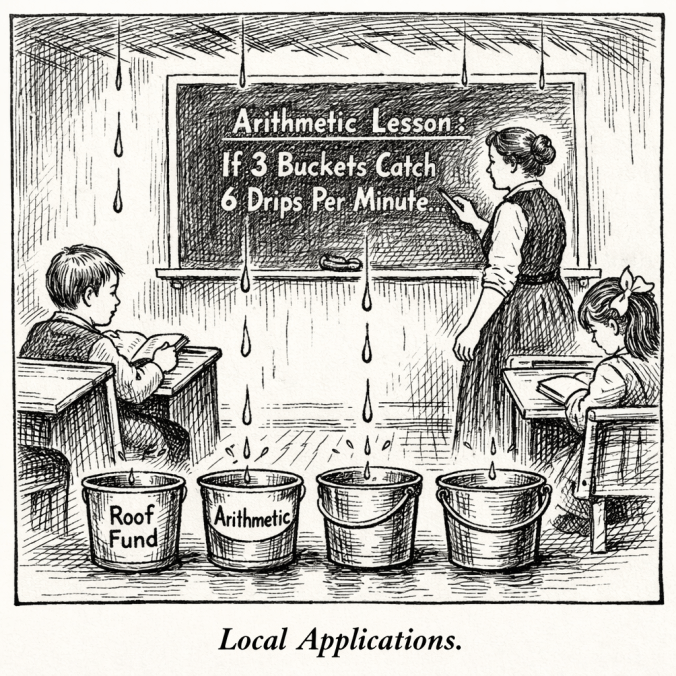
Mr. Moss reminds us that even practical matters have their lessons.
Each week, Mr. Moss offers a pen-and-ink observation of life in Honey Hill Country. This week’s illustration accompanies the ongoing discussion regarding the Butterfield Schoolhouse roof.
Mr. Moss brings a practiced eye for the small ironies of civic life and a steady hand in their illustration. His drawings will appear regularly, offering visual commentary on matters of local interest — with due regard for both humor and fairness.
We trust our readers will receive his work in the spirit in which it is offered.
Crops & Markets Report
By Virgil Stone
Grain prices continue their gradual rise this week, with wheat and corn both advancing modestly over January levels. Several merchants attribute the upward  movement in part to increased regional demand associated with preparations for the Louisiana Purchase Exposition in St. Louis.
While much attention has been directed toward lumber and tin supplies, agricultural products are likewise finding broader markets. Feed corn has strengthened, and oats show firming interest in nearby depots. Livestock prices remain steady.
On the building side, tin roofing sheets have increased approximately eight percent since the turn of the year. Hardware inventories appear thinner than usual for late February. Merchants advise residents to secure necessary materials sooner rather than later, as additional price adjustments are possible.
Lumber shipments are moving, though more slowly than customary. River traffic north of Davenport remains partially restricted by ice conditions, limiting some upriver movement of goods. Thawing has begun, but full navigation has not yet resumed.
Contract labor is increasingly scarce. Several skilled carpenters and roofers from this region have taken engagements in St. Louis ahead of the Fair’s opening. Those planning repairs this spring are encouraged to account for potential scheduling delays.
As always, farmers are reminded that while supply prices rise, higher grain values may help offset increased costs where yields permit.
The season stands on the threshold of change. Preparations made now will determine how well fields answer when called upon.
— Virgil Stone

Hillside Chronicles
By Silas Thorne
There is a moment each year when winter does not quite know what it intends to do next.
The snow has thinned but not vanished. The ground softens in patches while shaded corners still hold their frost. The creeks speak louder than they did a  month ago, yet the trees remain bare, their branches drawn fine against the evening sky.
It is an in-between time.
Stand on a ridge at sunset and you may see it plainly. The hills are not asleep, and they are not fully awake. The bare limbs of oak and maple etch themselves against colors that feel almost borrowed from another season — pale violet, washed rose, faint amber lingering low in the west. Without leaves, the branches appear delicate, like dark lace laid carefully across a glowing cloth.
The earth seems to pause.
In the thawed margins along the field’s edge, a squirrel has begun testing the softened ground. A cottontail crossed the lower pasture this morning, leaving prints where snow still held and none where it had surrendered. Life is moving, but cautiously.
This is the breath before effort.
The sap rises quietly long before buds declare themselves. Water runs under ice before it shows in open current. Seeds lie in soil not yet ready, yet ready soon.
There is a patience in the hills this week. Not waiting in idleness, but waiting in preparation.
One can almost hear it — the land drawing in a steady breath, gathering strength for what it knows will come.
— Silas

Farm & Home — Notes From the Farm & Field
By Myrtle Mae Meadowbloom
This time of year asks for two things — patience outside and planning inside.
The yard may still be soft enough to claim a boot if you are not watching where you step, but the kitchen can begin preparing for what comes next. Flour bins are checked. Sugar jars are measured. The last of the winter preserves are counted with an eye toward what will replace them.
With the Butterfield Schoolhouse roof now in need of full replacement, many of  us are turning our thoughts toward what we can contribute. A cake may not look like tin, and a pie does not resemble a roofing nail, but they carry their weight just the same when placed on a long table among neighbors.
The Maple Syrup Boil later this month will ask for steady hands and good appetites. Syrup, if properly watched, rewards patience. Too hurried and it scorches. Too distracted and it runs thin. There is a lesson there for more than cooking.
Sugar may cost more this spring. So may flour. That does not prevent a careful baker from stretching what she has. A little applesauce may replace an egg. Buttermilk may soften what would otherwise turn dry. A modest cake, baked well, has fed more than hunger in this county.
I have always believed that a house reveals its strength not in abundance, but in how it arranges what is on hand.
As sap begins to rise in the trees, something similar stirs in a kitchen this time of year — a quiet readiness. Winter stores give way to spring tables. Old recipes are brought forward and new ones penciled in the margins.
There is work ahead. That much is certain.
There will also be tables set long with neighbors gathered close.
And that, I think, is certain too.
A Closing Thought
When the weather stands undecided, a warm kitchen keeps its own season.
— Myrtle Mae
Where Folks Gather in Good Company
By Felicity Grace Merriweather
If ever there were proof that winter does not wholly own February, it could be found last Saturday evening in the Butterfield Assembly Hall.
The Valentine’s Day Dance unfolded beneath garlands of paper hearts and ribbons in shades of red and rose, lovingly fastened by hands that clearly believed in cheerful persistence. Lantern light softened the corners of the room, and though the wind outside rattled at the shutters from time to time, it did not prevail.
Mrs. Adelaide Trafford’s strawberry preserves made an unexpected appearance between dances, spooned generously atop warm biscuits and declared by more than one gentleman to be “a fine improvement upon restraint.” Young couples navigated the floor with determination and varying degrees of rhythm, while older pairs demonstrated that confidence improves steadily with practice.
By evening’s end, no fewer than three corsages had been rescued from enthusiastic embraces, and one bow tie required retying under supervision. All were restored to order.

Mr. Horace Bellamy – February Frost Days Chili Cook-off Winner
Today’s February Frost Days Chili Cook-Off offered a different variety of enthusiasm, though no less spirited.
Steam rose in determined columns from cast-iron pots arranged in a long row along Main Street, each cook guarding his or her recipe with admirable discretion. Beans were debated. Peppers were discussed in hushed tones. At least one competitor insisted that “a true chili should speak clearly without shouting.”
After careful tasting by a panel of volunteer judges — who approached their task with solemn dedication — the blue ribbon was awarded to Mr. Horace Bellamy for a recipe rumored to contain a modest but persuasive measure of smoked paprika.
No arguments were recorded, though several rematches were proposed for next year.
In a month often accused of cold temperament, Honey Hill Country has once again demonstrated that warmth may be arranged wherever neighbors gather.
And arranged it was.
— F.G.M.

From Around Our Way
By Lillian Harper
There has been no shortage of industry this week, though not all of it has taken place in fields or workshops.
Mrs. Adelaide Trafford was seen early Monday morning in Trimble’s House & Hearth Mercantile selecting extra flour “for a purpose,” which we now understand to involve both cake and civic duty. Mr. Amos Calder’s wagon has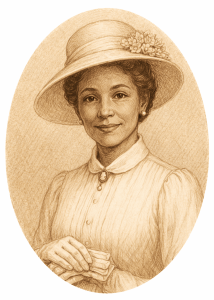 been noted traveling more frequently between Butterfield and Round Corners, measuring tape visible in the seat beside him.
At the Butterfield Schoolhouse, students have shown admirable patience during recent rains. Young Thomas Hale reportedly declared that twelve cents was “a respectable beginning,” a sentiment that has already prompted several adults to examine their own pockets more closely.
Word reaches us that Littleberry Bedford, having recently taken possession of the Longenecker place near Buffalo Crossing, is seeking spare parts for a worn  plow in advance of spring planting. Those with serviceable iron fittings or advice are encouraged to call.
Groovy Gary, the grey fox of Hopper’s Holler, has been observed pacing thoughtfully along the ridge above his den. When asked if preparations were underway, he replied, “You dig, it is all about expansion, baby.” Mrs. Gary is said to be resting comfortably as the family anticipates the arrival of five small additions before month’s end.
Elsewhere, maple sap has begun to run in modest measure. Buckets appear at the base of certain trees, and the smell of wood smoke lingers a little longer in the hollers at dusk.
In short, Honey Hill Country stands neither fully winter nor fully spring — but fully attentive.
If you have a note to share, the Gazette remains glad to hear it.
— L.H.

The High Brush Chronicles
Hickory Pinenut of High Brush Farm
Hickory Pinenut had long maintained that a three-legged milking stool possessed a practical wisdom that four-legged furniture did not.
“A thing that can steady itself,” he had been known to say, “knows what it is about.”
On Thursday morning, the stool disagreed.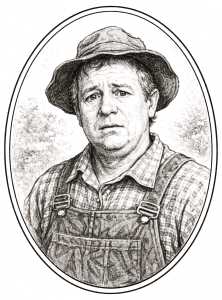
The thaw had come softly over the past several days, working its way into the yard in patches. What had appeared firm at sunrise proved otherwise by midmorning. Hickory, having crossed the yard with the confident stride of a man who believed in both habit and routine, set his stool beside Bessie with customary assurance.
The first leg sank with quiet determination.
The second followed in companionable fashion.
The third, finding itself in like-minded soil, surrendered altogether.
Hickory descended seat-deep into what could only be described as a thoughtful mixture of mud and melted snow, arriving there with a dignity that lasted  approximately half a second.
Bessie, startled but patient, shifted her weight. The milk pail tipped. A full gallon — hard-won in February — departed its proper container and joined the yard.
For a long moment, Hickory remained where he had settled, considering the matter. The morning air held the sharp edge of retreating winter. Somewhere beyond the barn, one of the younger Pinenuts laughed — not unkindly, but unmistakably.
Olivia appeared in the doorway with an expression that suggested she had both expected and confirmed this development.
“Well,” she observed.
Hickory removed his hat, inspected it, and replaced it with care.
“No use crying over it,” he said at last, though whether he referred to the milk, the mud, or the stool was not entirely clear.
The three-legged stool was later recovered, washed, and set upright in the sun to reconsider its future.
High Brush Farm, meanwhile, continued its gradual surrender to spring.
Community Notices & Small Tidings
Items of interest from Honey Hill Country and nearby hollers. Notices are printed as received and offered in good faith.
Schoolhouse Roof Meeting
Residents are invited to attend a community meeting regarding replacement of the Butterfield Schoolhouse roof on Tuesday evening at Whispering Pines Meeting House. Discussion will include cost estimates, volunteer coordination, and upcoming fundraising efforts.
Maple Syrup Boil & Pancake Supper
Saturday, February 28 — Beginning at 4 o’clock
Butterfield Commons
Fresh maple syrup, pancakes, and neighborly company. Bottled syrup will be available for purchase while supply lasts. Proceeds to benefit the Schoolhouse Roof Fund. Volunteers welcome for sap tending, table setting, and clean-up.
Spring Planting Fair & Seed Exchange Social
March 14
Plans are underway for a combined planting fair and seed exchange to assist with spring preparations and roof fundraising. Additional particulars will be published next week.
March Madness Days
Festivities begin March 1 under this year’s theme, “Mad As A March Hare.” Events scheduled throughout the month. Co–Grand Marshals to be announced in next week’s issue.
Woodland School for Tikes & Tots — Spring Term
Opening March 2. Registration due Monday. A special guest instructor is expected during the term.
Notice from Littleberry Bedford
Spare iron fittings or serviceable parts for a worn plow sought at the former Longenecker place near Buffalo Crossing. Inquiries welcome.
A Small Reminder
If you have a notice to share — a gathering, a need, a thank-you, or a simple word worth passing along — you may leave it with the Editor by letter or in person. Space is limited, but goodwill is not.

Classifieds
Notices are printed as submitted. Replies may be made discreetly, or not at all.
FOR SALE — One sturdy iron cookstove, good draft and steady heat. Recently replaced only due to kitchen rearrangement. Inquire at Willow Bend, south road past the sycamore.
WANTED — Reliable youth willing to split kindling and stack cordwood afternoons. Payment fair.
FOR TRADE — Two bushels sound seed potatoes for equal measure of field corn. See Ezra Coombs, Cricket Hollow County.
NOTICE — Boots left too near the stove at River Road Mercantile may be collected during regular business hours. Identification encouraged.
HELP WANTED — Able hands for maple sap gathering in advance of February 28 boil. Will accept experienced climbers or steady bucket carriers.
MISSING — One milk pail, last observed in upright condition. Likely in possession of mud. High Brush Farm.
A Small Reminder
Classified notices may be left with the Editor in person or by letter. Brevity is appreciated. Honesty assumed.

Country Chuckles
By Cousin Orville P. Dithers
During a recent arithmetic lesson at the Butterfield Schoolhouse, a steady drip reportedly found its way onto young Walter Peabody’s slate just as he was struggling with a particularly stubborn sum.
When asked later whether the water had spoiled his figures, Walter replied that it had “improved them considerably,” as the incorrect answer was no longer visible.
The teacher is said to have remarked that while rain may erase mistakes, it does not prevent their return.
Repairs are eagerly awaited.
— Cousin Orville
Heart of the Holler
By Abigail “Abby” Whitcombe
By Tuesday afternoon, before any formal vote had been taken and before any nail had been purchased, Honey Hill Country had already begun its answer.
Mrs. Adelaide Trafford was seen sifting flour by lamplight, measuring carefully with the sort of concentration usually reserved for birthdays and weddings. She confirmed only that “one ought to begin early when baking for a purpose.”
Amos Calder has walked the perimeter of the Butterfield Schoolhouse twice this week, tape extended, boots settling in thawed earth, making quiet notes in a small leather book. He has not yet offered a figure beyond the printed estimate, but he has offered his hands.
At Planters Feed & Seed in Butterfield, Mr. Lowell Jenkins set aside a small crate marked “Roof Fund — Nails,” stating that he would add to it as supply allowed. The crate sits near the counter where customers may see it plainly.
Young Thomas Hale, having pledged twelve cents in last week’s letter, reportedly  placed them in a jar on the mantel at home. Two neighbors have since added coins of their own.
Along the lower ridge, buckets have begun appearing at the base of sugar maples. Smoke from early sap fires drifts at dusk, carrying the promise of syrup and pancakes and long tables set with purpose.
No tin has yet been ordered. No boards have yet been raised.
And still, the work has begun.
It often does.
In Honey Hill Country, resolve gathers first in kitchens and pockets and small leather notebooks. It travels from there — from hand to hand — until it stands in daylight, plain as a new roof against the sky.
— Abby W.


Front Porch Reflections
There is a difference between what is grand and what is lasting.
In St. Louis, men are raising palaces of plaster and steel to welcome the world. Domes are measured. Towers are timed. Trains arrive with ambition packed tightly inside them.
 Here in Honey Hill Country, a roof waits.
The two are not in competition.
They are simply different kinds of building.
One gathers crowds.
The other shelters children.
This week we have seen both in motion. Markets shifting. Prices rising. Buckets set beneath steady drips. Maple sap coaxed from quiet trees. Ribbons awarded. Sashes pressed. Coins dropped gently into jars.
None of it seems extraordinary at first glance.
And yet.
A community does not reveal itself in moments of ease. It reveals itself in the small, early decisions — the flour measured before dawn, the tape extended along a weathered beam, the twelve cents offered without hesitation.
Before the first board is lifted, the work is already underway.
Before the first parade steps off, the hats are already mended.
Before spring arrives, the hills have already drawn breath.
There will be noise enough in the months ahead. There will be spectacle, and laughter, and the occasional misjudged stool.
For now, there is something steadier to notice.
Neighbors preparing.
We will see you again next Saturday.
— Jim (and Red!)
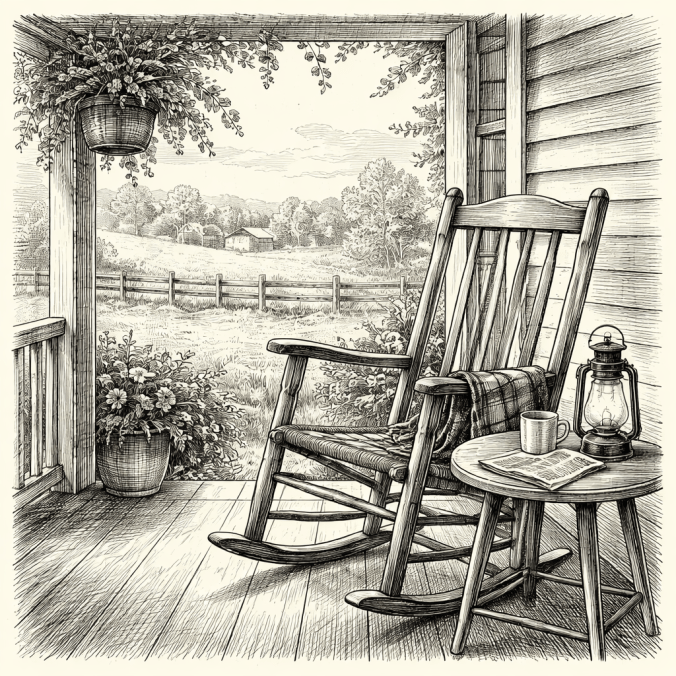
The Hearth & Holler Gazette is a work of fiction, created for entertainment and storytelling purposes. The people, places, events, and notices appearing within its pages are imagined, and any resemblance to actual persons or events is purely coincidental.
© 2026 James Milson. All rights reserved.
Pen-and-ink illustrations created with the assistance of AI and lovingly styled for Little Red Bear Land.
Would you prefer Coffee or Tea with your newspaper?


Another perfect newspaper of “The Hearth & Holler Gazette.”
Looking forward to hearing about the schoolhouse’s roof. 😉
Thanks for sharing!
~Rosie
LikeLiked by 1 person
Thanks for visiting with us, Rosie! We appreciate your kind support and encouragement. It helps keep the printing presses going! 🤠 🐻 ❤️
LikeLike