The Squirrel Has Plans — I Have a List

Heading outside on a beautiful Autumn morning to gather my thoughts and develop a work strategy for the day, I encountered a squirrel in the yard.

I had a list in hand.

The squirrel had a walnut.

At first glance, I appeared to be the better organized of the two. My intentions were written down in a reasonably orderly fashion, with little boxes waiting to be checked.

The squirrel had no notebook, no calendar, and nowhere obvious to keep a pencil.

Nevertheless, he was making considerably more progress it seemed.

I watched him cross the grass with his walnut, stop beside a tree, and look around.

Then he changed direction.

Continue reading →

Meet Chewy — We Think He Works Here

Some new friends arrive with a knock at the door. Others come by way of an introduction.

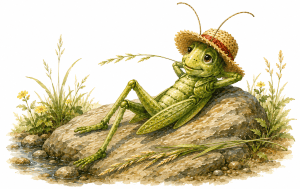
Chewy the Grasshopper flittered in from the field one day in July, found himself a comfortable spot, and apparently decided the accommodations suited him.

He has been hanging around ever since.

If you have visited The Front Porch these past few months, you may have spotted our little green friend in a picture or two. Usually wearing a straw hat. Frequently chewing on a stem of grass. Orchardgrass, preferably. Generally looking as though whatever needed doing could wait until after he finished enjoying the afternoon.

We thought it was time for a proper introduction.


Continue reading →

On Fiction Writing and the Art of Respectable Lying

Welcome back to the Front Porch.

Please pull up a chair for a few minutes and make yourself comfortable. Today I’d like to make a confession — one that may permanently damage my reputation as an honest fellow.

I’ve been lying to perfectly nice people for years.

Professionally.

Now before anyone becomes too alarmed, I’m talking about the respectable, old-fashioned kind of lies. The harmless sort that begin with, “Once upon a time . . . . “ and somehow end with everybody smiling.

Mark Twain is often credited with saying that if you want to become a good fiction writer, you must first become proficient at the art of lying. Whether he actually said those exact words or not, I’ve never been entirely sure. But I’ve always had a difficult time believing he’d object to the sentiment, and cannot argue with it myself.

The longer I’ve been writing, the more I think there may be more than a little truth hiding inside that mischievous observation.

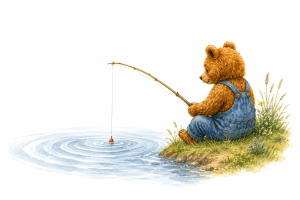
After all, I’ve spent years convincing otherwise sensible people that a talking bear in the Ozarks backwoods wears overalls, a bloodhound interviews a talking mule, a goat develops an unhealthy appetite for hats, and somewhere in a fictional place called Honey Hill Country there are folks who seem just a little more interesting than anyone has a right to be.

And the surprising part?

People keep believing every word.

The curious part isn’t that writers tell these respectable lies.

It’s why perfectly sensible people keep smiling . . . . and asking for another one.

And well . . . . that’s where the real story begins.


Continue reading →

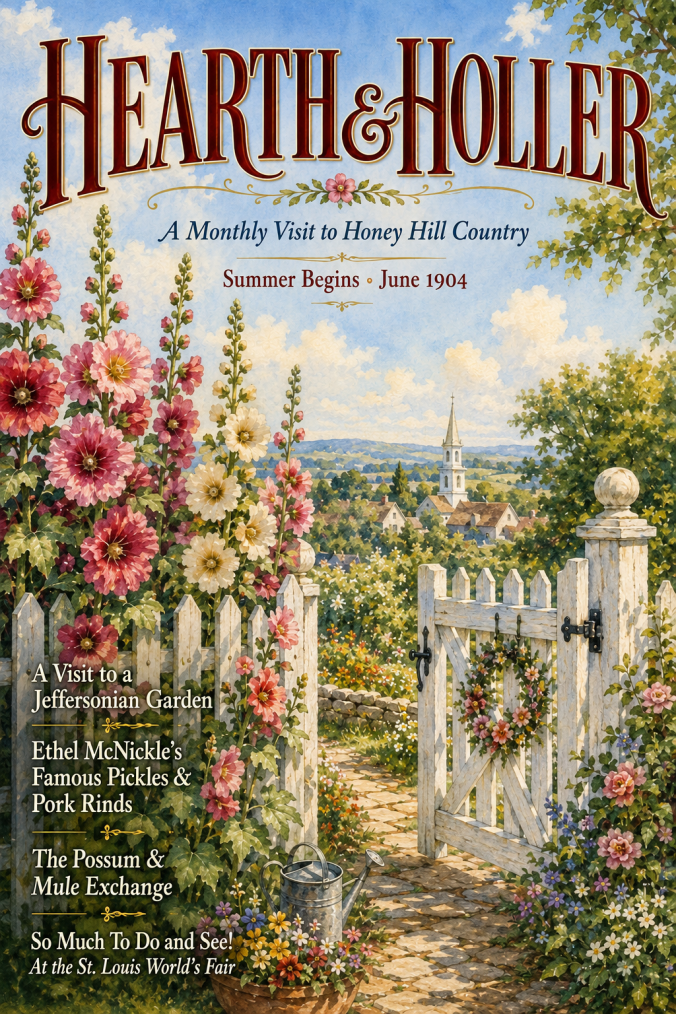
The June 1904 Issue of Hearth & Holler Has Arrived

Today marks the beginning of something new.

After much thought, planning, writing, illustrating, and more than a few cups of tea, Hearth & Holler has taken on a new format as a Monthly Magazine — a collection of stories, people, places, gardens, recipes, traditions, and adventures from across Honey Hill Country.

For readers visiting Honey Hill Country for the first time, the stories and features in Hearth & Holler are set in the fictional world of Honey Hill Country in the year 1904, the home and time period of my primary story character Little Red Bear. Through the eyes of its residents, contributors, and occasional bears and animals, we explore a simpler time filled with gardens, front porches, festivals, railroads, riverboats, animals and humans living side-by-side, and everyday life.

Inside this month’s issue you’ll meet one of Honey Hill Country’s most beloved shopkeepers, climb to Inspiration Point with Willow Meadows, visit a Jeffersonian garden in bloom, enjoy strawberry season at the Packet House Hotel, and travel with Felicity Merriweather to the St. Louis World’s Fair.

You’ll also find hummingbirds, festivals, good-natured nonsense, front porch reflections, and a few surprises along the way.

Rather than presenting everything in a single post, each feature now has its own page, allowing readers to explore the magazine much as they might wander from article to article in a traditional publication.

I invite you to pour yourself a cup of something good, settle in, and spend a little while with us in Honey Hill Country.

👉 Click here to visit the June 1904 issue of Hearth & Holler.

Thank you for visiting and spending part of your day with us!

— Jim  (and Red!)

The illustrations accompanying this issue were created with the assistance of AI and lovingly prepared in a watercolor style for the world of Little Red Bear and Honey Hill Country.

Life Without Supervision

The Continuing Adventures of a Very Small Warden


A few weeks ago, I said goodbye to my little Chihuahua, Allie.

At fourteen years old, she had been my writing companion, supervisor, schedule keeper, occasional employer, and friend for a very long time.

Like many good dogs, she occupied far more space in a life than her small size would ever suggest.

As with many small dogs, Allie seemed to have 120 pounds of heart, adventure, and spirit all crammed into a little 12 pound body. It is always amazing how a creature so small can leave such a large space behind and oversized hole in your heart.

It has taken me a few days to come back to this.

Not out of reluctance . . . . but out of respect, I think.

Some things do not ask to be written right away.
They ask to be sat with first — quietly — until the edges soften just enough to be held without breaking.

Continue reading →

The Little Tin That Changed the Supper Table

And the Quiet Idea That Made It Possible

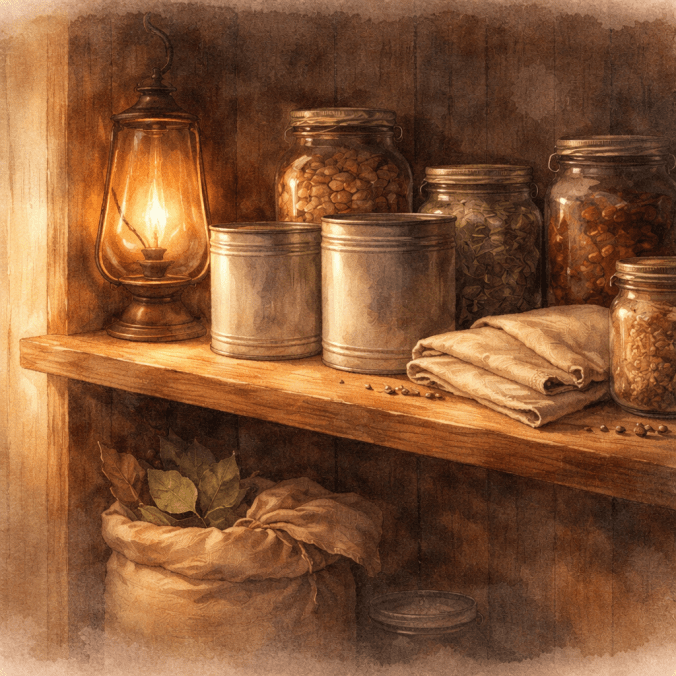
There are certain things that sit so plainly on a shelf, one might pass them by without a second thought.

A small tin, for instance.

Nothing remarkable in its appearance — no flourish, no fuss — merely a label, a lid, and the promise of something warm inside.

And yet, now and again, a closer look reveals that even the simplest things carry a story worth telling.


In the closing years of the last century, a company began offering what was then considered a rather fine and hearty dish — Beefsteak Tomato Soup.

By all accounts, it was a very good soup. Filling, flavourful, and welcome on the table.

But like most foods of that time, it came with its share of inconveniences — its weight, for one, made the cost of transport high, along with the need to prepare it fully before it ever reached the home.

Then, in 1897, someone had a different sort of idea.

Not louder. Not grander.

Just . . . . better, in a practical way.

A chemist by the name of Dr. John T. Dorrance developed a method of condensing soup — removing much of the water content before it was sealed in its tin.

What this meant, in practical terms, was rather remarkable:

Smaller tins
Lower cost to ship
Longer keeping

And the ability for families to prepare a warm meal simply by adding water or milk at home.

It was not merely a new product — it was an all together new way of thinking about food on the household table.


A smaller tin meant less cost, so more could be carried.
A lower price meant more could afford it.
A simpler preparation meant less time at the stove after a work-filled day, and more time at the table.

And before long, what was once a new and occasional thing became part of everyday life.


By these early years of the new century — including our own Gazette year of 1904 — such tins were beginning to appear more regularly on the shelves of mercantiles and general stores, often for around ten cents apiece.

A modest price at the time.

But one that placed a warm, dependable meal within easy reach.


There is something worth noticing in that.

Not every improvement arrives with great fanfare.

Some come quietly — set down on a wooden shelf, waiting to be tried.

And once tried, they have a way of staying.


You may notice something familiar on the shelves in this week’s “Hearth & Holler Gazette.”

And should you do so, you will now know a little more of the story behind it.

‘Til next time then, and hoping to see you on Saturday . . . .

— Jim  (and Red!)

P.S. from Little Red Bear —After a long day roaming the hills up and down in search of honey, a warm supper that asks only for water, a pot, and a little good sense sounds to me like one of mankind’s better ideas.

Pen-and-ink illustrations created with the assistance of AI and lovingly styled for Little Red Bear Land.