PULL UP A CHAIR — IT’S STORYTIME
A Visit with the Bookers — Isaiah & Evelyn
“Two Roads, Neither Particularly Recommended”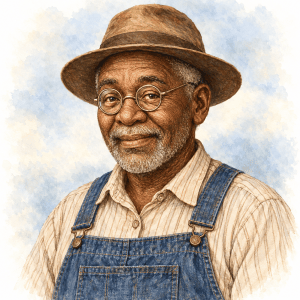
Isaiah and Evelyn Booker welcome readers into the easy company of neighbors who know the value of a good story and a listening ear. Isaiah generally has a tale ready, while Evelyn has a sharp memory, a warm welcome, and a few observations of her own about the way he tells it.
Isaiah enjoys giving a story room to unfold. He knows when to pause, when to lower his voice, and when to let his listeners decide what might have happened next. Whatever turns the telling takes, his affection for the people gathered around him is never far beneath the surface.
Evelyn brings her own lively understanding of people to every visit. She listens closely, speaks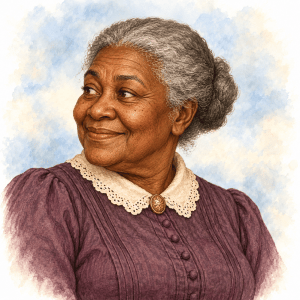 her mind, and can bring a wandering tale back to earth with a few well-chosen words. Her kindness has a practical side, too — especially when somebody needs another cookie, a little reassurance, or a reminder that it is getting late.
Join them each month for porch-side visits, local recollections, laughter, and the sort of stories that give folks something to carry home besides an empty plate.
Pull up a Chair . . . . Stories from the Hills & Hollers
“Before you begin,” Evelyn said, “these children have to walk home.”
Isaiah Booker looked at the children gathered before his porch.
“I know where they live.”
“That is not what I mean.”
October leaves scraped softly along the path. Beyond the yard, the last sunlight rested in the upper branches, and Roper lay beside Isaiah’s chair with his chin on his paws.
Evelyn set down a plate of cookies.
“We were only asking about the roads,” one boy explained.
“Yes,” she said. “That is generally how it starts.”
Isaiah waited until everyone had a cookie.
“Which road were you asking about?”
“Old Hatchet Road.”
“And Whistling Haints Road,” a girl added.
Isaiah settled back.
“Well. Neither one particularly recommended.” 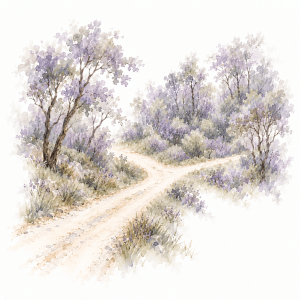
“The two roads pass along opposite sides of the Phantom Forest,” Isaiah began. “Between them stand trees that grow twisted, leaning where there seems no reason to lean. Some of those branches bend into shapes you might prefer not to examine too closely toward evening.”
“Do the leaves change in October?” a girl asked.
“Those leaves do not turn green with the other trees in Summer. Nor do they fall when Autumn comes.”
“You mean they stay on all Winter?”
“So people say.”
“What color are they?”
“Queer, faded, grey looking things. You would know you were looking at different woods.”
A boy turned his cookie over, inspecting the underside.
“And at the very heart of that forest,” Isaiah continued, “lies Witches Holler.”
He spoke the name quietly.
The youngest girl stopped swinging her feet.
“Mystery Creek runs into the Holler. Nobody can point to where it comes out.”
“Does it go underground?”
“Could.”
“Does anybody know?”
“Not that I have heard.”
For a moment, the children were quiet.
“You keep to the roads,” Isaiah said. “And you arrange your traveling so you are well away before dark. As for Witches Holler itself, you leave that alone.”
“Why?”
“You leave it alone.”
Evelyn moved the cookie plate nearer the youngest girl.
“Here, sweetheart. These little ones have extra sugar.”
“What about the faces?” the older girl asked.
Isaiah looked at her.
“You have heard about those?”
“My brother told me.”
“Did he tell you whose faces they are?”
She shook her head.
“Neither could I.”
The youngest girl glanced toward the nearest tree in the Bookers’ yard.
“Not that one,” Evelyn said gently. “That one has been minding its own business since before you were born.”
Isaiah waited until the child looked back.
“Along those roads, people sometimes notice a face in the bark. A hollow where an eye might be. A fold that looks like a mouth.”
“Somebody carved them?”
“Perhaps.”
“Or they just grew that way?”
“Perhaps that, too.”
“What do they look like?”
“Sad.”
He let the word settle.
“Not angry?” a boy asked.
“No. Just sad. As though the tree had something on its mind and no way to tell it.”
“Are they always there?”
“That is the peculiar part. A traveler remembers a face on one tree. Next time he passes, he cannot find it. But farther along, there is another.”
“The same face?”
“Not quite. Different trees. Different faces.”
“But always sad?”
Isaiah nodded.
Evelyn looked out across her yard.
“Well, I should like to think somebody has said a kind word to them.”
Isaiah considered that.
“Would do no harm.”
“Now, Old Hatchet Road has a place where a traveler sometimes hears somebody walking behind him.”
“How close?” a boy asked.
“Close enough to hear the steps.”
“What happens if he stops?”
“They stop.”
A girl looked toward the path.
“If he starts again?”
“After a little while, so do they.”
“Has anybody turned around?”
“Certainly.”
“What did they see?”
“Road.”
The children considered that.
“Sometimes,” Isaiah added, “there is a voice.”
“What does it say?”
“Your name, perhaps.”
“My name?” asked the youngest girl.
“If you were the one walking there.”
“I wouldn’t be.”
“That would be my recommendation.”
Evelyn poured lemonade.
“You see? We have settled that very sensibly. Nobody needs to go anywhere to find out.”
“On Whistling Haints Road, a dog has been known to join a traveler.”
Roper’s ears moved.
“No barking from a farmyard,” Isaiah continued. “No rustling approach through the brush. Just a dog walking beside him where no dog had been a moment before.”
“What kind?”
“Accounts differ.”
“Big?”
“Usually.”
One boy looked at Roper.
“Not Roper,” Isaiah said. “Roper would want to know what you had in your dinner pail before setting out to follow you.”
Roper lowered his chin again.
“This other dog asks for nothing. Walks along quietly. Might stay beside you for a good stretch.”
“That doesn’t sound so bad,” the older girl said.
“No. A person might be glad of the company.”
Isaiah rubbed his thumb along the arm of his chair.
“Then the person looks away for a moment.”
“And?”
“When he looks back, the dog is gone.”
“Into the woods?”
“No sound of it.”
“Behind him?”
“Nothing on the road.”
“Perhaps it just went home,” Evelyn said.
“Perhaps.”
She looked at her husband.
He looked pleasantly back.
“You could allow a perfectly ordinary dog to go home, Isaiah.”
“I have raised no objection.”
“Now, the lights,” Isaiah continued. “Those are another matter.”
The youngest girl shifted her chair nearer the older girl’s.
“Small ones sometimes appear deep among the trunks. Others are larger. Round and pale, showing between trees where no cabin stands and nobody lives.”
“What color?”
“Some travelers describe white lights. Others have seen blue, green, or a dull reddish glow.”
“Lanterns?” a boy asked.
“Nothing beneath them that anyone could make out.”
“Could you see who carried them?”
“No one to see. And too high for any man to carry, lest he had his lantern high up on a pole.”
“Who would carry a lantern through the woods on a pole?”
Isaiah spread his hands.
The children waited.
He had apparently finished his answer.
“There is one white light,” he went on, “said to keep pace with a traveler along the road.”
A boy’s cookie stopped halfway to his mouth.
“You walk, it moves. You stop, it waits. Always back among the trees. Always about the same distance away.”
“What if you run?”
Evelyn set the lemonade pitcher down.
“Isaiah Booker — you are going to scare the daylights out of these children. I do not want their mothers coming here in the morning complaining of nightmares.”
“I have not advised anybody to run.”
“You have made walking sound troublesome enough.”
She turned to the children.
“Have another cookie. There is nothing following anybody around this porch except crumbs, and Roper will attend to those.”
Roper’s ears moved again.
“Then there is the lady,” Isaiah said.
Evelyn closed her eyes briefly.
“What lady?” asked the youngest girl.
“The one in white.”
“Does she live there?”
“Nobody knows where she lives.”
Isaiah rested his hands on his knees.
“She is seen beside the road sometimes, standing a little way beyond the reach of a traveler’s lantern. A white dress. A still figure. Her face difficult to make out.”
“Does she speak?”
“Not in the accounts I have heard.”
“What does she want?”
“That is another thing nobody has explained.”
“Has anybody offered her a ride?” the older girl asked.
“So the story goes.”
“What happened?”
“By the time he brought his wagon to a stop, there was no lady.”
A dry leaf caught against the porch step.
Every child heard it.
The youngest girl caught the older girl’s sleeve.
Evelyn reached down, picked up the leaf, and held it where they could see.
“October,” she said. “Leaves fall. That’s all.”
Then she let it go. Everyone watched as it floated softly to the ground.
The little girl released the sleeve, smiling a little at herself.
From somewhere beyond the pasture came the ordinary evening sound of a bird settling in the hedge.
Isaiah waited.
“There is a high hill above those woods,” he said at last, “where people have heard a wolf.”
One boy drew his feet beneath his chair.
“A long howl. Carries over the trees and down across the road. They say you can feel it in your chest.”
“Just one wolf?”
“Just one voice. Mournful. It starts as a quiet whimper, they say. Then grows into a long, low, mournful cry. Hollow and lonely. Echoing across the hollers. It trails off into the night. And then begins again.”
“Was it a wolf?”
“That,” Isaiah said, “is what the fellow hoped.”
“Isaiah Booker.”
“I said nothing more, Evelyn.”
“You paused. I know your pauses.”
The children laughed.
It was a relieved sort of laugh, and Evelyn helped it along by passing the plate.
“Goodness sakes alive. Will you stop frightening these children?”
“Just one more thing they need to hear.”
“They need to hear that it is time to start home while they can still see where they are putting their feet.”
Isaiah looked at the sky.
There was light remaining.
He nodded.
“Fair enough.”
But the oldest boy had a question.
“Has anybody gone along those roads after dark?”
Isaiah turned back toward him.
“There are those who say that anyone foolish enough to venture there after nightfall is never seen again.”
Nobody reached for a cookie.
Evelyn folded her arms.
“Then who has been telling the stories?” she inquired with a tone of someone already knowing the answer.
Isaiah opened his mouth.
Closed it.
The older girl began to grin.
“Well?” Evelyn asked.
“Accounts,” Isaiah said carefully, “are not always complete.”
“Apparently neither are the disappearances.”
The porch filled with laughter.
Even the youngest girl laughed, though she left her chair comfortably close to the others.
Evelyn wrapped a few remaining cookies for the walk.
“Halloween is coming,” she said, handing them over, “but that does not mean we have to spend the whole of October peering over our shoulders.”
“We weren’t frightened,” one boy said.
“Of course not.”
“Not very,” the youngest girl added.
Evelyn smiled and patted her on the head.
Isaiah rose and took his hat from its peg.
“I will walk along with you.”
“We know the way.”
“I could use the walk.”
Roper stood, stretched, and joined them.
At the gate, the youngest girl looked back.
“Mrs. Booker?”
“Yes, dear?”
“The lights don’t come along this road, do they?”
“The light you will see on this road is my porch lantern when you come back to visit.”
That seemed to satisfy her.
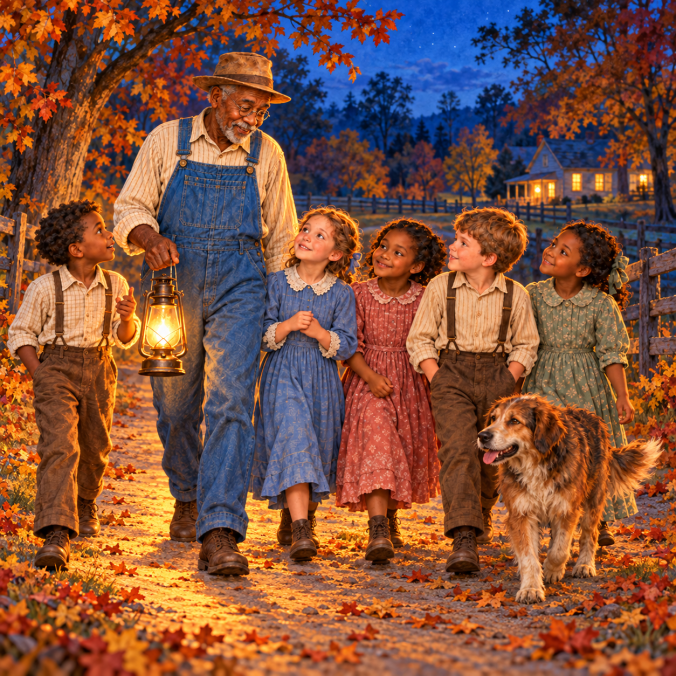
They went off together through the ordinary October dusk, Isaiah in the middle, Roper nosing along the verge, and the children already discussing which parts they intended to tell their brothers and sisters.
Evelyn watched until they reached the bend.
Then she called after them.
“Isaiah?”
He turned.
“No new stories on the way.”
He lifted one hand in acknowledgment.
“And no meaningful pauses.”
This time, she could hear the children laughing all the way down the road.
Original artwork throughout The Front Porch has been created from my concepts and creative direction with the assistance of AI.