NOW THEN, LITTLE ONES
Learning Along the Way with Alma Thimbleberry
“While We Set the Table”
Alma Thimbleberry helps young minds discover the stories behind familiar things, with patience, practical activities, and room for every question. Whether she is explaining an old custom or helping little paws try something new, she knows that a lesson remembered often begins with something enjoyed.
Join her each month as the little ones of Honey Hill Country explore, make, listen, and learn — with plenty for the grown-ups to discover along the way, too.
By Alma Thimbleberry
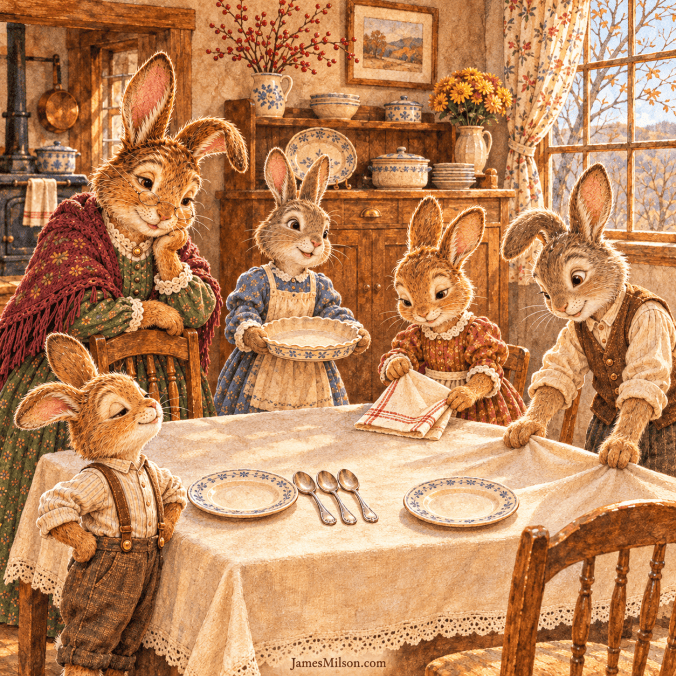
The youngest helper had put three spoons beside one plate and none beside the next.
“Are we expecting somebody particularly hungry?” I asked.
He considered the arrangement, moved two spoons, and looked pleased with himself, one long ear standing straighter than the other.
We were preparing my home for Thanksgiving, although the day itself was still ahead of us. There were napkins to fold, serving dishes to bring down, and a tablecloth that needed airing after spending several months in a drawer.
I had offered the young ones an afternoon of helping.
They had accepted on the understanding that there might be something to eat.
“Was there pie at the first Thanksgiving?” one of them asked.
She was carrying a pie plate at the time, which may have influenced her choice of historical questions.
“We do not know that they had pie anything like ours.”
She stopped walking.
“Then why do we?”
“Because people have been adding good ideas for a very long time. Set that beside the other plate, please.”
That seemed reassuring enough for her to continue.
“The gathering people usually mean when they say the first Thanksgiving happened at Plymouth, in the Autumn of 1621,” I began. “English settlers we call the Pilgrims celebrated their harvest with Wampanoag people who lived in that country.”
“Were they the Indians?”
“That is the word you will find in many books. Wampanoag tells us which people we are speaking about. They had their own homes, leaders, knowledge, and customs long before the settlers arrived.”
“Did they bring anything?”
“They brought deer to the gathering. The English account tells us that, and that there was wildfowl. But it does not give us a complete list of every dish.”
The pie plate bearer looked down at her empty hands.
“So we cannot be sure about dessert.”
“No.”
“That seems something they ought to have written down.”
I could see her point.
We spread the tablecloth together, each of us taking hold along an edge. One small helper pulled with such enthusiasm that the opposite end began retreating across the table.
“Gently,” I said. “We are covering it, not moving it to Plymouth.”
Once we had the cloth settled, somebody asked whether the Pilgrims had invented giving thanks.
“Oh, no. People had been giving thanks for harvests and other blessings for a very long time. The Wampanoag had their own traditions of gratitude, too. That gathering is one part of the story.”
“Did everybody get along after that?”
I laid down the napkins.
“No, dear. There were hard and sorrowful years afterward, and Native families lost much. One shared feast does not tell us everything about what followed.”
For a moment, we worked quietly.
Then the youngest helper placed a spoon beside the plate nearest him.
“One each,” he announced.
“That will do nicely.”
Thanksgiving, I explained, had not become the same yearly holiday everywhere as soon as the Plymouth celebration ended. Different communities observed days of thanksgiving at different times.
“Even President Washington called for one,” I said. “In 1789.”
“Did he tell everybody what to have for dinner?”
“No.”
“That was sensible,” said the child with strong feelings about pie.
I handed her a stack of small plates.
“Many years later, a woman named Sarah Josepha Hale thought the country ought to share an annual Thanksgiving on the same day. She wrote about it in her magazine, and she wrote letters to people who could help.”
“How many letters?”
“Enough to keep at it for years.”
“Did nobody answer?”
“Some people listened. But getting a whole country to agree on something can take longer than getting this tablecloth straight.”
They looked at the cloth. One corner was still hanging lower than the others.
We corrected it.
“Mrs. Hale wrote to President Lincoln, too. In 1863, during the Civil War, he called upon the country to observe the last Thursday of November as a day of thanksgiving.”
“During a war?”
“Yes.”
That brought another pause.
“Even then?”
“Even then. There were blessings to be thankful for, people suffering who needed care, and families hoping for peace.”
One of the older children smoothed a napkin against the table.
“So he did not mean everything was already all right.”
“No, dear. He did not.”
From the kitchen came a small, unmistakable clatter.
We all looked toward the doorway.
“I was finding the serving spoon,” said a voice.
“With your elbow?”
There was a pause.
“Partly.”
Nothing had broken. We recovered the spoon and returned to our preparations.
By then, the children wanted to know how Thanksgiving had acquired all the things their own families did.
“My grandmother always makes the same pudding.”
“We go to my aunt’s.”
“My father says we have to leave early, and then he talks at the gate.”
These, I told them, were family traditions. Some had traveled a long way with people who brought their recipes and customs to new homes. Others had begun because somebody tried something once and everybody hoped they would do it again.
“Like pie?”
“Very much like pie.”
“Or going for a walk after dinner?”
“Yes.”
“Or falling asleep?”
“That may happen without being arranged.”
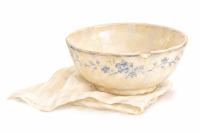
We brought out a serving bowl that had belonged to my mother. Its rim had a small chip, turned toward the wall when it stood on the shelf.
“Do you always use this one?”
“Whenever I can.”
“Because it was hers?”
I nodded.
The child carried it carefully to the table with both hands.
Outside, somebody’s wagon passed along the lane. The afternoon light was beginning to leave the far side of the room, and we still had a few dishes to put away.
“Will we tell the Thanksgiving story again next year?” the youngest asked.
“If you like.”
“With the pie part?”
“I expect you will remind me.”
He surveyed the table, then looked toward the kitchen.
“Are we finished helping?”
“Nearly.”
“Because we have been giving thanks for the harvest a considerable while without eating any.”
I brought out the plate I had set aside for them.
There were enough small pieces of cake for everyone, and we sat down at the newly covered table to try out our work.
The youngest examined his place carefully.
This time, he had remembered his spoon.
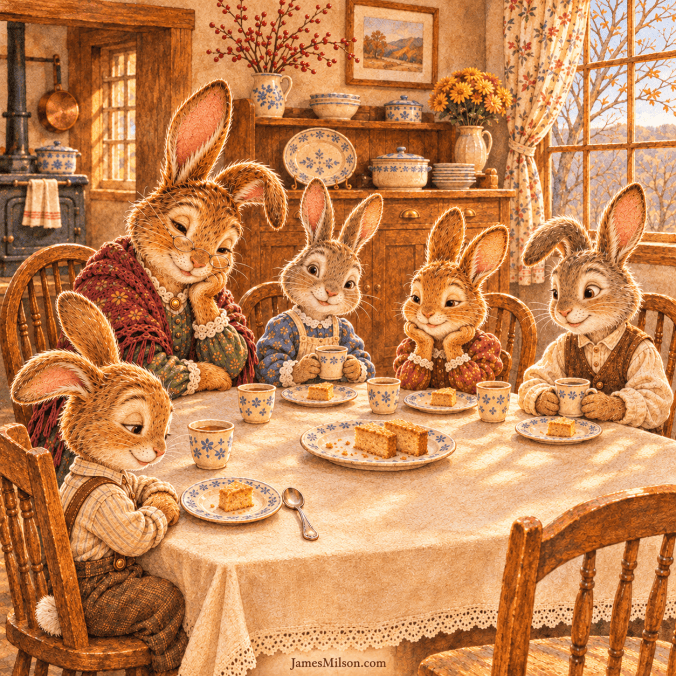
Original artwork throughout The Front Porch has been created from my concepts and creative direction with the assistance of AI.